Cooking apples
Apples grown for the kitchen: sharp, and in some cases cooking down to a froth or a purée. Below are notes on the tradition behind them, then the varieties in the atlas that their sources describe as cooking apples.
A cooking, or culinary, apple is one grown to be cooked rather than eaten raw1. Apples grown especially for the kitchen are a British tradition: a 2007 report from the US Department of Agriculture’s office in London called the United Kingdom “the only country that grows apples especially for cooking”, and put Bramley’s Seedling at almost half of UK apple production: 95,000 of the 202,000 tonnes forecast for 20072.
Robert Hogg’s Fruit Manual (1884) gave a list of the best kitchen apples beside its lists of dessert and cider apples3. He counted the English Codlin, once used in “Codlins and cream”, a national dish, among the oldest English apples, and derived its name from coddle, to parboil4. By 1920 E. A. Bunyard could call Bramley’s Seedling “the most popular and profitable of cooking apples”5.
Sharpness, and what happens in the pan
In juice analysed at Long Ashton, near Bristol, Bramley’s Seedling had 0.85% malic acid, against 0.60% in the dessert apple Cox’s Orange Pippin6, and the specification that protects Armagh Bramley apples describes the Bramley as “High in malic acid and low in sugar”, keeping its tangy flavour through cooking7.
Bunyard’s entries say how each variety cooks: Grenadier “Cooks to a froth”, Lord Derby “Cooks a deep golden red”8,9. Bramley’s Seedling is known for collapsing quickly into a purée when heated, unusually among apples10. A 2026 study linked this to the breakdown of pectin, hemicellulose and cellulose in its cell walls, which stayed largely intact in Fuji and Toki, and found that the firmness of the raw fruit did not predict how far it would soften; other apples, such as Calville Blanc d’Hiver, keep their shape when heated10.
Dual-purpose apples
Some varieties serve both ways: Bunyard rated Blenheim Orange “One of the best all round apples grown, cooking excellently, and of fine quality and texture for dessert”11. The Royal Horticultural Society lists it and Charles Ross as dual-purpose, though it warns that they are “seldom excellent for either use”, and notes that many culinary apples grow sweeter in store until they can be eaten raw from late winter1.
424 varieties Filter them with the finder
-
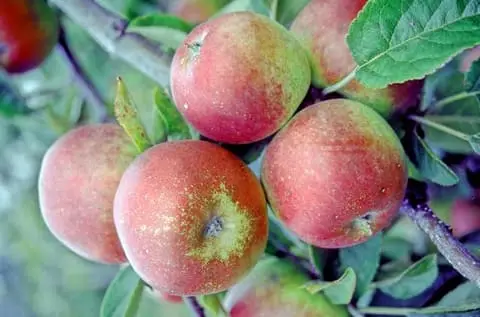
Åkerö
Named after a Södermanland manor where its 18th-century mother tree still stood in 2020; described by Eneroth in 1858
-
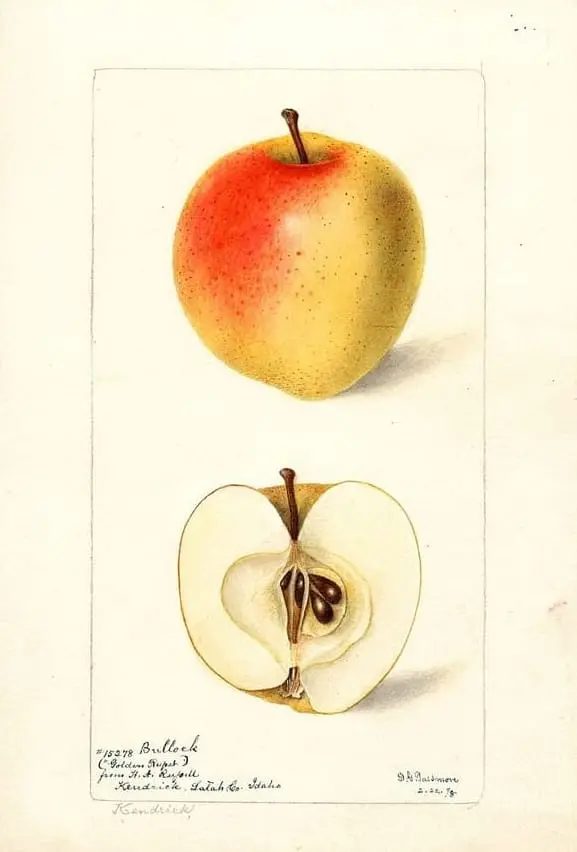
American Golden Russet
A small New Jersey russet whose flesh Downing likened to a buttery pear; Coxe knew it in 1817 as Sheep-nose
-
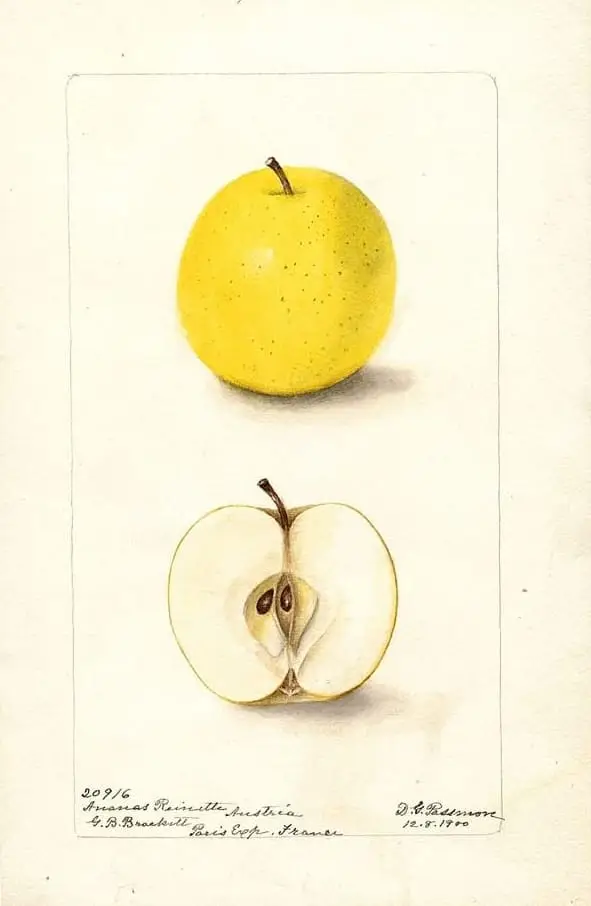
Ananas Reinette
Long thought Dutch, first described in Germany in 1826; DNA names Golden Harvey as one of its parents
-
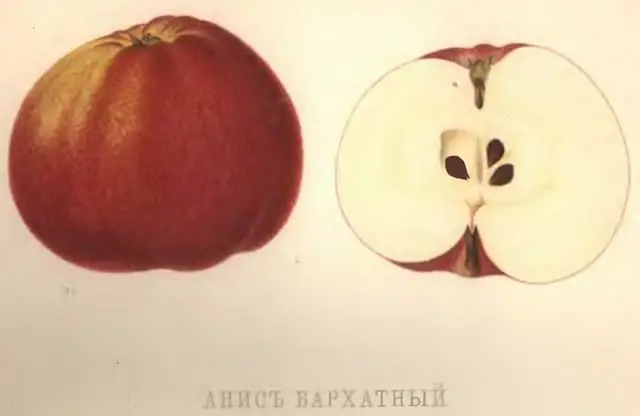
Anis
An old Volga folk apple whose clones bear small, bloom-dusted red fruit; Anis Polosaty has an anise-like scent
-
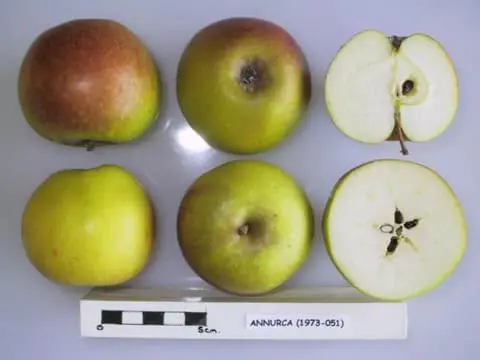
Annurca
Campania's "queen of apples", picked before it is fully red and then coloured on beds laid out on the ground
-
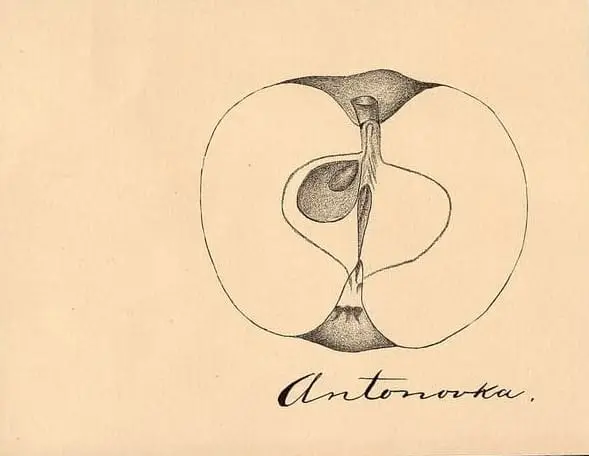
Antonovka
Central Russia's old folk apple, prized for its scent and hardiness; DNA shows Schmidt's Antonovka is the same variety
-
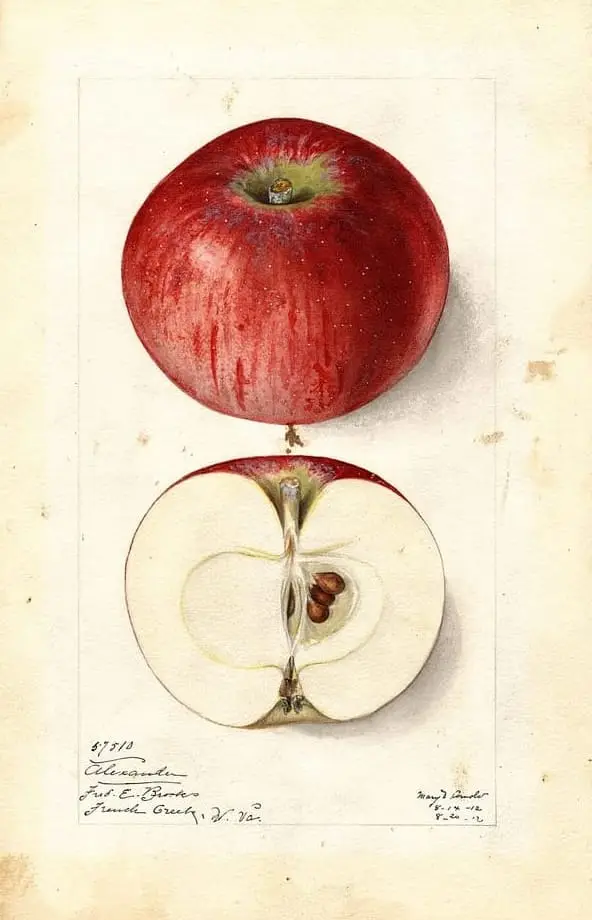
Aport
An old Russian apple, known in the West as Alexander, that became the celebrated Aport of Almaty after 1865
-
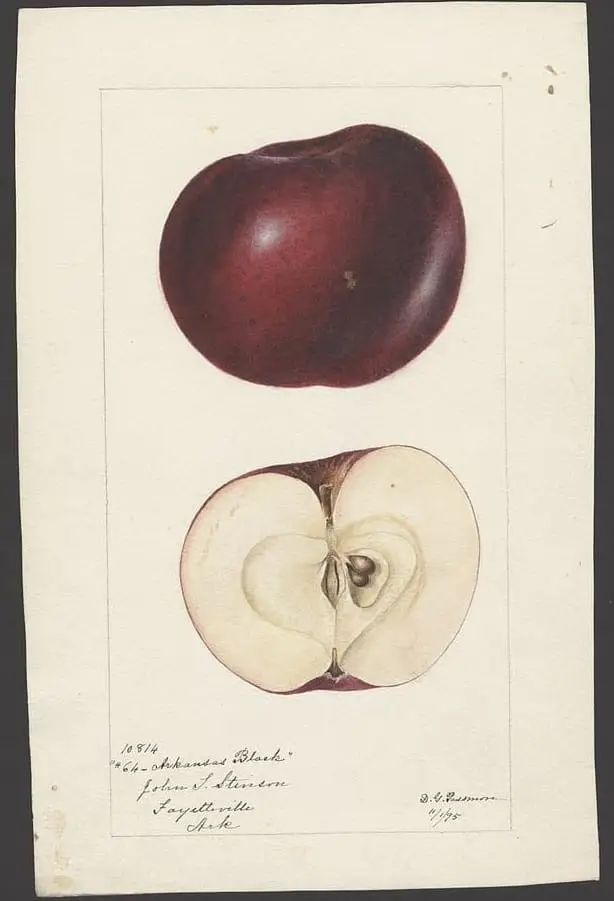
Arkansas Black
From Benton County, Arkansas, about 1870; in the sun its red skin deepens to purplish red or almost black
-
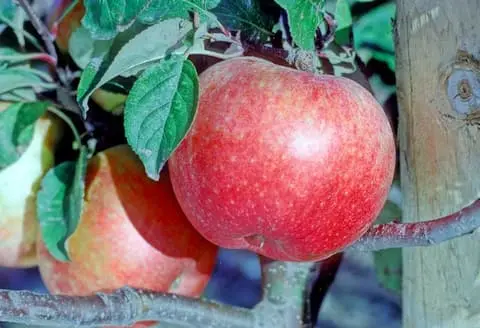
Aroma
Crossed in 1947 from Ingrid Marie and Filippa and released by Balsgård in 1973; second in Swedish orchards in 2023
-
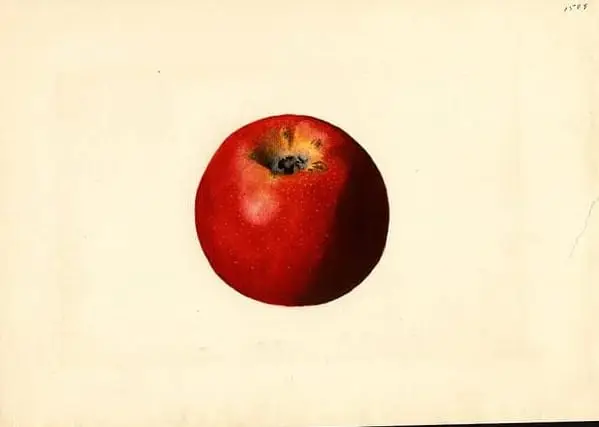
Baldwin
The United States' leading apple in 1909–13; the freezes of 1933–34 killed or ruined nearly two million of its trees
-
Bay 3484
Bred from Weirouge at the Bavarian Centre of Pomology, Hallbergmoos; its fruit is sold under the trade mark Baya Marisa
-
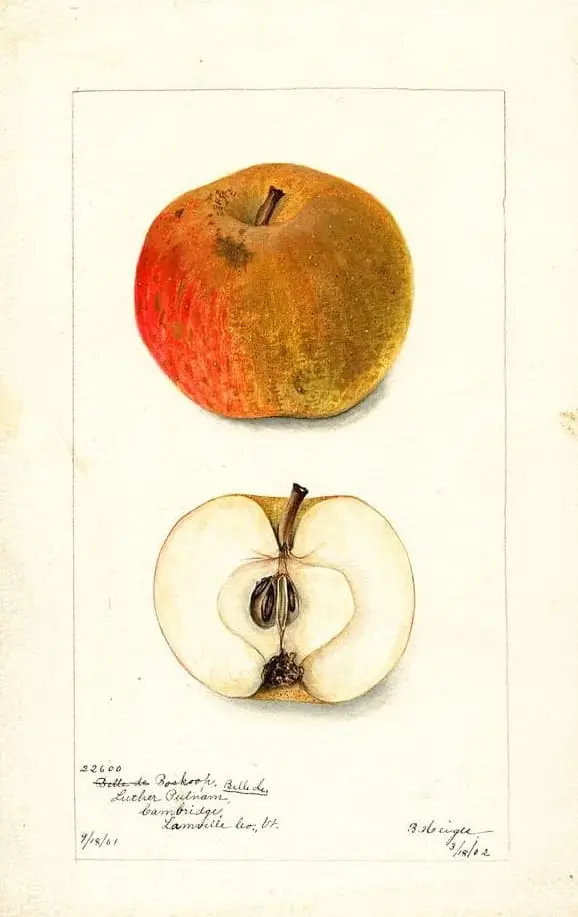
Belle de Boskoop
Found at Boskoop in 1856 and much grown in the Netherlands and Germany; DNA shows Kasseler Renette is one parent
-
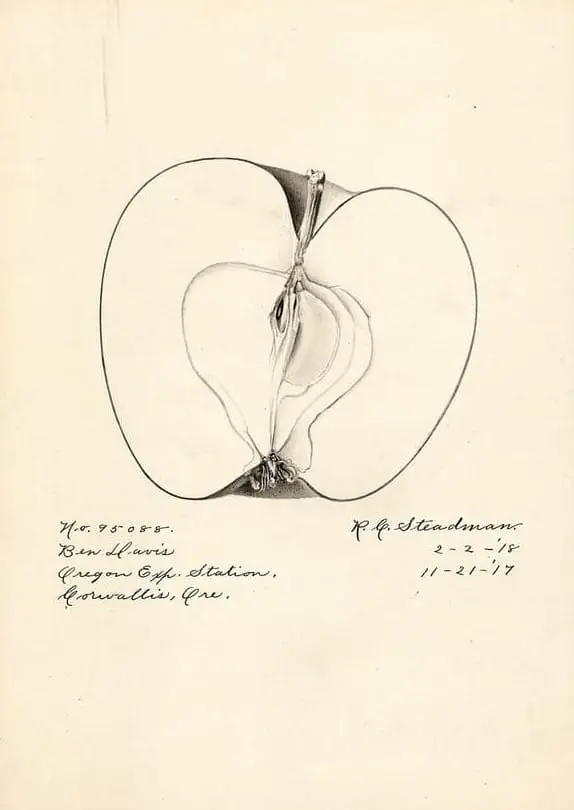
Ben Davis
A tough-skinned keeper of unknown Southern origin; in 1909–13 second only to Baldwin among American apples
-
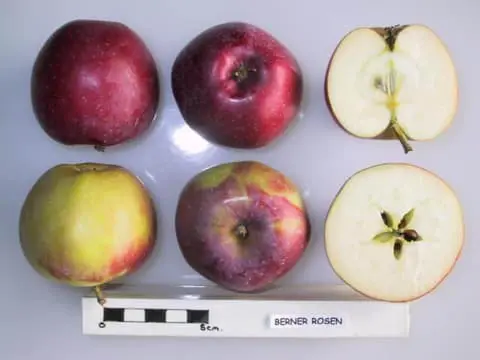
Berner Rose
A chance seedling from the canton of Bern that first fruited in 1888; its parents were found by DNA
-
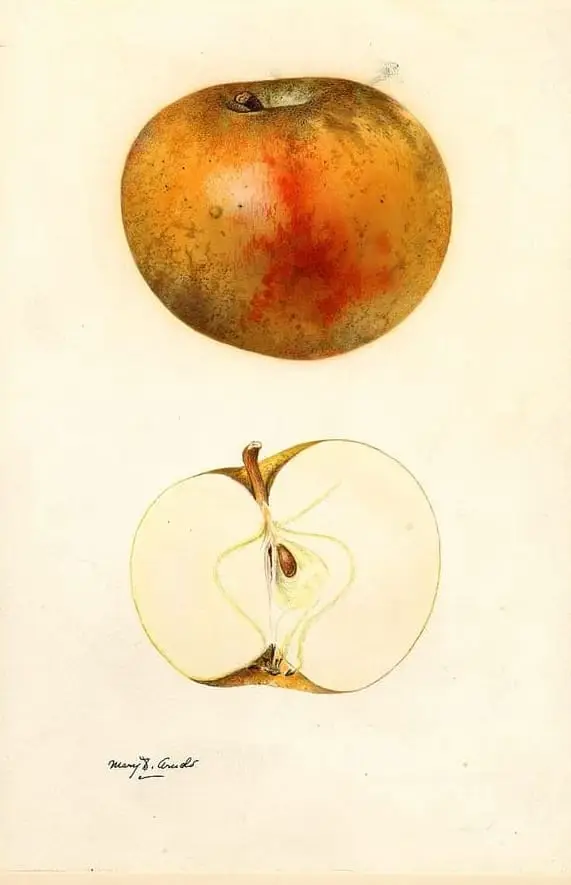
Blenheim Orange
Grown from a pip at Woodstock, beside Blenheim Park; a large triploid that DNA ties to Reinette de Hollande
-
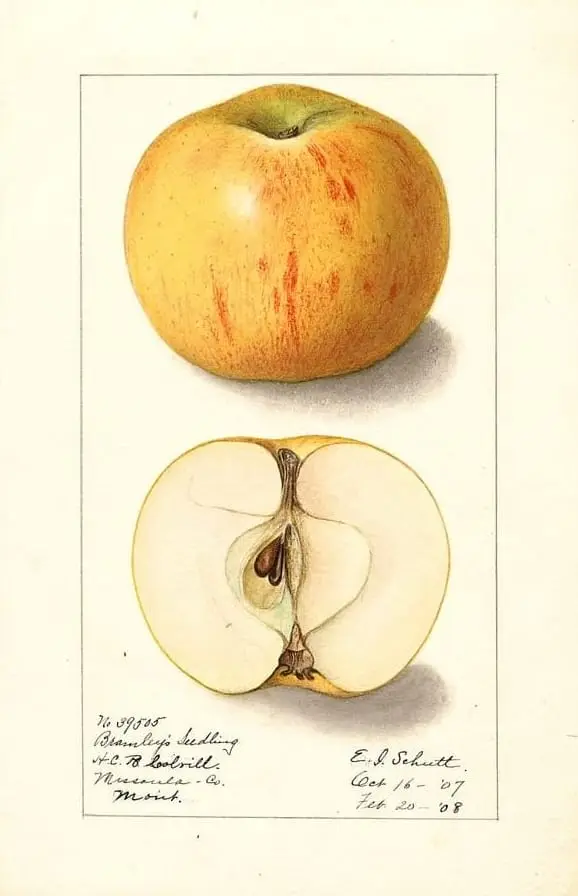
Bramley's Seedling
Grown from a pip in a Southwell garden between 1809 and 1815; the original tree was still alive in 2026
-
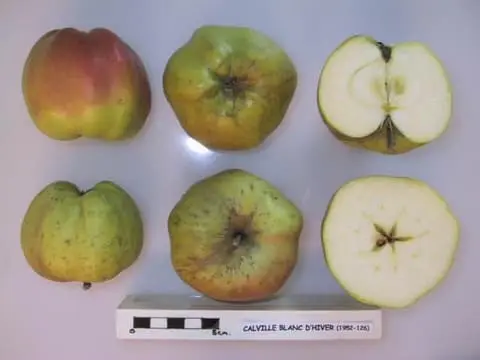
Calville Blanc d'Hiver
Described by Jean Bauhin in 1598; DNA points to Calville Rouge and Reinette Franche as its parents
-
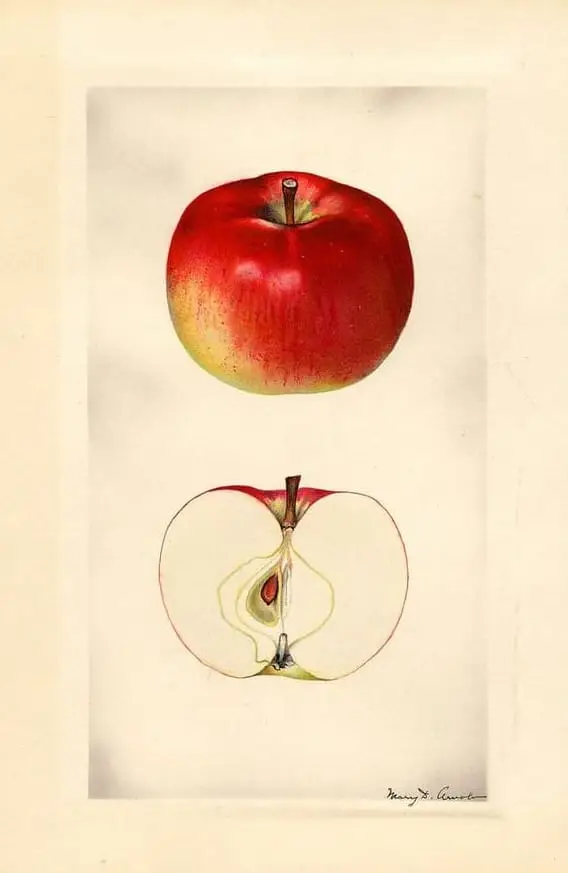
Cortland
The first apple from the Geneva station's breeding: Ben Davis × McIntosh, crossed in 1898 and introduced in 1915
-
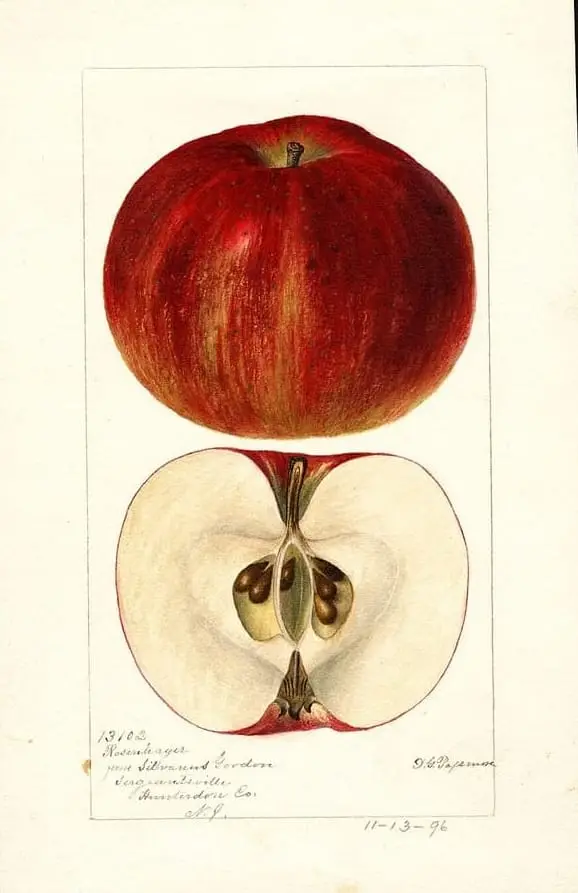
Danziger Kantapfel
Described by Knoop in 1760 and grown in Germany under dozens of local names; a parent of Freiherr von Berlepsch
-
Dolgo
A Siberian crab brought from Russia to South Dakota in 1897 and introduced in 1917 for its ruby-red jelly
-
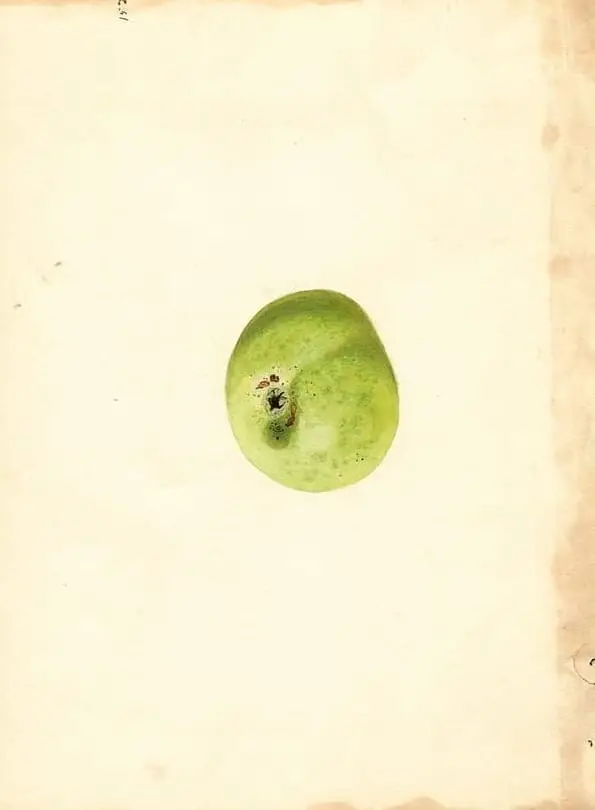
Duchess of Oldenburg
Borovinka at home; its hardiness in prairie test winters led Americans to import more Russian apples
-
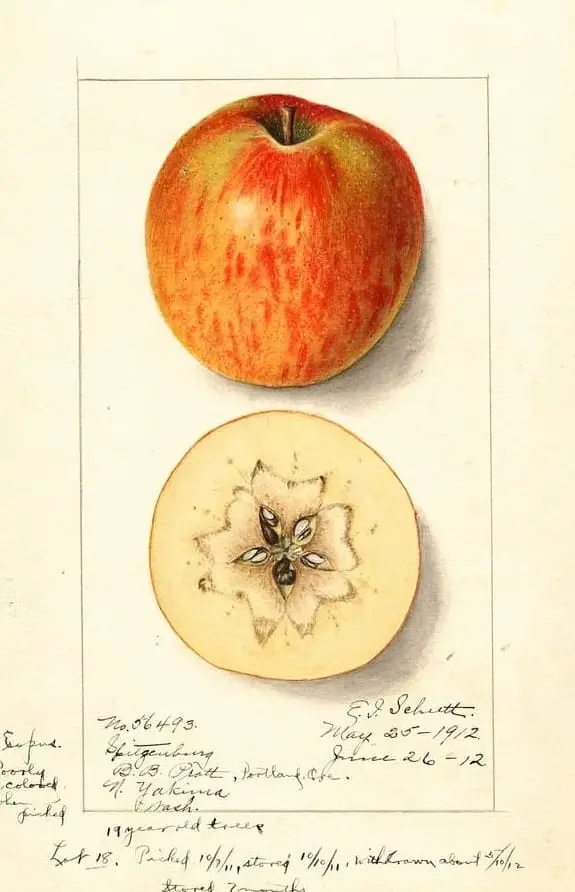
Esopus Spitzenburg
A Hudson valley apple known before 1790; DNA shows it a parent of Jonathan and probably a child of Reinette Franche
-
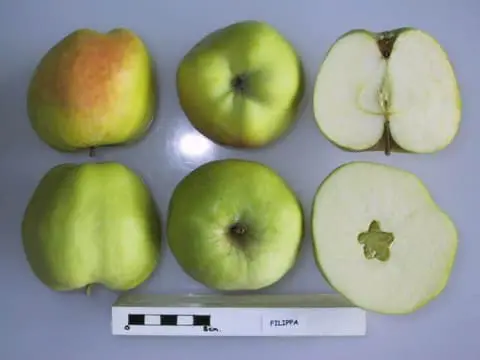
Filippa
Grown from pips sown in a pot by Filippa Johannsen at Hundstrup, Fyn, about 1880; a parent of Aroma
-
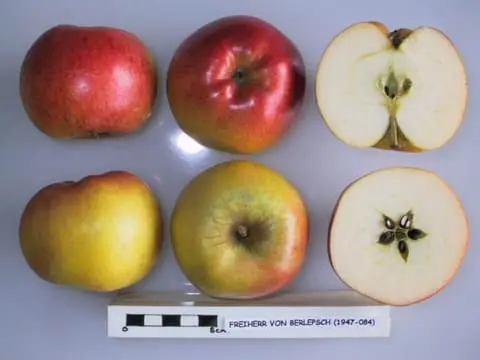
Freiherr von Berlepsch
Raised about 1880 at Grevenbroich; DNA shows its parents are Ananas Reinette and Danziger Kantapfel, not Ribston Pippin
-
Geneva
A crab raised at Ottawa from a 1920 seedling of a red-fleshed wild apple; a standard host for testing apple scab races
-
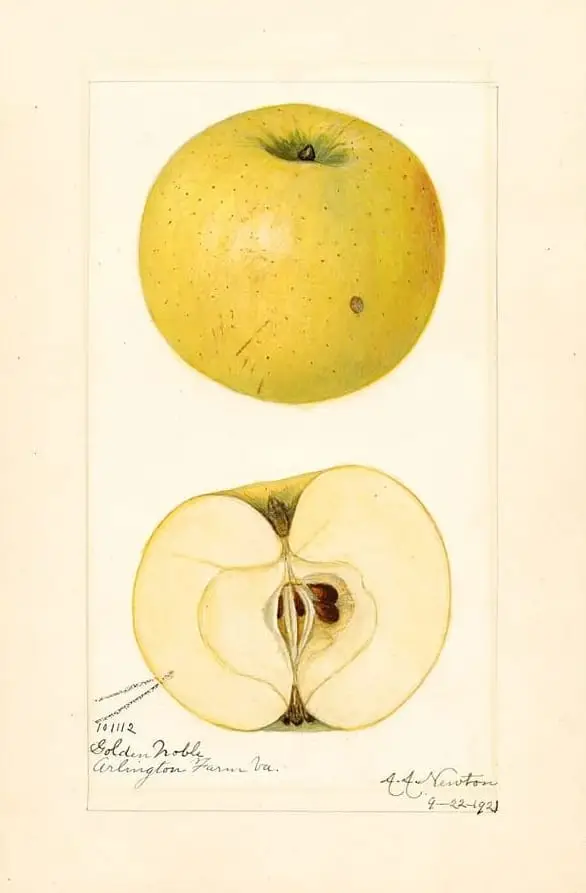
Golden Noble
From an old orchard at Downham, Norfolk; a clear golden cooker without red, and a parent of Peasgood's Nonsuch
-
GoldRush
A late yellow apple of the Purdue–Rutgers–Illinois programme, named for its gold colour and "rush" of flavour
-
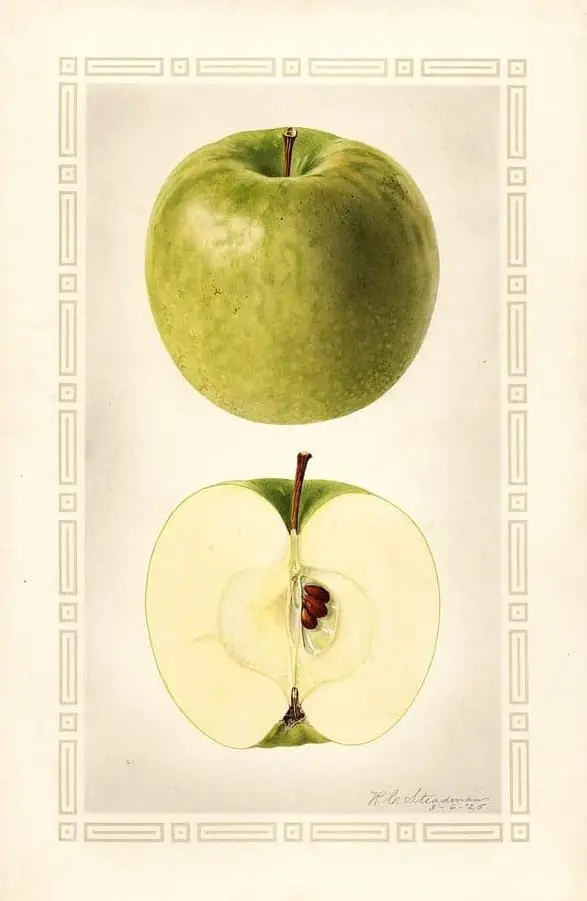
Granny Smith
From Maria Ann Smith's orchard near Sydney; by 1975 it made up 39 per cent of Australia's apple crop
-
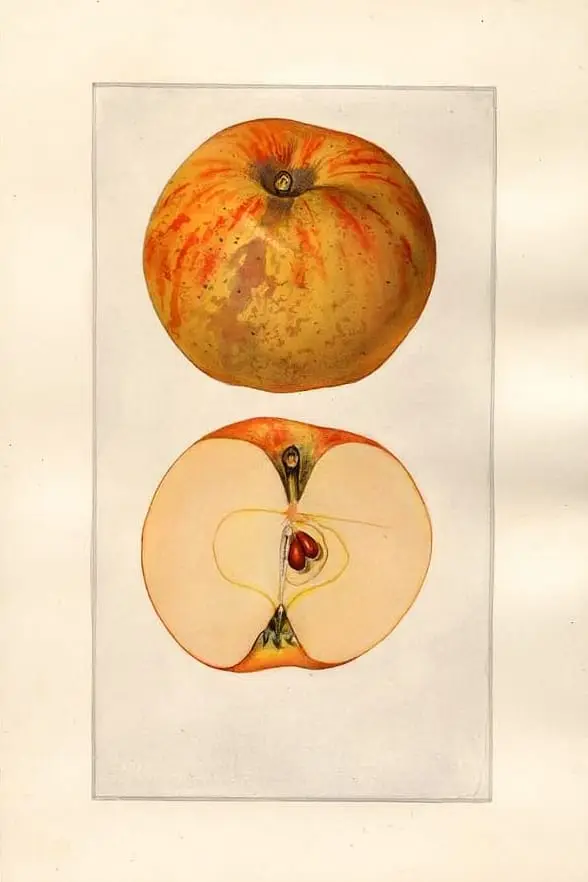
Gravenstein
A triploid of disputed origin, linked to Gråsten Castle and to Italy; Danish growers named it the national apple in 2005
-
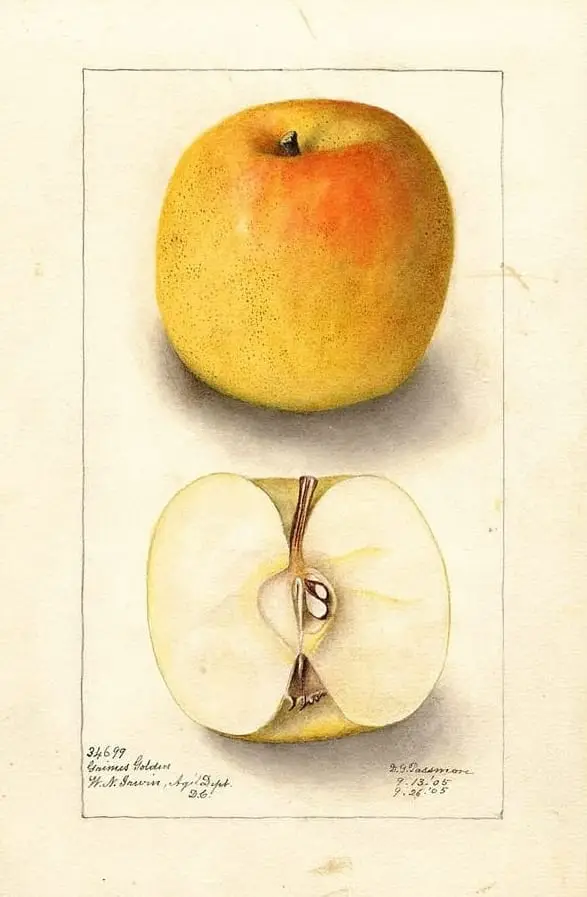
Grimes Golden
A West Virginia apple sold to New Orleans traders by 1804; DNA confirms it as a parent of Golden Delicious
-
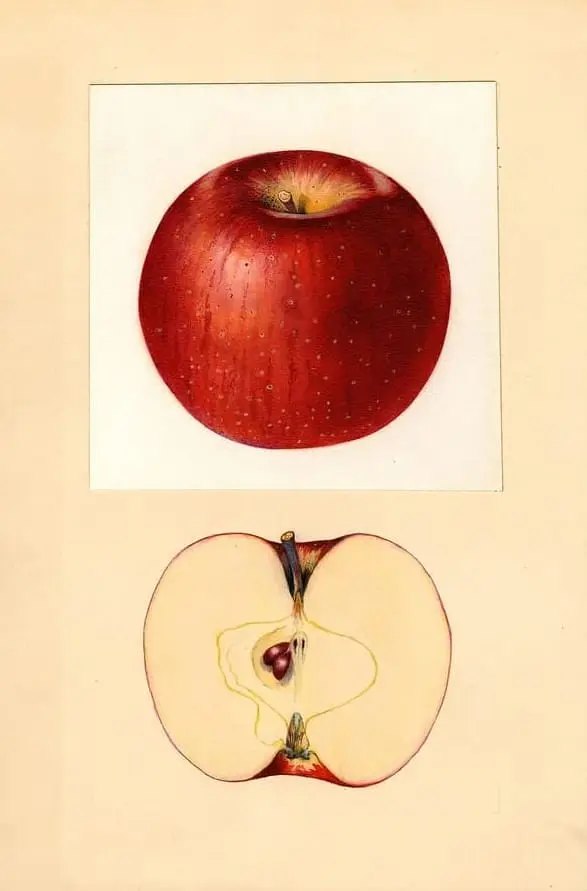
Haralson
A Malinda seedling named after the first head of Minnesota's fruit breeding farm; DNA names Wealthy as its other parent
-
Hewe's Crab
Colonial Virginia's prized cider crab, recorded from 1744; the tree now grown as Virginia Crab is another apple
-
Honeycrisp
Nearly discarded after winter injury, it became Minnesota's state fruit; DNA showed its recorded parents were wrong
-
Howell TC2
Red-skinned, red-fleshed seedling of Airlie Red Flesh, raised at Prosser, Washington, and selected in 2010
-
Huaguan
Bred in Zhengzhou, China, from Golden Delicious and Fuji; sold in North America under the trade mark Autumn Glory
-
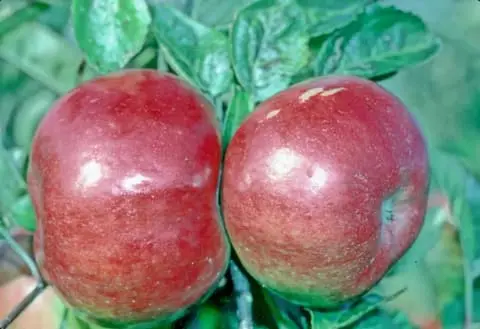
Idared
Raised in Idaho from Jonathan and Wagener and introduced in 1942; in the US today nearly all of it is processed
-
Ilzer Rosenapfel
A perfumed chance seedling of about 1840 from eastern Styria, by 1920 one of the region's main apples
-
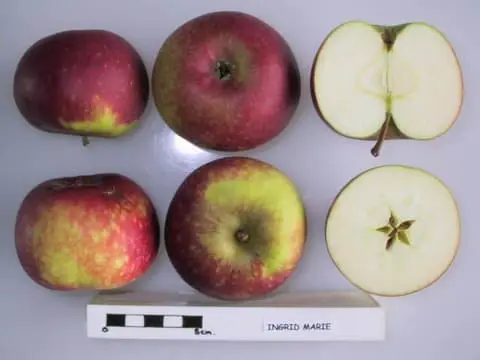
Ingrid Marie
Found in a Fyn school garden about 1910; Denmark's most widespread apple until 1997 and still Sweden's in 2023
-
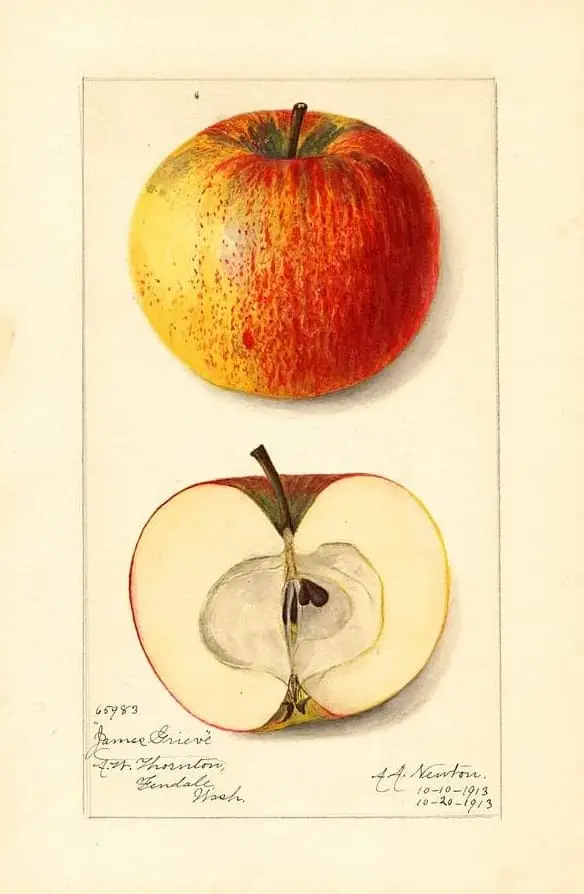
James Grieve
Raised in Edinburgh by the nurseryman James Grieve and shown in 1892; DNA finds Cox's Orange Pippin among its parents
-
John Downie
Raised at Whittington, near Lichfield, and introduced in 1875; probably still Britain's best-known crab apple
-
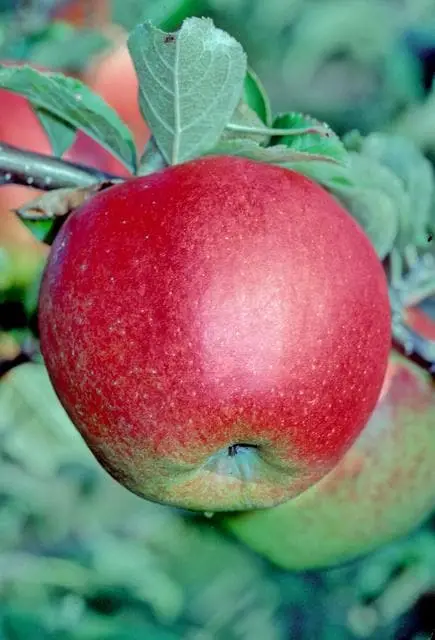
Jonagold
Golden Delicious × Jonathan, crossed at Geneva in 1943; in 1981 western Europe planted it more than any other apple
-
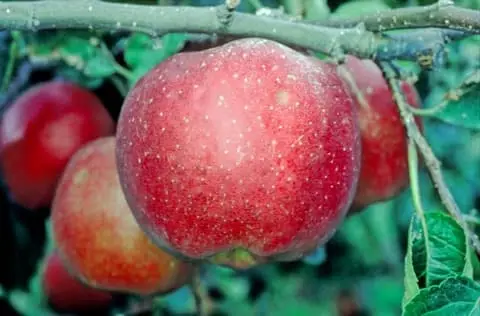
Jonagored
A blood-red sport of Jonagold, found in 1980 at the top of a tree in Jos Morren's orchard at Halen, Belgium
-
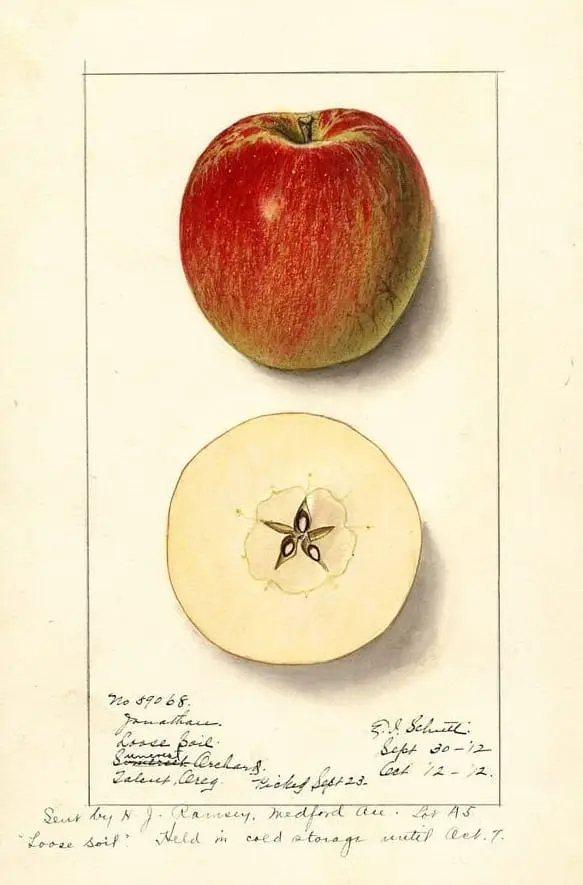
Jonathan
Named by Judge Buel after Jonathan Hasbrouck; in a 2020 DNA study only Cox's Orange Pippin had more inferred offspring
-
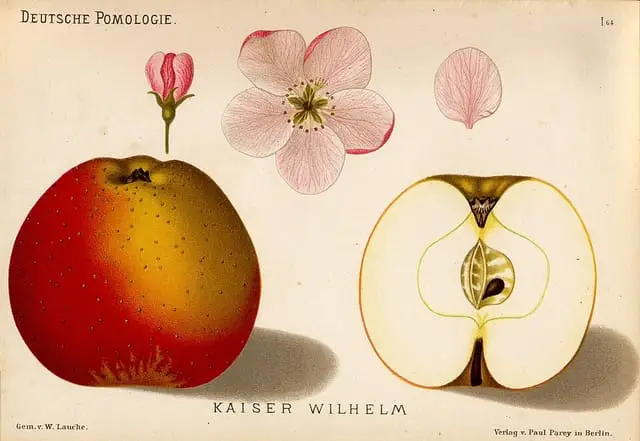
Kaiser Wilhelm
Named in 1875 with Emperor Wilhelm I's consent; DNA shows it is the Rhineland apple Peter Broich
-
Keepsake
A hard, long-keeping Minnesota apple from a 1936 cross, introduced in 1979; DNA shows it is a parent of Honeycrisp
-
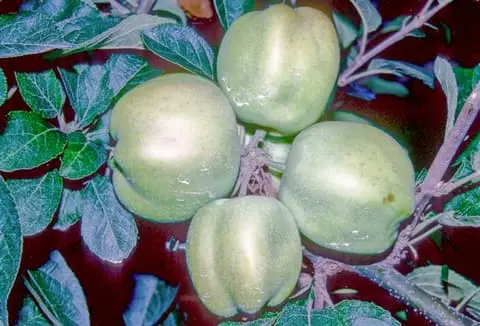
Keswick Codlin
Found on a rubbish heap at Gleaston Castle; an early codlin that could go into tarts by the end of June
-
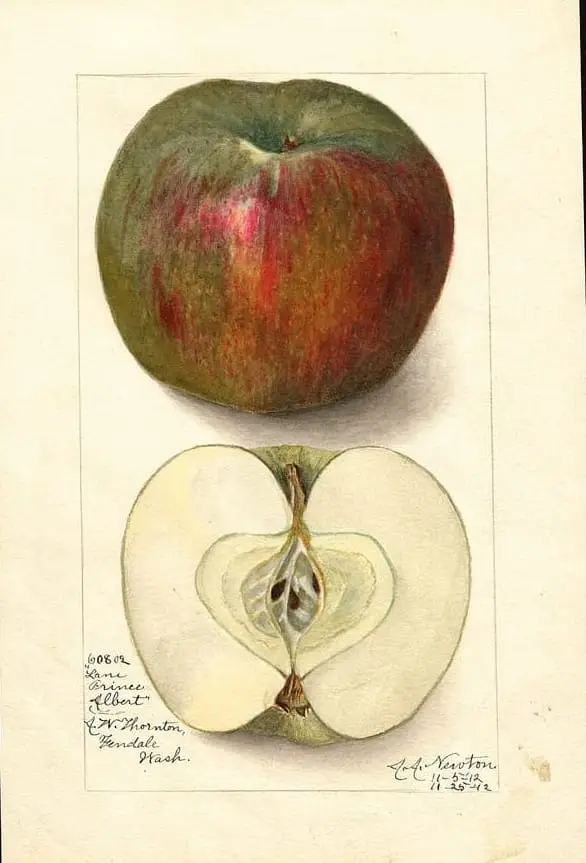
Lane's Prince Albert
Named on a royal visit to Berkhamsted; Bunyard thought it perhaps the most reliable cropper of all cooking apples
-
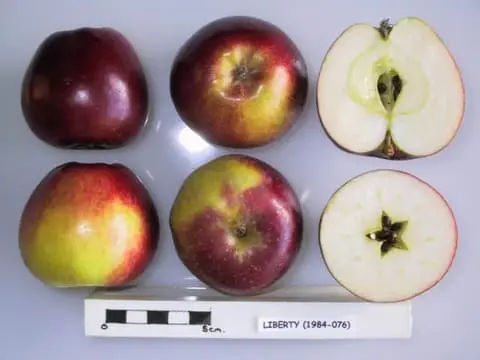
Liberty
Bred at Geneva, New York, from a 1955 cross and named in 1978 to denote its freedom from disease
-
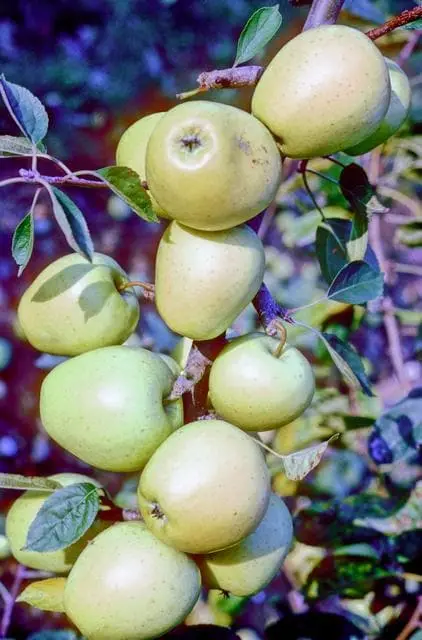
Limoncella
A small, yellow, firm-fleshed apple of southern Italy, first described in 1831 and now in danger of disappearing
-
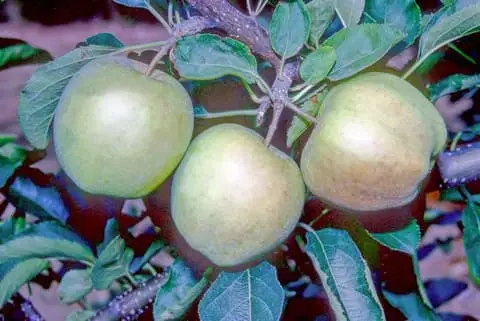
Mutsu
Raised at Aomori in 1930, a big triploid that turns pink when grown in paper bags; renamed Crispin in Britain in 1968
-
New York 2
A late, firm and tart Cornell apple from a 1992 cross of Braeburn and Autumn Crisp; sold under the trade mark RubyFrost
-
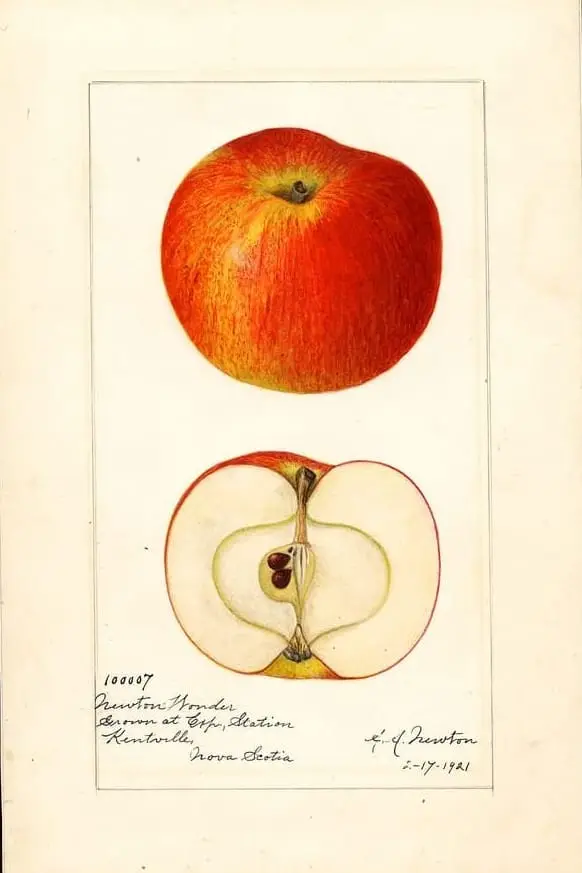
Newton Wonder
A Derbyshire cooker introduced about 1887; DNA gives its parents as Maharaji and Northern Greening, not those on record
-
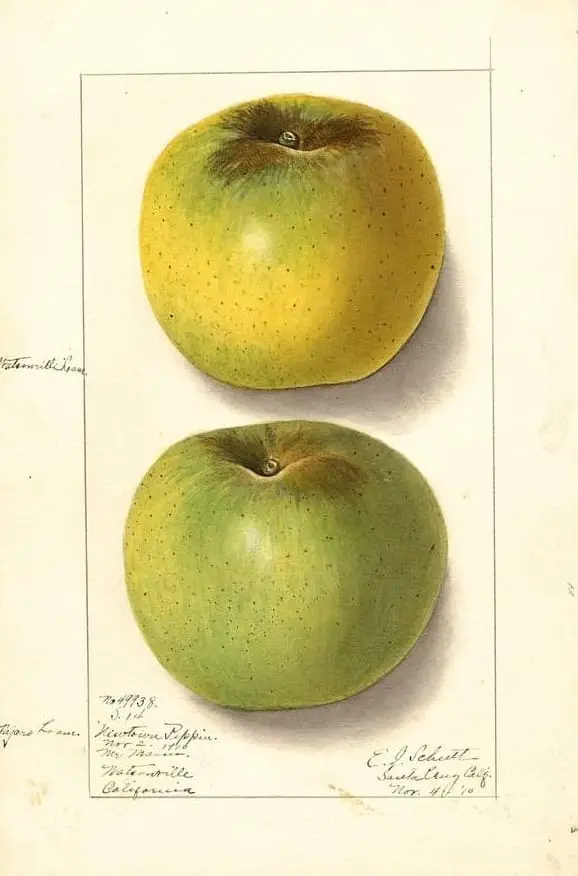
Newtown Pippin
From Newtown, Long Island: the first American apple to draw notice in Europe, sent to Franklin in London in 1759
-
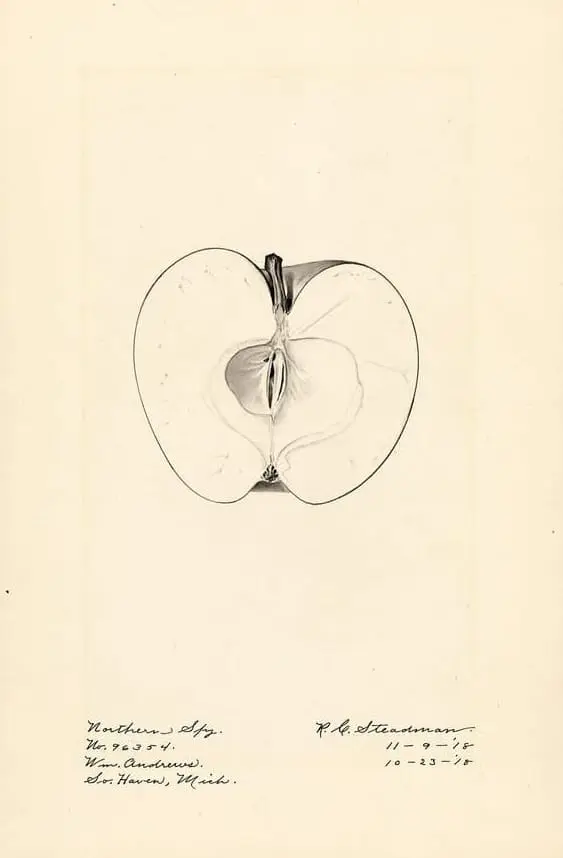
Northern Spy
Raised from Connecticut seed at East Bloomfield, New York, about 1800; third among US apples in 1909–13
-
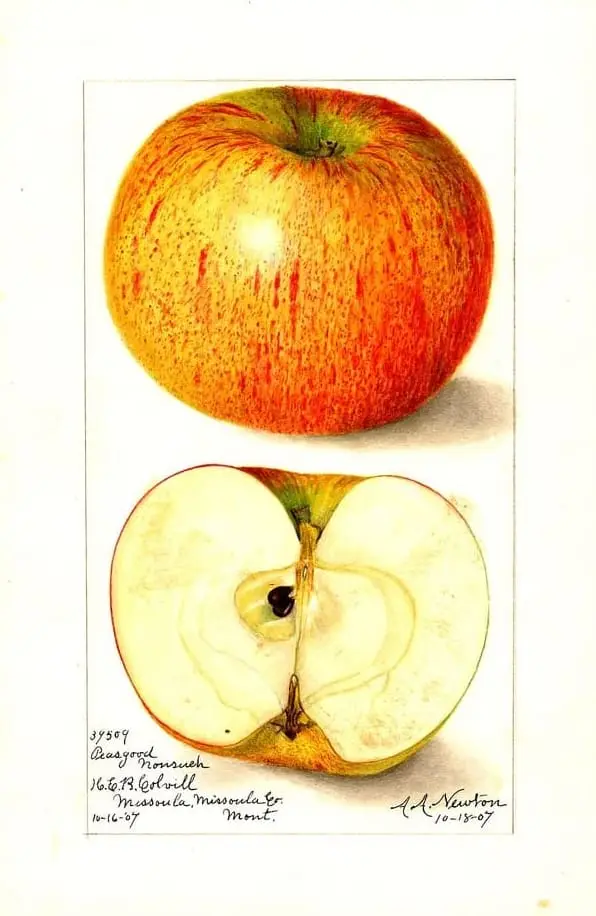
Peasgood's Nonsuch
Grown from a pip sown at Stamford about 1858; DNA shows its parents are Alexander and Golden Noble, not Catshead
-
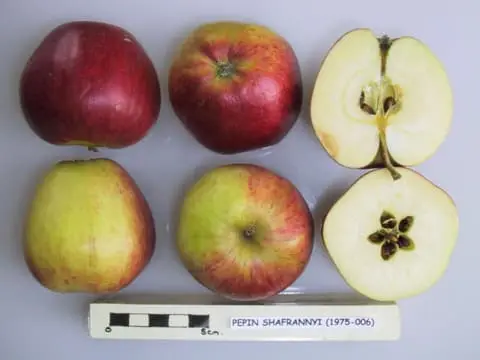
Pepin Shafranny
Michurin's winter apple of 1907–15; SNP data name Scarlet Pearmain and Glogerovka as its parents, not those recorded
-
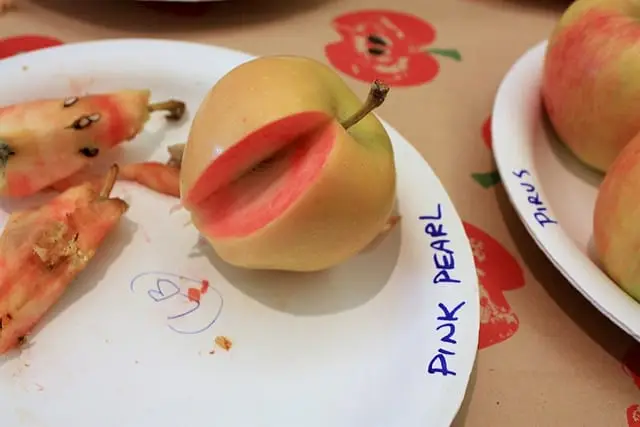
Pink Pearl
Albert Etter's best-known red-fleshed apple, a Surprise seedling from Ettersburg, California, patented in 1947
-
Pinova
Crossed at Dresden-Pillnitz in 1965 from Clivia and Golden Delicious; released in 1986, it crops early and heavily
-
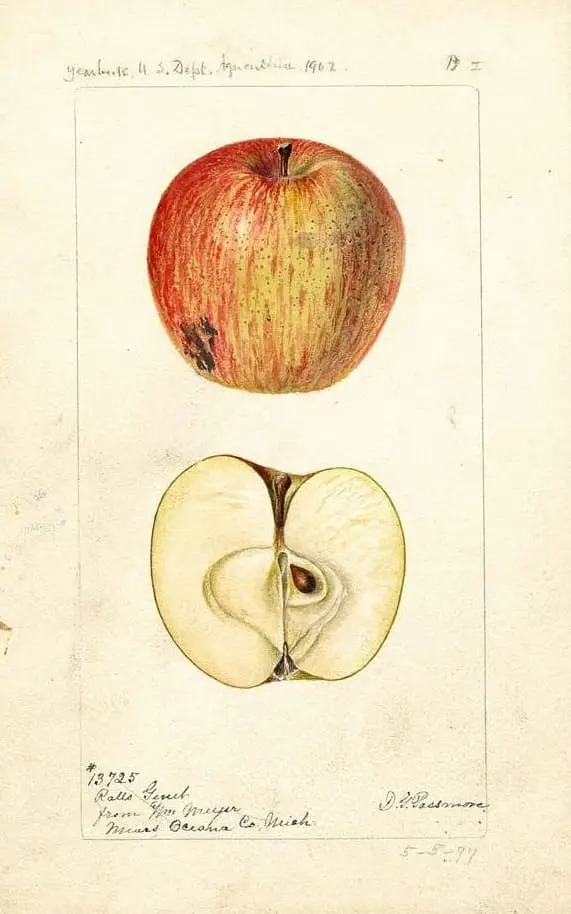
Ralls Janet
A late-blooming Virginia apple known by about 1800; in Japan, as Kokko, it became a parent of Fuji
-
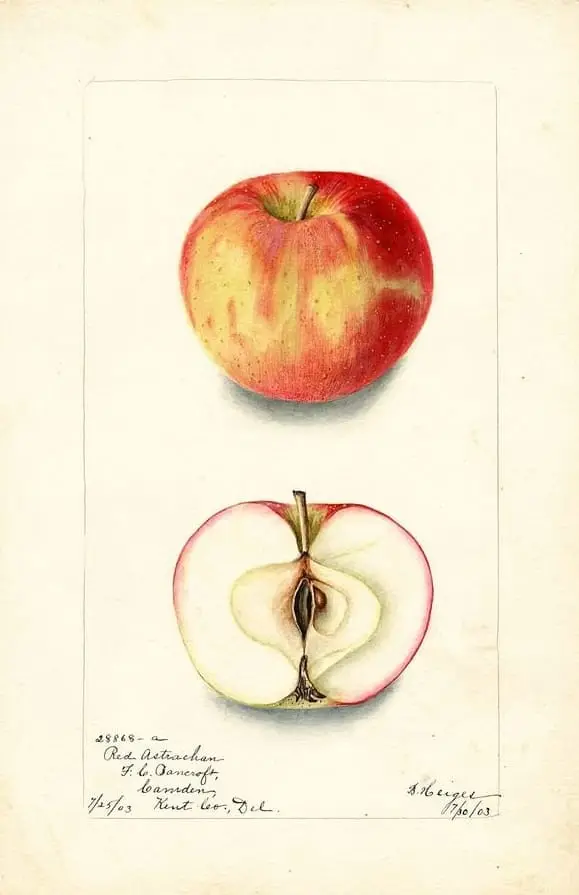
Red Astrachan
A bloom-dusted summer apple, in England from Swedish stock by 1816; a 2025 DNA study names both its parents
-
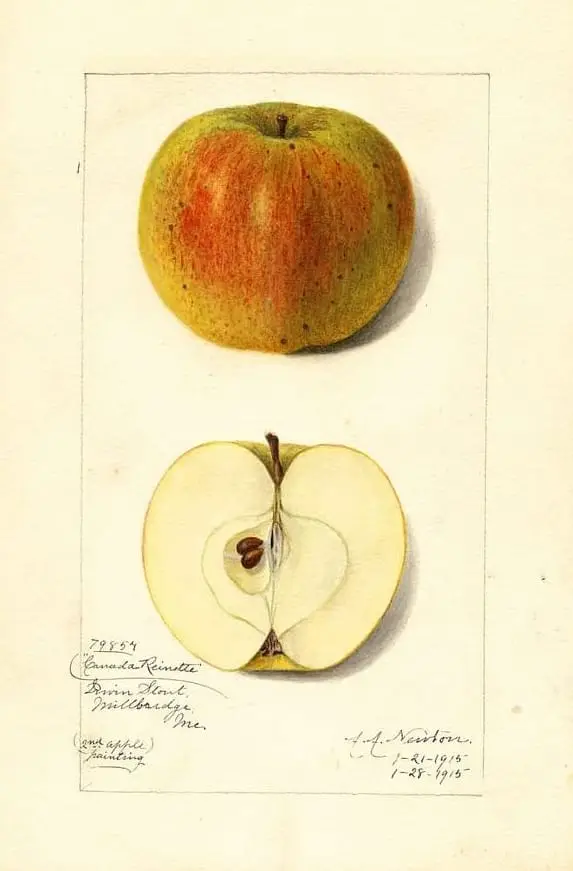
Reinette du Canada
Probably French despite its name: first announced in Paris in 1771 as the monstrous reinette of Canada
-
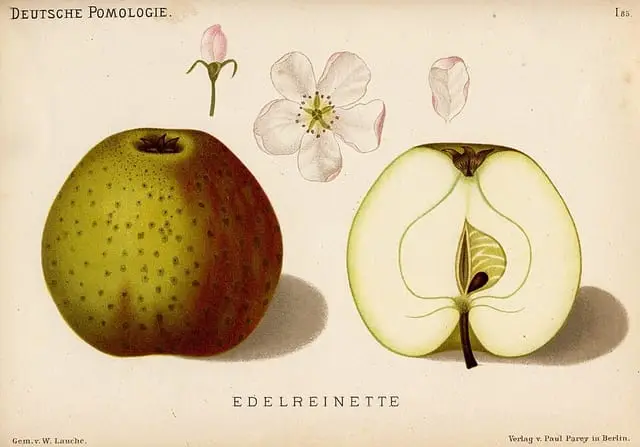
Reinette Franche
Named in 1540 and probably Norman; in a 2020 DNA study of over 1,400 apples it had the most parent–offspring links
-
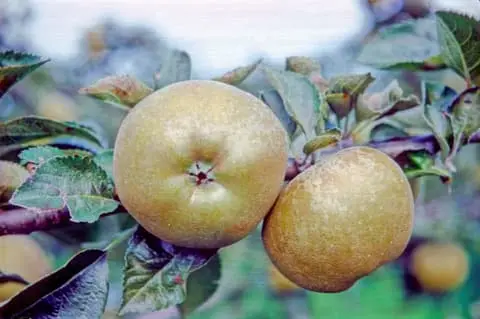
Reinette Grise du Canada
The russeted form of Reinette du Canada, identical to it at 16 DNA markers; recorded in Paris in 1805
-
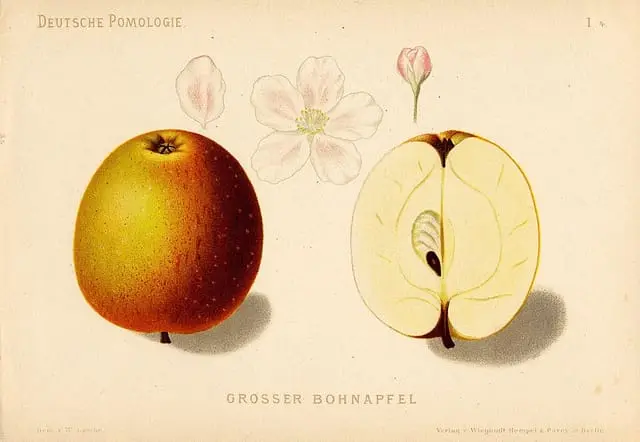
Rheinischer Bohnapfel
A triploid Rhineland apple described by Diel in 1797; hard and sour when picked, it was said to keep over a year
-
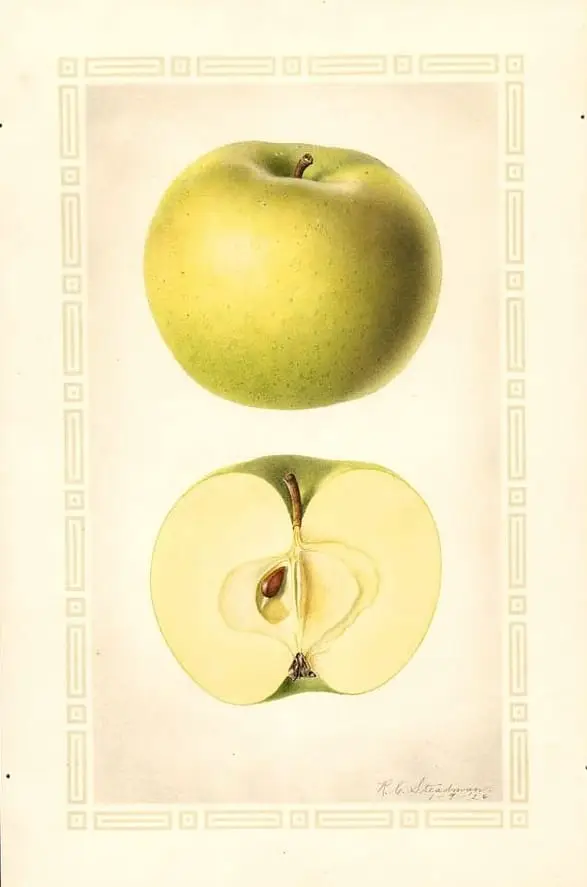
Rhode Island Greening
Probably from Green's End near Newport; second only to the Baldwin in New York in 1905, and Rhode Island's state fruit
-
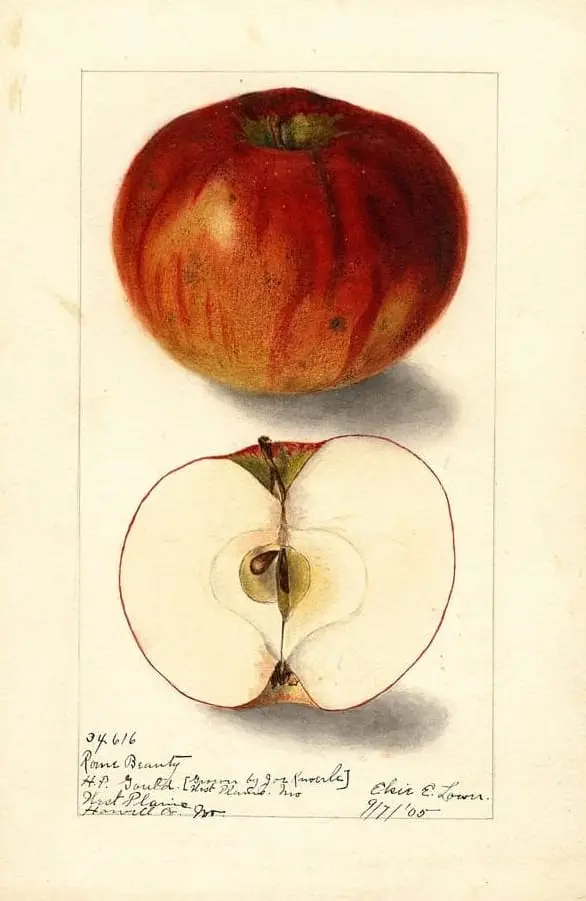
Rome Beauty
An Ohio apple that blooms late and keeps until spring; in 2020–24, 94 per cent of the US crop went to processing
-
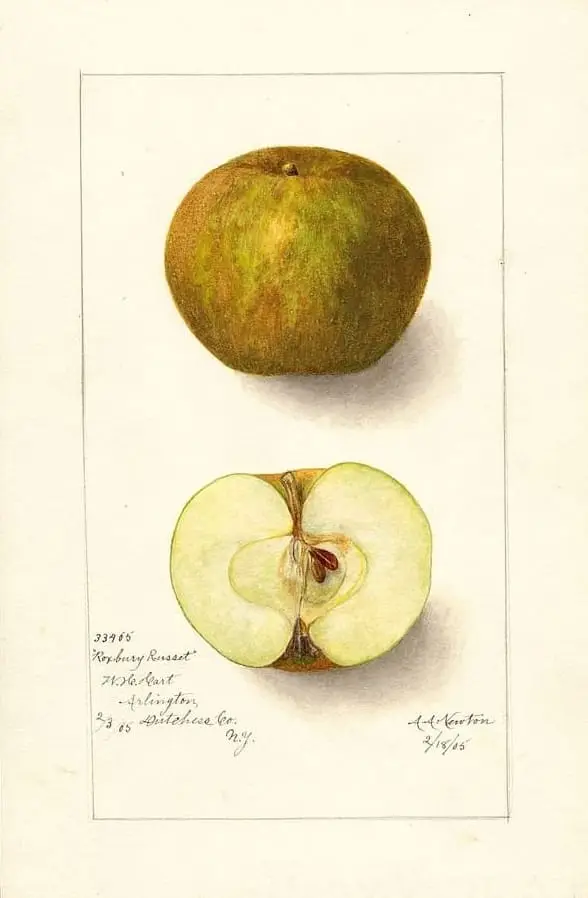
Roxbury Russet
Often called the oldest American apple; SNP data show the old French Reinette Franche to be one of its parents
-
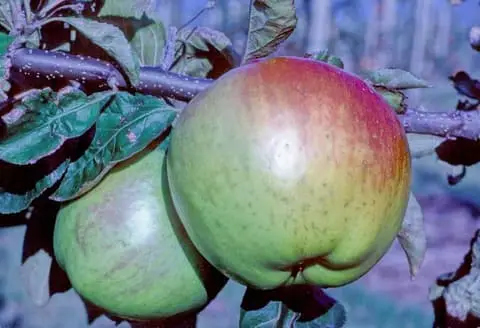
Signe Tillisch
Raised in Denmark in 1866 and named after the grower's daughter; DNA shows it a child of Alexander and London Pippin
-
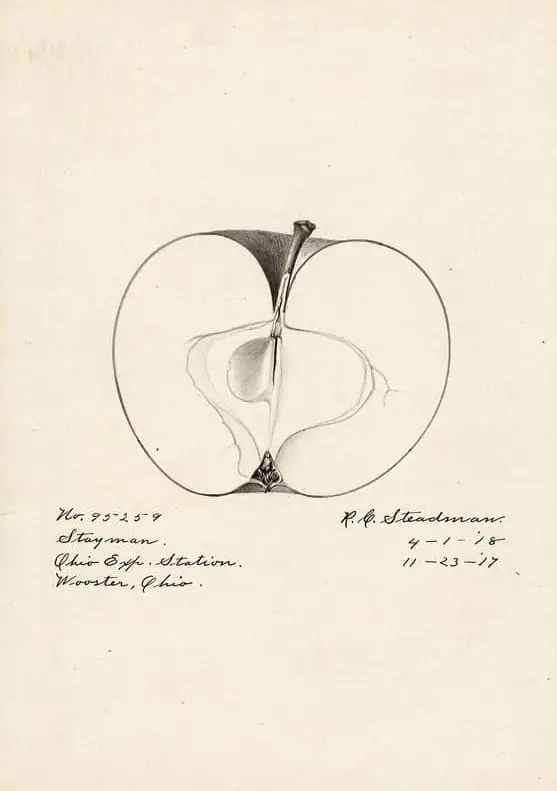
Stayman
A Winesap seedling raised at Leavenworth, Kansas, in 1866; the fifth apple of American orchards in 1928
-
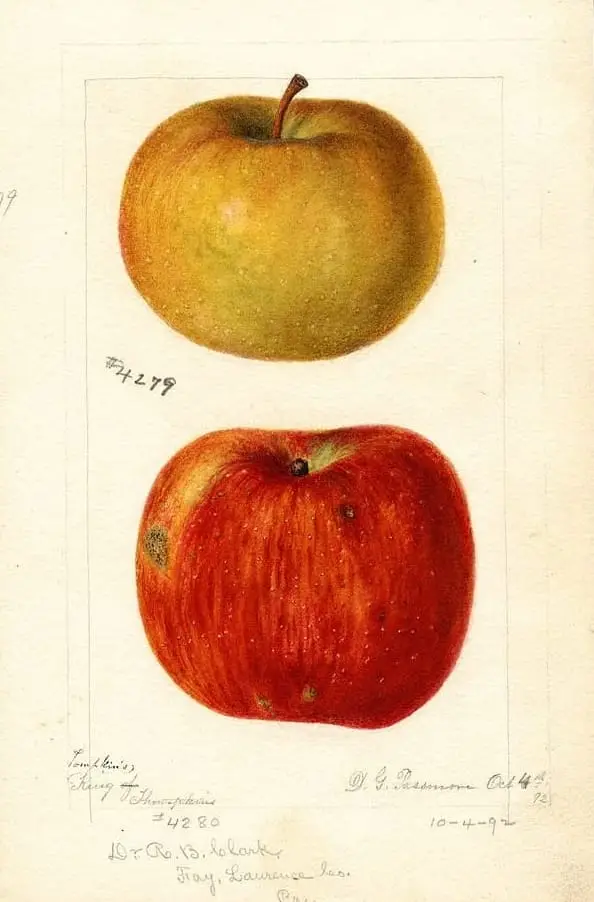
Tompkins King
Brought from New Jersey to Tompkins County, New York, in 1804; a triploid with Esopus Spitzenburg as one parent
-
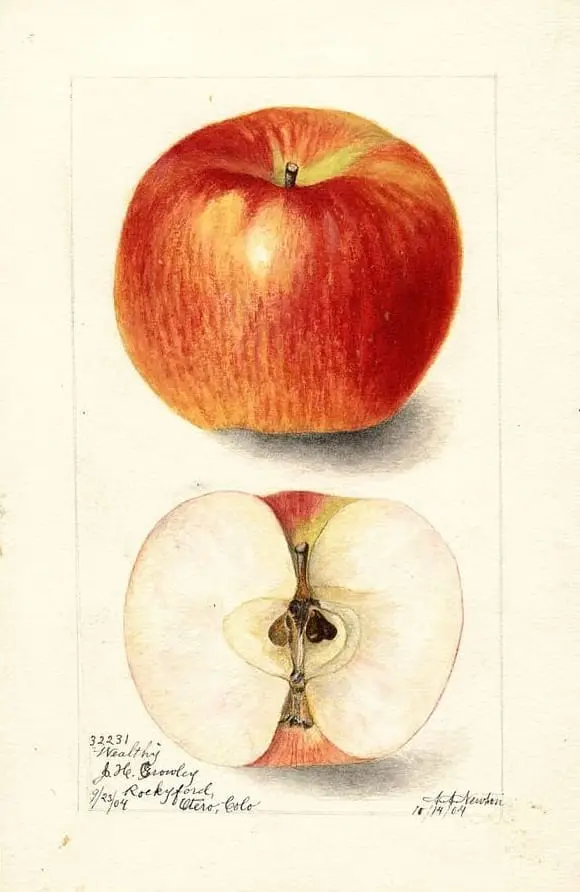
Wealthy
Peter Gideon's hardy Minnesota seedling of the 1860s; DNA names Jonathan and Duchess of Oldenburg as its parents
-
Weirouge
An acid, astringent red-fleshed apple for processing; Germany's fruit genebank files it as Michurin's Roter Mond
-
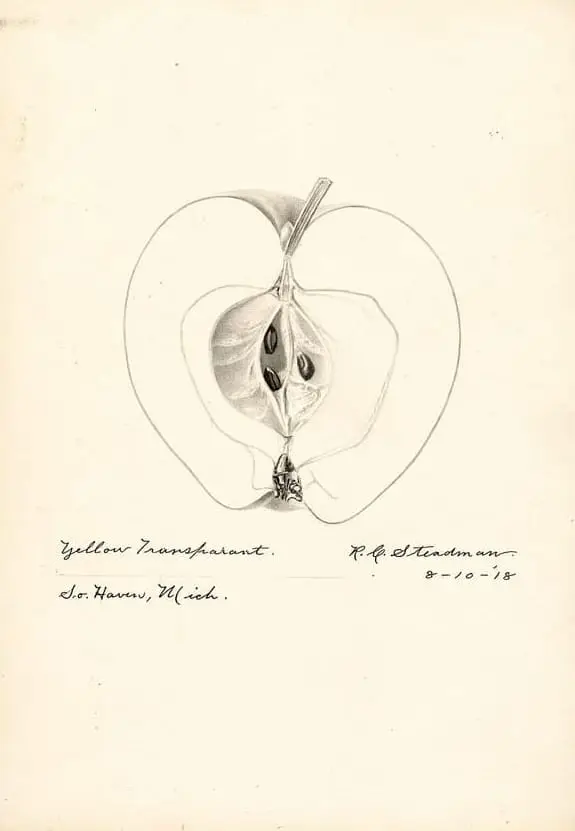
White Transparent
A thin-skinned summer apple long common in Russia's Baltic provinces; SNP data name Aspa and Saint Germain as parents
-
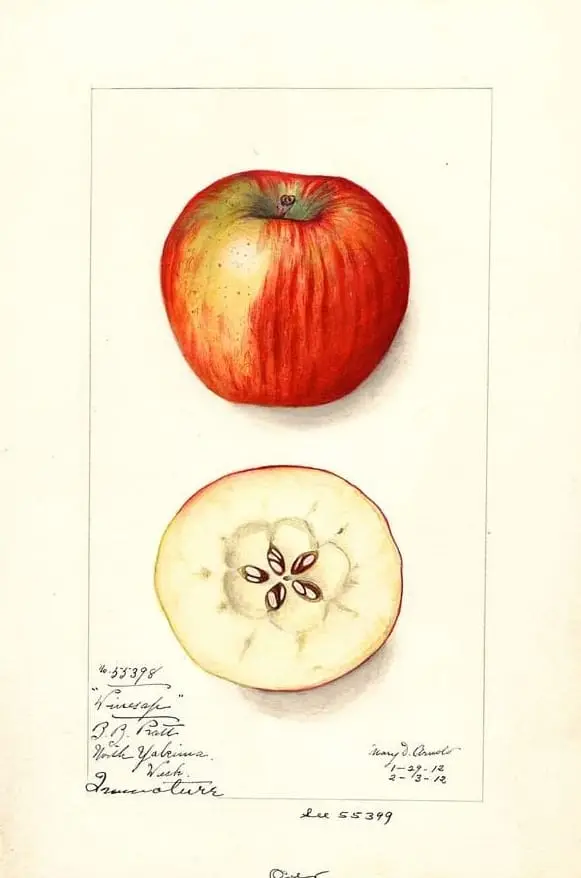
Winesap
Of unknown origin, it was "the most favored cider fruit in West Jersey" in 1817 and a parent of Delicious
-
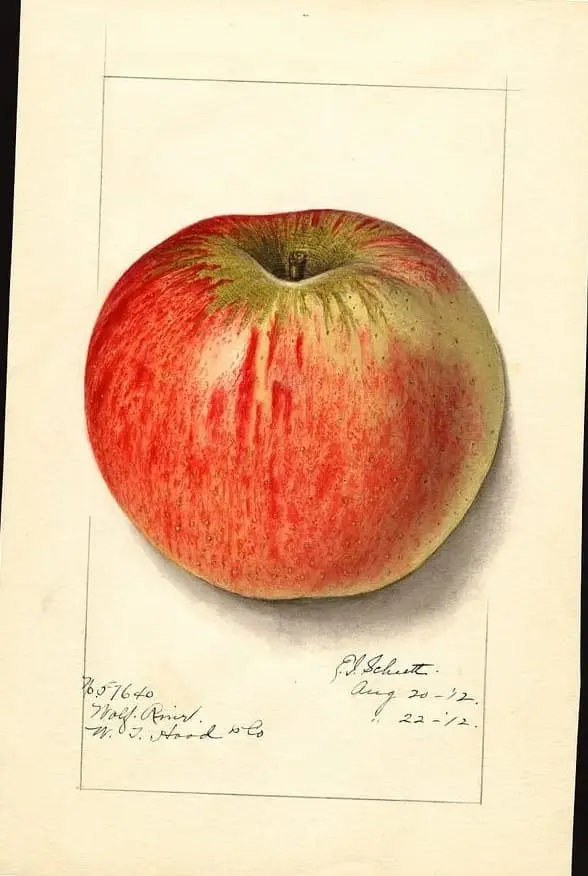
Wolf River
A large, very hardy apple raised by W. A. Springer near the Wolf River at Fremont, Wisconsin; first recorded in 1875
-
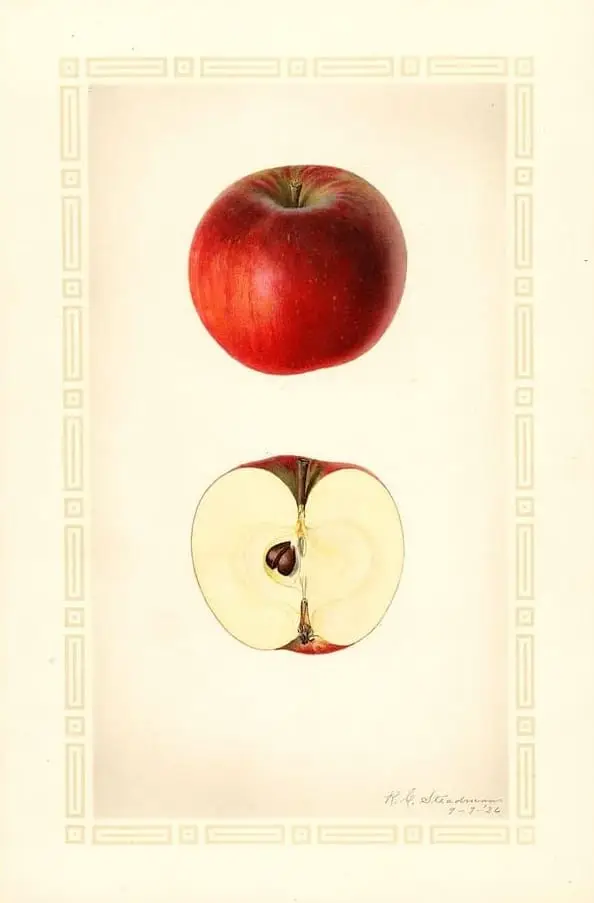
Worcester Pearmain
Bright red and early, from Worcester in the 1870s; a parent of Discovery, Merton Worcester and many more
-
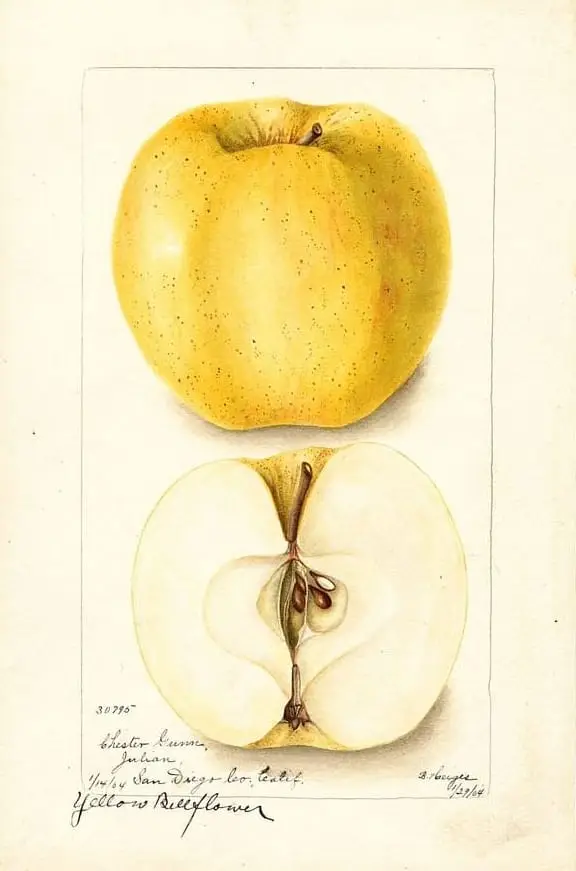
Yellow Bellflower
In 1817 the most popular apple in the Philadelphia market, it came from near Crosswicks, New Jersey
-
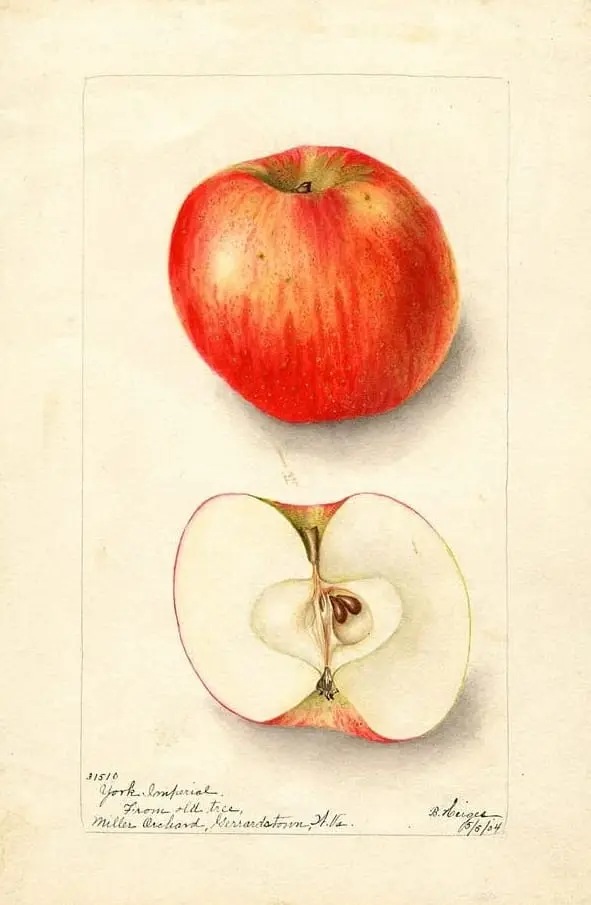
York Imperial
A lopsided Pennsylvania winter apple, named after Charles Downing called it the "imperial of keepers"
And 346 more in the catalogue, A to Z
- A.D.W. Atkins about 1971
- Aldenham Blenheim before 1929
- Alderman before 1923
- Alfa 68 1937
- Alfriston late 1700s
- Alnarps Favorit 1945
- Altlander Fettapfel by 1958
- Altlander Pfannkuchenapfel 1840
- American Grindling by 1872
- Annie Elizabeth about 1857
- Antonovka-kamenichka by 1889
- Arthur Turner by 1912
- Arthur W. Barnes 1902
- Autumn Harvest by 1934
- Ballyfatten by 1802
- Banffy Pal by 1948
- Baron Ward 1850
- Bassard by 1948
- Baumann's Reinette by 1811
- Baxter's Pearmain by 1821
- Beauty of Kent by about 1820
- Beauty of Stoke by 1889
- Bedfordshire Foundling about 1800
- Bedwyn Beauty about 1890
- Belle de Longue by about 1884
- Belle de Pontoise 1869
- Belle-Fille Normande late 1700s
- Belle-Fleur de France by 1954
- Betty Geeson by 1854
- Bietigheimer by about 1870
- Biggs's Nonsuch
- Bloody Butcher by 1951
- Bonnet de Comte by 1947
- Bovarde by 1934
- Brettacher Samling 1900
- Bridgewater Pippin (of Cheal) by 1665
- Broad-Eyed Pippin (of Bultitude) by the late 1600s
- Brown's Seedling before 1874
- Budimka by 1936
- Bukhovitsa by 1957
- Bushey Grove 1897
- Byeloborodovka by 1842
- Byfleet Seedling 1915
- Byford Wonder by 1893
- Calville d'Aout 1925
- Calville d'Oullins about 1850
- Calville d'Ulzen by 1947
- Calville de Saint-Sauveur about 1839
- Calville des Femmes 1850
- Calville Duquesne by 1895
- Calville Rouge d'Hiver by about 1600
- Calville Rouge du Mont d'Or by 1934
- Cambusnethan Pippin about 1750
- Camelot by 1934
- Carlisle Codlin (of Bultitude) before 1830
- Caroline Hopkins by 1956
- Castle Major by 1875
- Catshead 1600s
- Caudal Market by 1953
- Cellini by about 1828
- Charles Eyre by 1911
- Charles Ross by 1890
- Chelmsford Wonder about 1870
- Chusenrainer about 1852
- Cinq Cotes by 1947
- Clark's Seedling by 1936
- Clearheart by 1951
- Cockpit by 1831
- Coeur de Boeuf 1200s
- Collins about 1865
- Collogget Pippin by 1920
- Colonel Yate 1905
- Contessa by 1958
- Cooper's Seedling by 1946
- Corry's Wonder 1917
- Cottenham Seedling by 1924
- Cox's Pomona about 1825
- Craggy's Seedling by 1934
- Crawley Beauty about 1870
- Crimson Bramley by 1913
- Crimson Newton 1921
- Cure by 1947
- Curl Tail by 1872
- de Bonde by 1947
- de Jaune about 1700
- de Vendue l'Eveque by 1948
- Desse de Buff by 1900
- Devonshire Buckland by 1803
- Dewdney's Seedling about 1850
- Dewdulip Seedling by 1946
- Diamond Jubilee about 1889
- Dick's Favourite late 1800s
- Dockney by 1949
- Doctor Clifford about 1898
- Doctor Hogg by 1878
- Dodd
- Domino by 1883
- Domnicele by 1934
- Double Red Rome Beauty about 1920
- Dulmener Rosenapfel about 1870
- Dumelow's Seedling by 1800
- Dutch Codlin by about 1783
- Dutch Mignonne by about 1771
- Eady's Magnum about 1908
- Earl Cowper by 1949
- Early Julyan before 1800
- East Lothian Pippin by 1883
- Eccleston Pippin by 1883
- Ecklinville by 1800
- Edmund Jupp by 1862
- Edward VII by 1902
- Emneth Early by 1899
- Encore by 1906
- Endsleigh Beauty by 1906
- Essching by 1948
- Evagil by 1863
- Excelsior by 1921
- Eynsham Challenger 1935
- Eynsham Dumpling by 1960
- Fall Pippin by 1806
- Fiessers Erstling before 1904
- Florence Bennett by 1971
- Forester by 1883
- Foster's Seedling by about 1893
- French Crab by the end of the 1700s
- Frogmore Prolific about 1865
- Galantine by 1934
- Galloway Pippin by 1871
- Gascoyne's Scarlet by 1871
- Geneva Ontario
- Gennet Moyle (of Taylor) by the 17th century
- George Neal 1904
- Glasbury by 1872
- Glengyle Red 1914
- Glockenapfel by 1948
- Gold Medal by about 1882
- Golden Spire about 1850
- Gooseberry by 1831
- Grand'mere by 1915
- Grange's Pearmain before 1829
- Green Roland by 1945
- Greenup's Pippin by the late 1700s
- Gros-Hopital long before 1864
- Gros-Locard before 1849
- Guldborg by the 1870s
- Hambledon Deux Ans about 1750
- Hambling's Seedling by 1893
- Hannan Seedling 1928
- Hanwell Souring by 1820
- Harvey by 1629
- Hawthornden by 1780
- Hector MacDonald by 1904
- Herefordshire Beefing by the late 1700s
- Herring's Pippin by 1908
- Histon Favourite by 1883
- Hoary Morning by 1819
- Hocking's Green by 1984
- Hodge's Seedling by 1876
- Holland Pippin by 1729
- Hollandbury by 1799
- Hormead Pearmain by 1826
- Horneburger Pfannkuchen by 1951
- Hounslow Wonder by 1910
- Howgate Wonder 1915-16
- Hunter's Majestic before 1914
- I.B. Reid by 1851
- Iron Pin by 1884
- Isaac Newton's Tree 1660
- Jacques Lebel about 1825
- Jacquet by 1947
- James Grieve Lired
- Jeanne Hardy 1878
- John Divers 1905
- John Huggett 1940
- Joseph Musch by 1872
- Jubile d'Argovie by 1934
- Karinable by 1902
- Kemp by 1837
- Kentish Fillbasket before 1820
- Khoroshavka alaya by 1892
- Kim 1946
- King Byerd by 1954
- Lady Henniker between 1840 and 1850
- Lady Isabel 1939
- Lady of the Wemyss by 1831
- Lady's Delight by 1851
- Lamb's Seedling 1866-1867
- Lass o' Gowrie by 1883
- Lewis's Incomparable by the end of the 1700s
- Lindel 1939
- Loddington by about 1820
- Lodi 1911
- London Pippin by 1580
- Longstart by 1851
- Lord Clyde by 1866
- Lord Derby by 1862
- Lord Derby Spur Type
- Lord Stradbroke about 1900
- Lord Suffield by about 1836
- Maggie Sinclair by 1949
- Maid of Kent by 1942
- Maltster by 1830
- Mandan by 1965
- Manks Codlin by 1815
- Marie Doudou by 1948
- Marston Scarlet Wonder about 1909
- Mary Barnett about 1920
- Mary Green by 1948
- Mead's Broading by 1884
- Measday's Favourite by 1939
- Melrose (1) by 1831
- Mere de Baia by 1934
- Meri Cretesti by 1951
- Meri de Saminta by 1948
- Mers Bryan by 1947
- Minshull Crab by 1777
- Missing Link by 1897
- Mitchelson's Seedling by 1851
- Monarch 1888
- Monroe 1910
- Morley's Seedling by 1928
- Mrs. Lakeman's Seedling about 1900
- Munster Tulip by 1950
- Murfitt's Seedling by about 1883
- Nancy Jackson by 1875
- Nemes Szercsika alma by 1883
- Norfolk Beauty by 1901
- Norfolk Beefing by 1807
- Northern Greening by 1826
- Notarisappel 1890
- Nured Rome 1927
- Ohio Nonpareil by 1848
- Ohm Paul 1890s
- Ontario about 1820
- Orange Goff by 1842
- Orbai Alma by 1882
- Oxford Yeoman 1922
- Payette 1936
- Perrine Yellow Transparent about 1930
- Peter Lock early 1800s
- Pladei by 1939
- Polly by 1954
- Pomme a Cotes by 1948
- Pomme de Feu (Indre) by 1948
- Pomme de Glace (Cher) by 1948
- Ponsford by 1934
- Ponyik alma by 1872
- Poor Man's Profit by 1824
- Potts' Seedling about 1849
- Present van Engeland by 1864
- Prince George
- Pumpkin Sweet by 1834
- Queen 1858
- Queen Alexandra by 1902
- Queen Anne by 1842
- Queen Caroline about 1820
- Racine by 1947
- Racine Blanche by 1947
- Rambour Papeleu by about 1853
- Red Musk by 1951
- Red Newton Wonder by 1958
- Red Rome by 1950
- Red Sauce 1910
- Red Victoria about 1884
- Redcoat Grieve 1916
- Regent by 1963
- Reinette Clochard mid 1800s
- Reinette de Champagne about 1770
- Reinette de Pluvigne by 1948
- Reverend W. Wilks by 1904
- Rheinischer Krummstiel by 1821
- Ringer by 1864
- Rival by 1900
- Robert Blatchford by 1914
- Rosmarina bianca by the early 1800s
- Roundway Magnum Bonum by 1864
- Royal Jubilee by 1888
- Sabaros by 1895
- Sandew by 1950
- Sandringham by 1883
- Scarlet Staymared 1930
- Schoolmaster by about 1880
- Scotch Bridget by 1851
- Seaton House by 1860
- Sergeant Peggy 1922
- Serveau by 1948
- Severn Bank by 1884
- Sheep's Nose (3) by 1951
- Shenandoah 1942
- Shoesmith by 1930
- Siddington Russet 1923
- Skovfoged by the early 1800s
- Sleeping Beauty by 1851
- Small's Admirable about 1850
- Smart's Prince Arthur by 1883
- Sovari Comun by 1876
- Sovari Nobil (of Romania) before 1880
- Sowman's Seedling 1914
- Spiza by 1916
- Stanway Seedling by 1899
- Stirling Castle by 1831
- Stobo Castle by about 1900
- Striped Beefing 1794
- Strippy by 1949
- Summer Broaden by 1945
- Teint Frais by the late 1700s
- Thomas Rivers by 1892
- Thurgauer Weinapfel by the 1860s
- Tiffen by 1883
- Tillington Court by 1934
- Titovka by 1876
- Tobiasler by 1805
- Tom Putt late 1700s
- Tordai alma by 1887
- Tordai Piros Kalvil by 1881
- Tower of Glamis (Scott) before 1800
- Transparente de Bois-Guillaume about 1895
- Transparente de Croncels by 1869
- Trelage by 1947
- Tukor Alma by the late 1700s
- Twenty Ounce by about 1844
- Uland by 1922
- Undine by 1977
- Upton Pyne by 1910
- Venus Pippin about 1800
- Verdona by 1958
- Victory (Carpenter) by 1923
- Warner's King by the late 1700s
- Warren's Seedling by 1934
- Washington Strawberry by 1849
- Wayne by 1951
- Weisser Winter Taffetapfel by 1800
- Welschisner by 1889
- Wilhelm Ley
- Willie Sharp by 1905
- Winter Majetin by 1820
- Winter Peach by 1853
- Winter Pearmain
- Winter Stubbard by 1883
- Withington Fillbasket by 1883
- Woodford by about 1900
- Woolbrook Russet 1903
- Wrixparent 1920
- Yamborka by 1957
- Yorkshire Greening by 1803
- Zigeunerin by 1957
Sources
- Apples: choosing cultivars, Royal Horticultural Society. Supports: culinary (cooking) and dessert (eating) apples; Charles Ross and Blenheim Orange listed as dual-purpose cultivars, which "are seldom excellent for either use"; many culinary apples "become sweeter on storage, lending themselves to dessert use from late winter".
- United Kingdom, Fresh Deciduous Fruit, Annual 2007 (GAIN report UK7038), Jennifer Wilson, US Department of Agriculture, Foreign Agricultural Service, US Embassy London, 14 December 2007. Supports: "The UK is the only country that grows apples especially for cooking"; "Almost half of UK apple production is dedicated to the culinary variety – Bramley"; the forecast for 2007 (from Eurofel): Bramley 95,000 of 202,000 tonnes of UK apples.
- The Fruit Manual, fifth edition, pp. 257–259: The best dessert, kitchen and cider apples, Robert Hogg, Journal of Horticulture Office, London; Internet Archive, 1884. Supports: the list of "The best kitchen apples" (p. 258), between the lists of the best dessert apples (p. 257) and the best cider apples (p. 259).
- The Fruit Manual, fifth edition, pp. 72–73: English Codlin, Robert Hogg, Journal of Horticulture Office, London; Internet Archive, 1884. Supports: the English Codlin "A fine old English cooking apple" and "one of our oldest English apples"; "Formerly it was an ingredient in one of the national dishes of English cookery in the form of 'Codlins and cream'"; "The name is derived from coddle, to parboil".
- A Handbook of Hardy Fruits, vol. I, pp. 31–32: Bramleys Seedling, E. A. Bunyard, John Murray; Internet Archive, 1920. Supports: Bramley's Seedling "the most popular and profitable of cooking apples".
- Cider Apple Compositional Data, Andrew Lea, The Wittenham Hill Cider Portal (cider.org.uk). Supports: composite juice analyses from the Long Ashton Research Station, near Bristol: malic acid 0.85% in Bramley's Seedling (culinary), 0.60% in Cox's Orange Pippin (dessert).
- Armagh Bramley Apple: product specification (protected geographical indication), Department for Environment, Food and Rural Affairs; GOV.UK. Supports: the Bramley apple "High in malic acid and low in sugar it retains its strong, tangy flavour throughout the cooking process".
- A Handbook of Hardy Fruits, vol. I, p. 66: Grenadier, E. A. Bunyard, John Murray; Internet Archive, 1920. Supports: Grenadier, a culinary apple: "Cooks to a froth".
- A Handbook of Hardy Fruits, vol. I, p. 82: Lord Derby, E. A. Bunyard, John Murray; Internet Archive, 1920. Supports: Lord Derby, a culinary apple: "Cooks a deep golden red".
- Cultivar-Dependent Thermal Flesh Breakdown in Apple Associated with Cell Wall Polysaccharide Modification, with Pronounced Effects in Cooking Apple 'Bramley's Seedling', Mitsuho Nakagomi and others, Foods 15(8): 1375; PubMed Central, 15 April 2026. Supports: Bramley's Seedling "widely recognized for its rapid collapse into a puree-like texture during heating", such softening "uncommon among apple cultivars"; on heating, marked pectin solubilisation and depolymerisation and a loss of hemicellulose and cellulose in Bramley's Seedling, while Fuji and Toki kept their cell-wall structure and tissue integrity; the firmness of the raw fruit "did not predict the extent of softening after heating"; Calville Blanc d'Hiver retains its structural form during heating.
- A Handbook of Hardy Fruits, vol. I, p. 29: Blenheim Orange, E. A. Bunyard, John Murray; Internet Archive, 1920. Supports: Blenheim Orange, "Culinary or dessert": "One of the best all round apples grown, cooking excellently, and of fine quality and texture for dessert".