Reinette Grise du Canada
The russeted form of Reinette du Canada, identical to it at 16 DNA markers; recorded in Paris in 1805
History
Leroy credited Étienne Calvel with the first French record of it: in 1805 Calvel noted a “Reinette Canada gris” in the garden of the Muséum d’histoire naturelle in Paris2. It had not yet fruited, and he thought it close to the Reinette Grise2. In 1809 Louis Bosc, professor of cultivation at the Jardin des Plantes, called it a sub-variety of the Reinette de Canada grown in the Muséum’s garden2. From these two texts André Leroy dated its arrival in France to 1801–1803, but neither says how the Muséum obtained it2.
The Paris nurseryman Louis Noisette, sometimes credited with importing it, was in Leroy’s view only one of its chief propagators2. He knew it by 1825, and in 1839 described it as a grey fruit, a little smaller than Reinette de Canada, with firmer, more acid flesh, and longer keeping2. Leroy called its origin a mystery, noting that American pomologists did not count it among their native apples2.
The National Fruit Collection describes it as a russeted sport of Reinette du Canada, triploid, and known since the early 1800s1, and Downing had written that it “may prove identical” with Canada Reinette4. In 2022 André and colleagues found the two identical at all 16 SSR markers they tested3. The difference lies in the skin: the grey form showed russet by 57 days after full bloom, spreading as the fruit grew, while the white form kept a waxy skin, with spots and patches of russet only later3.
The fruit
The fruit is large, 77.5 mm wide and 60 mm high in the National Fruit Collection’s record, broadly rounded-conical and moderately ribbed1; Leroy found it irregular, more or less five-sided, with one side larger than the other2. The rough skin is greenish yellow, almost wholly covered with grey-brown russet, dotted fawn and sometimes reddish in the sun1,2. The flesh is firm and yellowish1. Leroy found it fine, fairly compact and somewhat crisp, its juice abundant, sweet, sharp and perfumed2; the National Fruit Collection calls it rather coarse and somewhat dry, with a sweet, moderate flavour1.
At Brogdale it begins to flower about 6 May and is picked in early October1. Leroy gave its season as November to April2.
Growing
Leroy found the tree very vigorous, with long, spreading shoots, and very fruitful2. As a standard it had to be top-grafted, or its trunk would hardly grow straight, and he thought dwarf trees on paradise stock suited it better2. It is triploid1.
Uses
It is used for dessert and for cooking1. In France it is one of the varieties of the protected geographical indication for Savoie apples and pears, Pommes et Poires de Savoie, whose rules require at least three-quarters of its fruit to be russeted, with at least 12 °Brix and 6 grams of malic acid per litre of juice7.
Where the sources disagree
- The English name. Hogg gave Reinette de Canada Grise as a synonym of Royal Russet, an old English apple mentioned by Lawson in 15975. Bunyard called that name for Royal Russet “an error”6, and Leroy held Royal Russet and Reinette Grise du Canada to be different apples, the English name Leather Coat belonging to Royal Russet alone2.
- One apple or two. Leroy gave its tree a description of its own, and Bosc called it a sub-variety2; the National Fruit Collection calls it a sport1, and DNA markers do not distinguish it from Reinette du Canada3.
- Texture. Fine, somewhat crisp and juicy to Leroy2; rather coarse and somewhat dry in the National Fruit Collection’s description, although the characterisation on its record calls the flesh fine1.
Family tree
Parents, grandparents and great-grandparents, as the entries in the atlas record them.
- Reinette Grise du Canada France, by 1805
- Sport of Reinette du Canada France, by 1771
- Parent Reinette Franche France, by 1540
- Parent Reinette de Saintonge
- Parent Reinette Franche France, by 1540
- Sport of Reinette du Canada France, by 1771
Sources
- Reinette Grise du Canada (accession 1956-065), National Fruit Collection, Brogdale, Kent (Defra). Supports: "A russetted sport of Reinette du Canada. Triploid. Origin unknown but known since the early 1800s"; "firm, rather coarse-textured, somewhat dry flesh with a sweet and moderate flavour"; culinary and dessert; synonyms including Canada Gris, Grise du Canada, Reinette de Canada Grise, Passe-Pomme du Canada, Monstrueuse du Canada and Graue Canada Reinette; set b: large, broad globose-conical, 60.00 mm high and 77.50 mm wide, ribbing medium, green-yellow ground with a brown over-colour, russet high to very high, flesh firm, fine and yellowish; 10% flowering on 6 May and picking in early October at Brogdale.
- Dictionnaire de pomologie, vol. IV, pp. 689–691: Reinette Grise du Canada (in French), André Leroy, Paris and Angers, Internet Archive, 1873. Supports: entry no. 409, with the synonyms Monstrueuse du Canada (Paris nurserymen about 1800, after Louis du Bois, 1804), Canada gris (Calvel, 1805), Grise du Canada and Passe-Pomme du Canada (Lindley, 1831), and Leather-Coat given in error; very strong wood with long, spreading shoots; fertility abundant; as a standard to be top-grafted, or the trunk will hardly grow straight, dwarf trees on paradise suiting it better; fruit large, irregularly globular or rounded-conical, more or less five-sided, one side larger; skin rough, greenish yellow, wholly washed with grey-brown, dotted fawn, sometimes reddish in the sun; flesh yellowish or greenish white, fine, fairly compact and somewhat crisp; juice abundant, sweet, "délicieusement acidulée et parfumée"; ripe November to April; first quality; Calvel in 1805 the first in France to record it, as "Reinette Canada gris", at the Muséum d'histoire naturelle in Paris, not yet fruiting and close in character to the Reinette grise; Bosc, professor of cultivation at the Jardin des Plantes, calling it in 1809 a sub-variety of Reinette de Canada grown in the Muséum's garden; its arrival in France dated from these texts to 1801–1803, with nothing on how the Muséum obtained it; the Paris nurseryman Louis Noisette not its importer but one of its chief propagators, knowing it by 1825 and in 1839 calling it a grey fruit, a little smaller than Reinette de Canada, with firmer, more acid flesh, and keeping longer; its origin "un mystère", the Americans not counting it among their native apples; Leather-Coat a name belonging only to Royal Russet, which is not the same apple.
- Identification of novel candidate genes involved in apple cuticle integrity and russeting-associated triterpene synthesis using metabolomic, proteomic, and transcriptomic data, C. M. André and others, Plants 11(3): 289, 2022-01-21. Supports: 'Reinette grise du Canada' (Canada Gris) and 'Reinette blanche du Canada' (Canada Blanc) two closely related varieties, the first fully russeted, the second non-russeted or slightly russeted; "CG and CB exhibited a perfect identity in alleles" at the 16 SSR markers used; russet on Canada Gris by 57 days after full bloom, increasing thereafter, while Canada Blanc kept a waxy skin, with russet spots and patches only later; fruit from the orchards of the Walloon Agricultural Research Centre at Gembloux, Belgium, in 2013.
- The Fruits and Fruit Trees of America, p. 116: Canada Reinette, A. J. Downing, revised by Charles Downing, John Wiley & Sons, Internet Archive, 1900. Supports: "The Canada Reinette Grise is very much like the above, and may prove identical".
- The Fruit Manual, 5th ed., p. 201: Royal Russet, Robert Hogg, Journal of Horticulture Office, Internet Archive, 1884. Supports: Royal Russet, with the synonyms Reinette de Canada Grise, Reinette de Canada Platte and Leather Coat; "a favourite old English variety", mentioned by Lawson in 1597.
- A Handbook of Hardy Fruits, vol. I, p. 115: Royal Russet, E. A. Bunyard, John Murray, Internet Archive, 1920. Supports: Royal Russet, with the names Leather Coat "(of some)" and "Reinette de Canada Grise (an error)".
- Specification of the protected geographical indication Pommes et Poires de Savoie (in French), Ministry of Agriculture, Agrifood and Forestry, Bulletin officiel no. 51-2016; approved by Commission Implementing Regulation (EU) 2016/2213, 2016. Supports: Reinette grise du Canada among the varieties, and their mutants, from which Savoie apples may come; at least three-quarters of the fruit russeted ("≥ ¾ roussissement"); at least 12 °Brix and acidity of at least 6 g of malic acid per litre of juice.
More from France
-
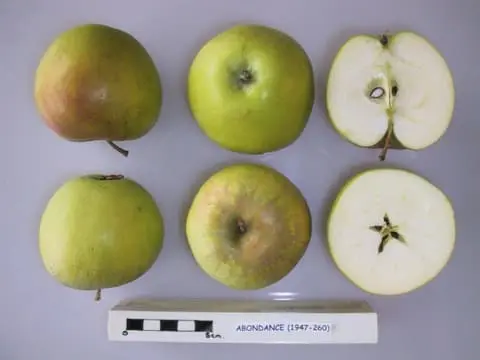
Abondance
-
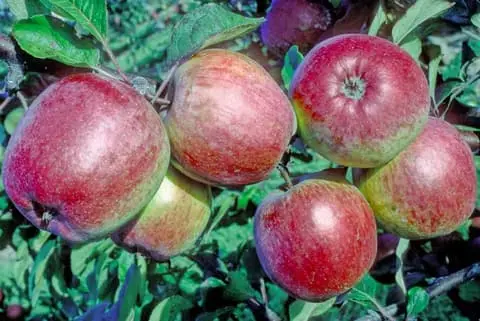
Alfred Jolibois
-
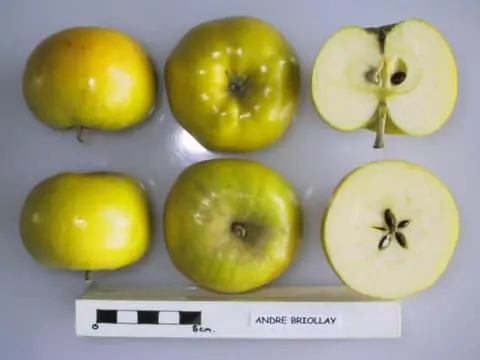
Andre Briollay
-
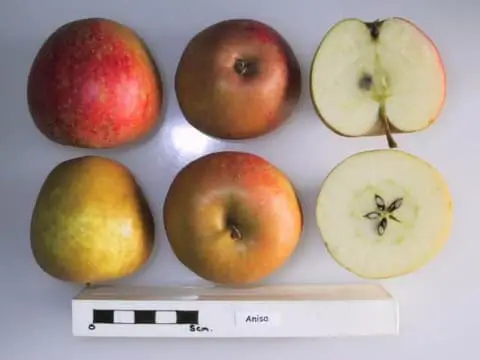
Anisa
-
Api
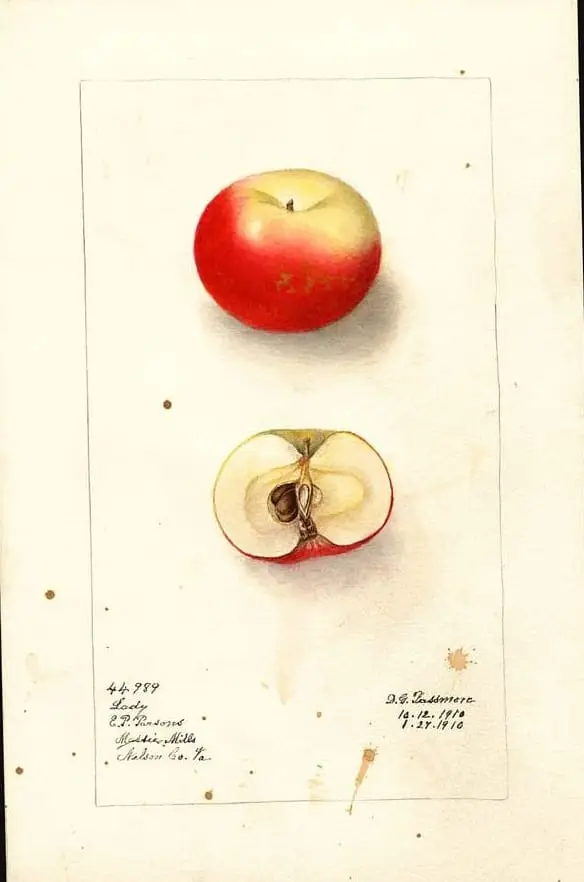
A tiny, glossy, red-cheeked apple recorded in 1628 and said to have been found wild in a forest in Brittany
-
Api Noir
-
Barre
-
Bassard