Sailors, settlers and traders met fruit they had no word for and reached for the one they had. The world is full of "apples" that are nothing of the kind.
The apple is Malus domestica, a member of the rose family1. None of the fruits in this guide is any relation. English speakers arriving on these shores met fruit they had no word for and reached for the one they had, and as Julia Morton noted of the rose apple, the result “in no way resembles an apple, neither in the tree nor in its fruit”2. Other languages did the same: the French pomme is behind the Mauritian tomato, and the Arabic word for apple settled, on the Swahili coast, on the Malay apple.
Each entry gives the plant’s accepted botanical name, checked against the GBIF backbone taxonomy, where it grows around the ocean, why it was called an apple, and what it is like to eat.
-
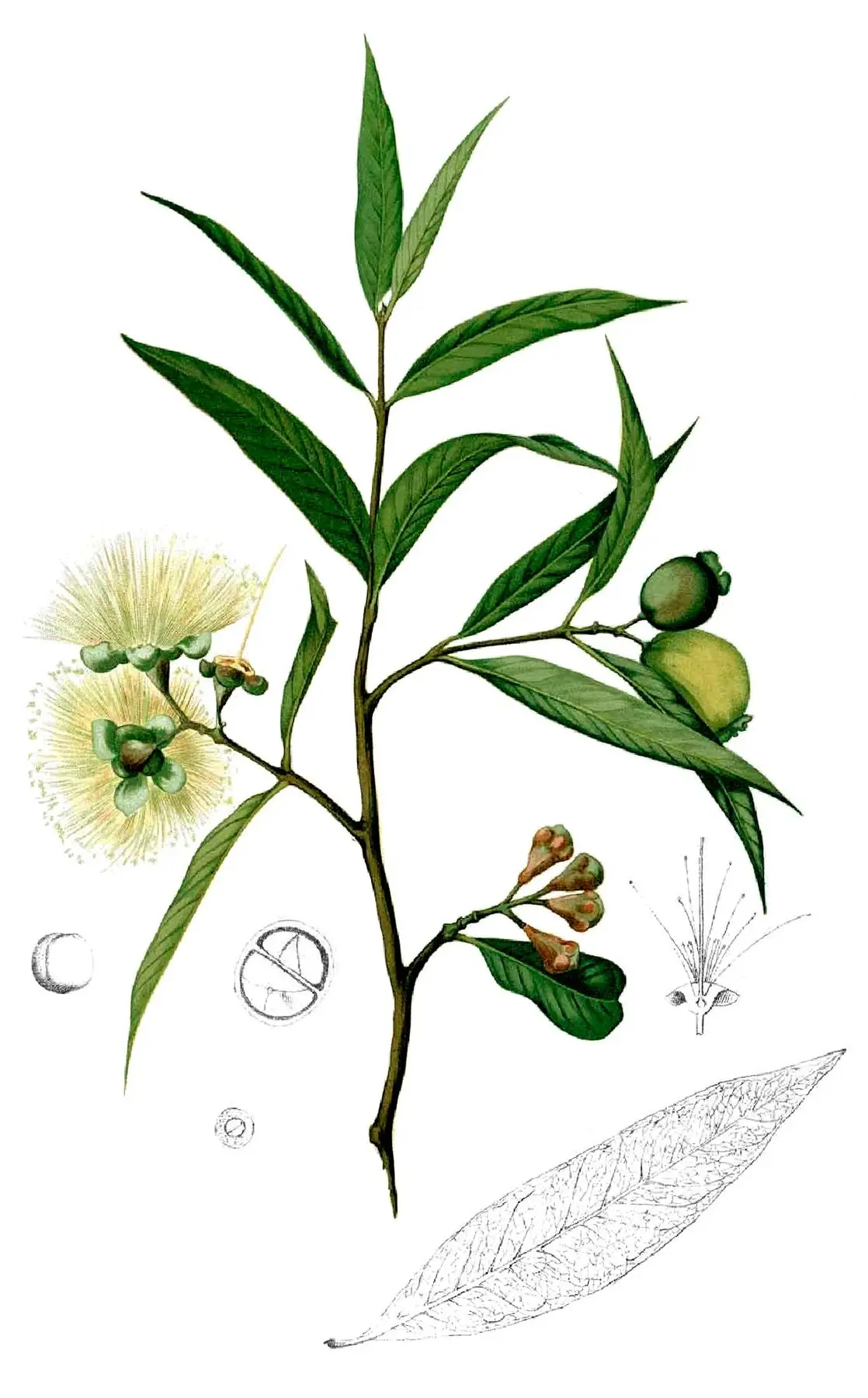
Syzygium jambos
Native to the East Indies and Malaya; grown and naturalised across India and Sri Lanka
-
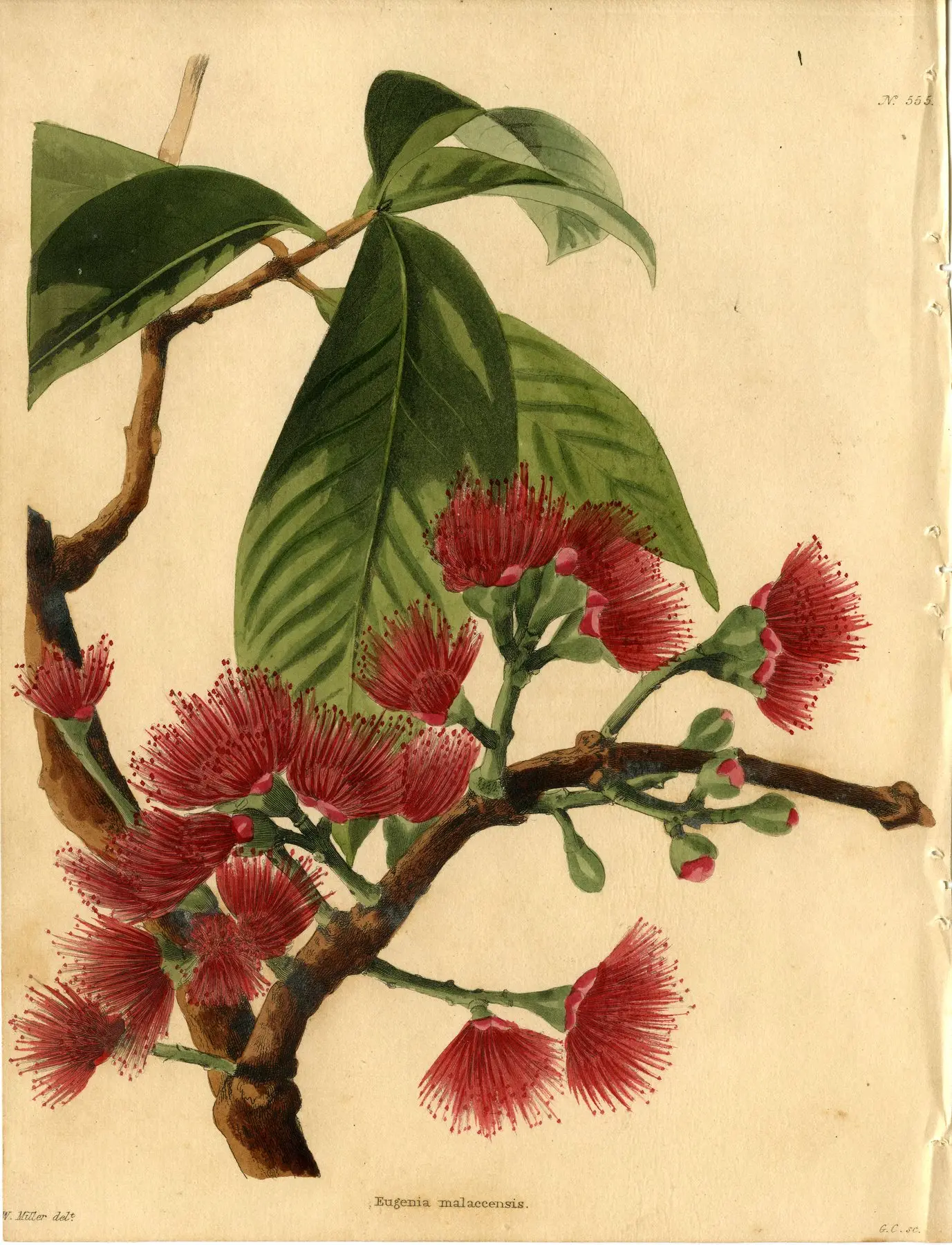
Syzygium malaccense
Presumed native to Malaysia; grown from Java to Bengal and southern India, and carried by the Portuguese from Malacca to Goa and East Africa
-
Syzygium samarangense
Indigenous from Malaya to the Andaman and Nicobar Islands; cultivated in India, Zanzibar and Pemba, mostly as an ornamental; ripe in Sri Lanka from March to May
-
Syzygium aqueum
Wild from southern India to eastern Malaysia; commonly grown in India, south-east Asia and Indonesia
-
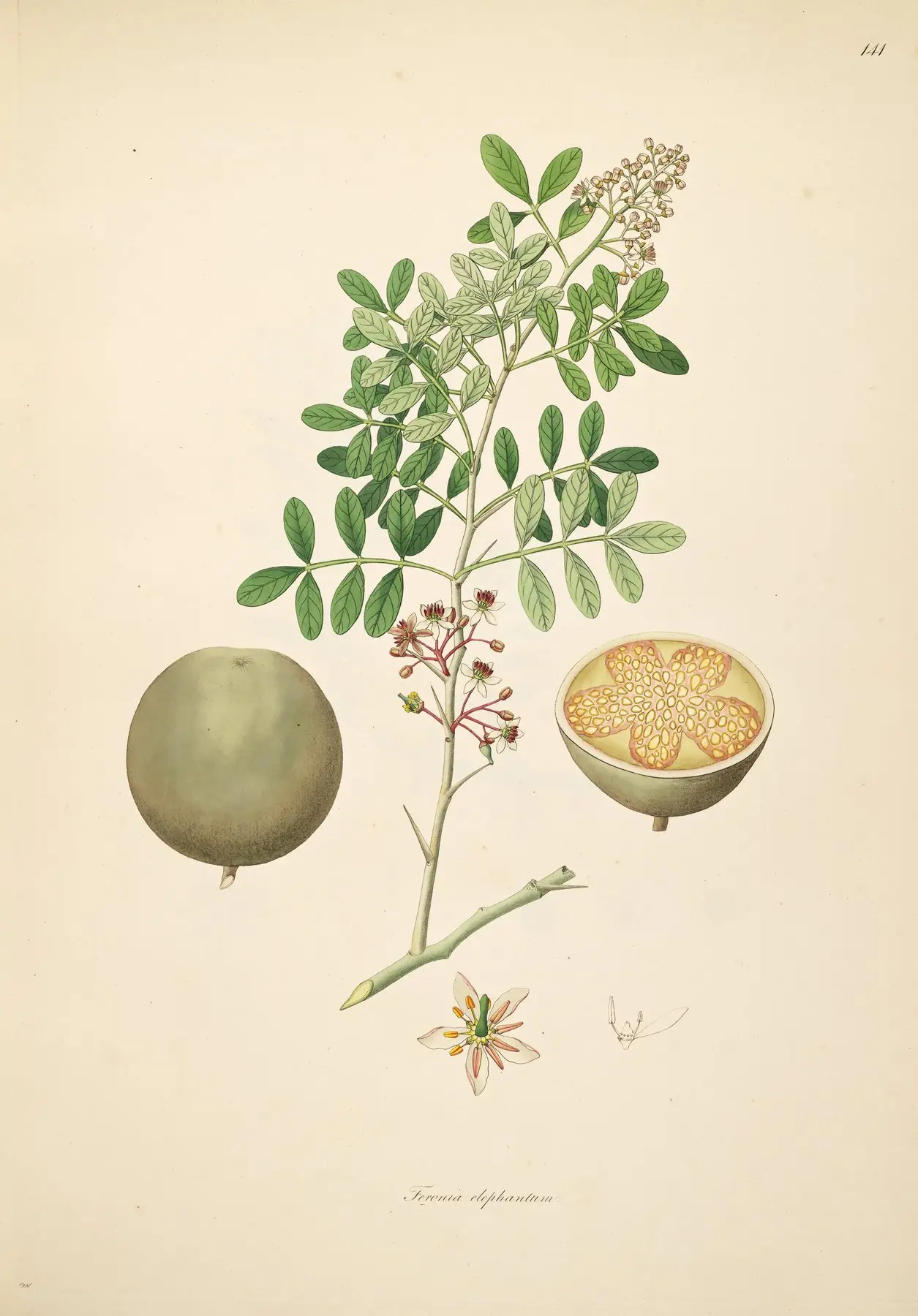
Limonia acidissima
Wild and common on the dry plains of India and Sri Lanka; grown in northern Malaya and on Penang
-
Aegle marmelos
Wild in the dry forests of central and southern India, Burma, Pakistan and Bangladesh; grown throughout India, mainly in temple gardens, and in Sri Lanka and northern Malaya
-
Dillenia indica
Native from the Himalaya through the Indian subcontinent and Sri Lanka into south-east Asia and the Malay archipelago
-
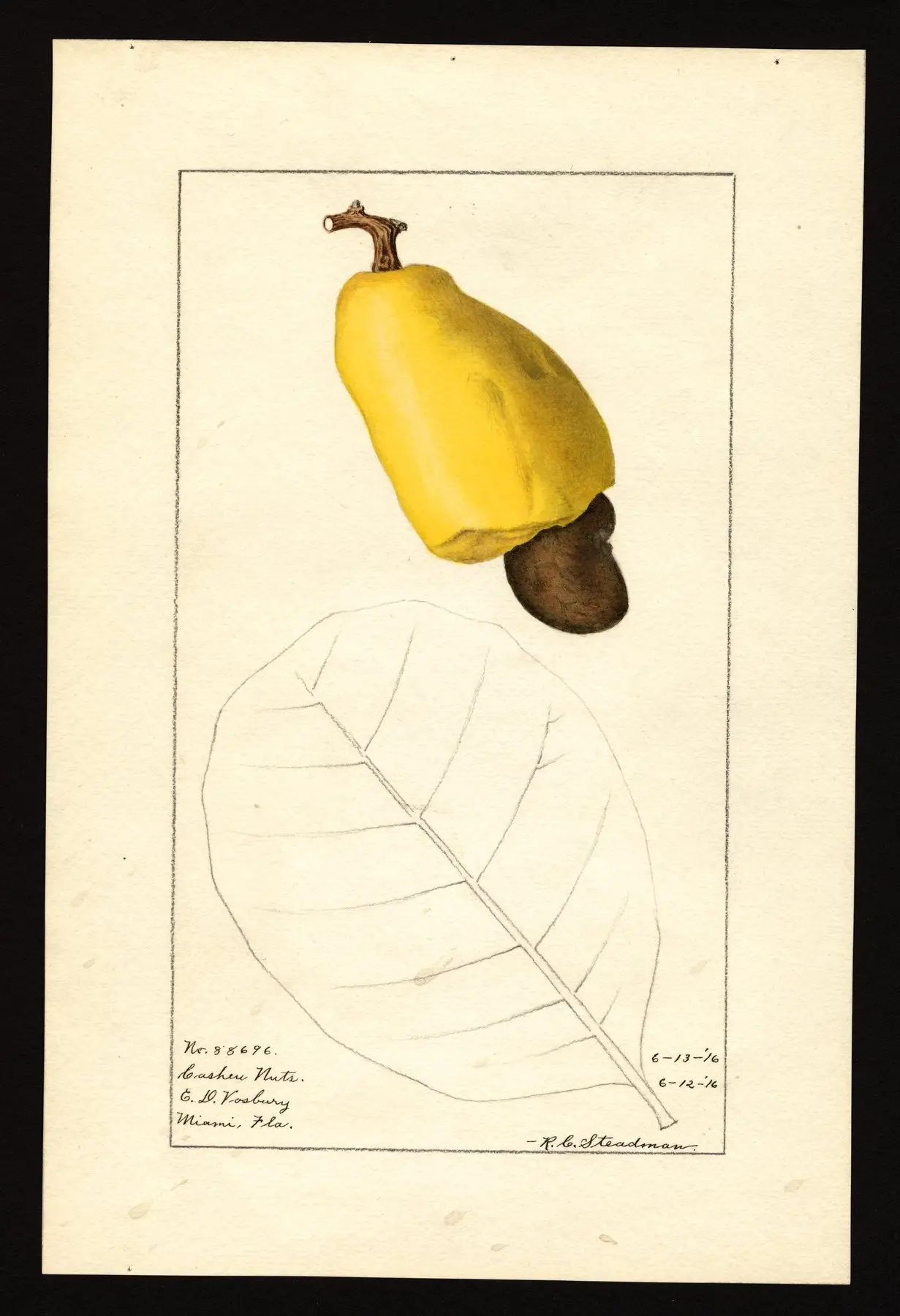
Anacardium occidentale
Native to north-eastern Brazil; brought by the Portuguese to Mozambique and coastal India in the sixteenth century, where it ran wild
-
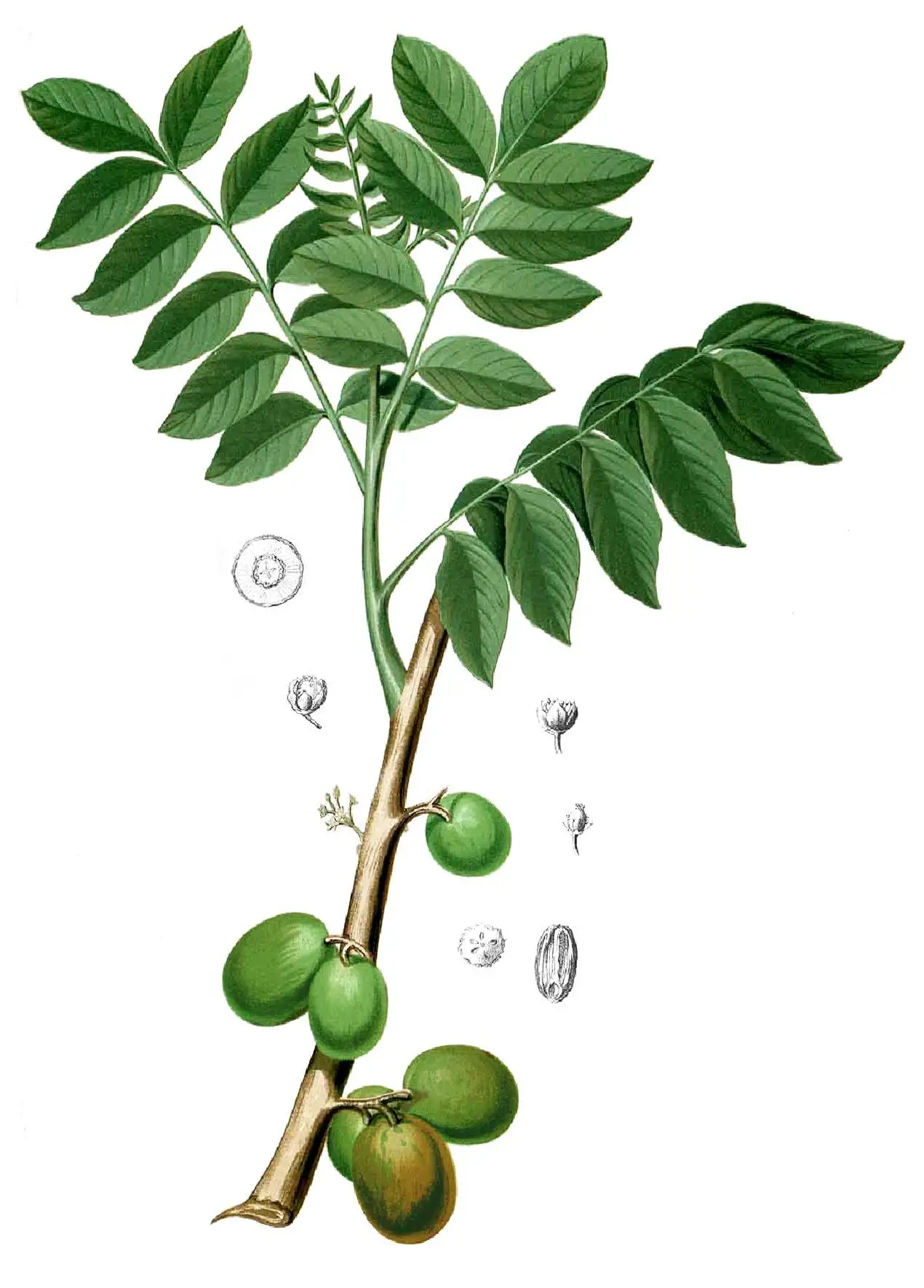
Spondias dulcis
Native from Melanesia through Polynesia; common in Malayan gardens, grown in India and Sri Lanka, and at home in Mauritius and Réunion
-
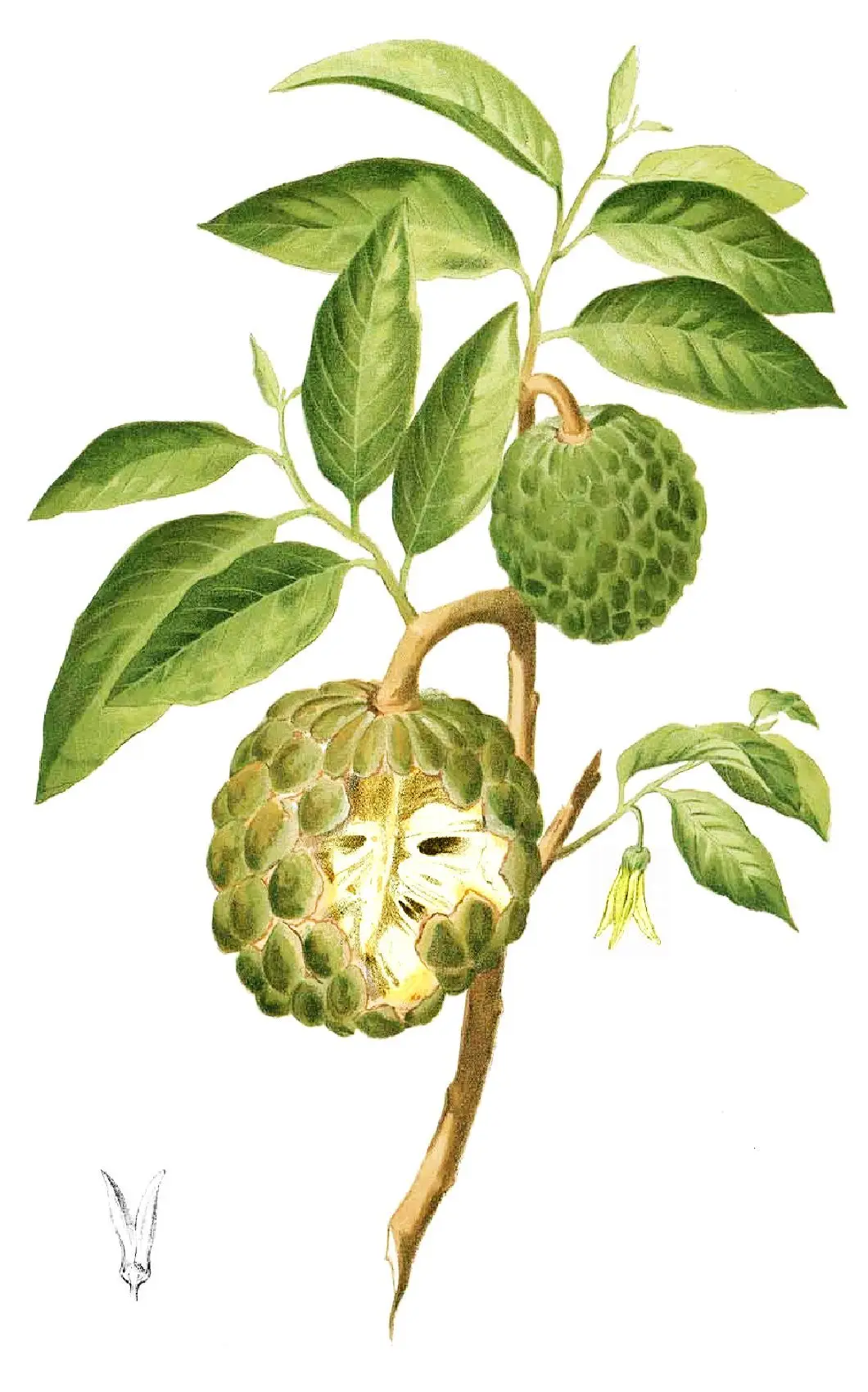
Annona squamosa
Original home unknown; grown in India, Sri Lanka from sea level to a thousand metres, Malaya and the Maldives
-
Solanum lycopersicum
Mauritius, where the tomato is pomdamour and the island's tomato chutney is satini pomdamour
-
Solanum tuberosum
Native to western and southern South America; domesticated from wild species in Peru, and now widely grown for its tubers
-
Punica granatum
Native from north-eastern Türkiye to Pakistan; grown since ancient times around the Mediterranean, and in India, south-east Asia, tropical Africa, Mexico and California
-
Cydonia oblonga
Native from the Caucasus to central Asia; the ancient Greeks knew it as the Cydonian apple
-
Prunus persica
Known only in cultivation, from north-central China; widely grown in temperate regions
-
Citrus medica
Native from the western central Himalaya to Myanmar; cultivated for its large, thick-rinded fruit
-
Citrus × aurantium
Known only in cultivation, from southern China; brought to Europe by the Portuguese in the sixteenth century
-
Cucumis melo
Native from Ethiopia to South Africa, from south-western Syria to Arabia and the Indian subcontinent, and from New Guinea to northern and central Australia; widely cultivated
-
Chamaemelum nobile
Native from the Azores and western Europe to north-western Africa; its dried flowers make a herbal tea
-
Solanum melongena
Native to tropical and subtropical Asia and the islands of the western Indian Ocean; grown for its fruit, the aubergine
-
Mandragora officinarum
Native from northern Italy to the north-western Balkans; its autumn-flowering relative, Mandragora autumnalis, from the Mediterranean to western Iran
-
Datura stramonium
Native to Mexico; a poisonous plant that grows mostly on rubble
-
Calotropis procera
Native from Macaronesia and northern and tropical Africa to Indochina; in Israel mainly around Ein Gedi, by the Dead Sea
-
Citrullus colocynthis
Native from Macaronesia and the Mediterranean to Myanmar, and from north-eastern tropical Africa to northern Kenya; a plant of dry, sandy country
-
Biorhiza pallida
On oaks; in Britain the gall wasp that raises it is quite common and widespread
-
Ananas comosus
Native to tropical America, from Costa Rica southwards; carried through the Americas long before Europeans arrived, and now one of the leading fruit crops of the tropics
-
Annona reticulata
Native from Mexico to north-eastern Venezuela, or to the West Indies by older accounts; grown and naturalised from Peru and Brazil to tropical Africa, India and south-east Asia
-
Annona glabra
Native to the swamps and coastal marshes of tropical and subtropical America and of western Africa; an invasive weed in the wetlands of Queensland's Wet Tropics
-
Chrysophyllum cainito
Known only in cultivation, from Central America, by Kew's account; common through the Caribbean, grown from Mexico to Peru and northern Argentina, and in south-east Asia
-
Mammea americana
Native to southern Mexico, Guatemala and the Caribbean, or to the West Indies and northern South America by Morton's account; grown sparingly through tropical America
-
Podophyllum peltatum
Native to the woods of eastern North America, from Quebec and southern Ontario to Florida, and west to Minnesota and eastern Texas
-
Maclura pomifera
Native to the Red River country of Oklahoma, Texas and Arkansas; planted as a hedge in all 48 conterminous states of the US and in south-eastern Canada
-
Hippomane mancinella
Native to southern Florida and the Keys, the Caribbean, Mexico to northern Venezuela, and the Galápagos; on seacoasts and in brackish swamps, among mangroves
-
Nicandra physalodes
Native from Peru to north-western Argentina; grown as an ornamental and naturalised as a weed in North America and Australia
-
Dovyalis afra
Native to southern and south tropical Africa, from the Eastern Cape to Limpopo and Zimbabwe; planted as a hedge around the Mediterranean and in California
-
Gambeya albida
Native from western tropical Africa to South Sudan and Tanzania; a forest tree whose fruit is widely eaten across West and Central Africa
-
Momordica balsamina
Native to tropical and southern Africa, the south-west of the Arabian peninsula and Australia; also in India, and probably introduced in tropical America
-
Diospyros blancoi
Native to the Philippines, and from eastern and southern Taiwan to eastern Borneo; grown in Java and Malaya, and here and there in India, Florida and the Caribbean
-
Solanum aviculare
Native to eastern Australia, from Queensland to Victoria, and to Lord Howe Island and New Zealand; naturalised in South Australia and Western Australia
-
Owenia acidula
Native to inland Australia: the plains of north-western New South Wales, and Queensland, South Australia and the Northern Territory
-
Billardiera scandens
Native to eastern Australia, from southern Queensland to Victoria, Tasmania and South Australia, in coastal heath, forest and inland mallee
-
Angophora floribunda
Native to eastern Australia, from Queensland through New South Wales to eastern Victoria, usually on deep alluvial sandy soils
-
Planchonella australis
Native to the warmer rainforests of eastern Australia, along the coast of New South Wales north from the Illawarra, and in Queensland
-
Planchonia careya
Native to New Guinea and northern Australia, from Western Australia and the Northern Territory to Cape York and coastal central Queensland
-
Passiflora laurifolia
Native from the Caribbean to northern and north-eastern Brazil; wild and grown from Venezuela and the Guianas to Peru, and grown in Malaya, Thailand and Vietnam