Reinette Franche
Named in 1540 and probably Norman; in a 2020 DNA study of over 1,400 apples it had the most parent–offspring links
History
Charles Estienne, in 1540, was the first French horticultural writer to name the Reinette: he wrote that apples called Renetia, or de Reinette, ripened about December and were softer and better-flavoured than the Rateau1. André Leroy took this to be the Reinette Franche, which went on to become the mother of a large group of apples that took its name1. He judged it about thirty years old in 1540 and born in Normandy, where the abbey of Saint-Amand at Rouen bought pommes de Raynette in 1543 and 15441. He also cited the German pomologist Mayer, who wrote in 1776 that franche meant French, making this the original Reinette of France1.
In 2020 Muranty and colleagues, analysing SNP data from more than 1,400 apple genotypes, mostly European, found Reinette Franche the most connected of all, with 66 parent–offspring pairs and 243 descendants, 18 per cent of the genotypes studied2. With Reinette des Carmes it is a parent of Reinette de Hollande, through which much of its influence spread, and its descendants include Peasgood’s Nonsuch in Britain and Esopus Spitzenburg and Jonathan in the United States2. Its own inferred parent is Reinette de Saintonge, dated to the 1200s2. In 2022 Howard and colleagues found it among the commonest donors of unreduced gametes to triploid apples, Roxbury Russet among them, and a great-grandparent of Cox’s Orange Pippin through Nonpareil and Rosemary Russet3,4. An unknown parent of Ralls Janet is its offspring, so it is an ancestor of Fuji too3. It is the commonest grandparent of Denmark’s heritage apples4.
The fruit
Leroy described a fruit of medium size or larger, rounded-conical, long-conical or short and markedly cylindrical, and often five-sided or ribbed1. The thick skin is pale yellow, brownish yellow and sometimes washed pink in the sun, dotted grey or brown, with some russet1; Downing found it large, yellow with some russet and red in the sun5. The yellowish-white flesh is fine, crisp and fairly firm, the juice very sweet but well acid and finely perfumed1. Leroy rated it first-rate for eating and for every kind of cooking, ripe from December to May1; Downing reported it valued mainly as a long keeper5, and in 1884 Hogg listed it among the best dessert apples, in use from November to April6.
Growing
Leroy found it of ordinary fertility, best grafted at the head for standard trees, and very regular as a dwarf on paradise or doucin, cropping better than on seedling stock1; Coxe, quoted by Downing, found the tree vigorous and an abundant bearer5. It is diploid2,4.
Where the sources disagree
- Origin. A Norman birth some thirty years before 1540 was Leroy’s inference from the Rouen accounts and from a Norman belief that all the dessert Reinettes came from a local cider apple1; the 2020 DNA study repeats it2, while Howard and colleagues say only that it is French, of the early sixteenth century3.
- Names. Leroy held Reinette Blanche to be the same apple, but not the early, short-keeping Reinette Blanche or Prime of some seventeenth-century writers1; Downing lists “Reinette Blanche, dite Prime” as a synonym5. The UK National Fruit Collection gives Reinette Franche as a name of Nonpareil7, which SNP data show to be a separate cultivar and its parent or offspring: the dates could not settle which for Muranty and colleagues2, while Larsen and colleagues make Reinette Franche the parent4.
- Size and cropping. Medium or above and ordinarily fertile to Leroy1; large, and an abundant bearer, to Downing and Coxe5.
Family tree
Parents, grandparents and great-grandparents, as the entries in the atlas record them.
- Reinette Franche France, by 1540
- Parent Reinette de Saintonge
Offspring in the atlas
- Calville Blanc d'Hiver × Calville Rouge d'Hiver; France, by 1598
- Calville Rouge d'Hiver × Calville Rouge d'Hiver; France, by about 1600
- Esopus Spitzenburg United States, before 1790
- Mabbott's Pearmain × Reinette des Carmes; United Kingdom, by 1883
- Reinette du Canada France, by 1771
- Roxbury Russet United States, early 17th century
113 varieties in the atlas descend from Reinette Franche.
Sources
- Dictionnaire de pomologie, vol. IV, pp. 673–678: Reinette Franche (in French), André Leroy, Paris and Angers, Internet Archive, 1873. Supports: entry no. 401, with synonyms including De Renette (Charles Estienne, 1540), Reinette Blanche (la Quintinye, 1690), Reinette Commune, Reinette Triomphante, Edelreinette, Reinette de Clareval, Victorious Reinette, Reinette Franche Rose and Reinette de Normandie; fertility ordinary; best grafted at the head for standards; dwarf trees on paradise or doucin very regular and always more productive than on seedling stock; fruit medium or above, very variable in shape (rounded-conical, conical and fairly long, or short and almost cylindrical), often five-sided or ribbed; skin thick, smooth or slightly rough, pale yellow in shade, brownish yellow in sun and sometimes finely washed pink, dotted grey or brown, with greenish russet round the stalk; flesh yellowish white, fine, crisp and fairly firm; juice abundant, very sweet but well acid, with an exquisite perfume; ripe December to May; first quality for the table and for all culinary uses; Estienne (1540) the first French horticultural writer to name the Reinette, his Renetia ripening about December with softer flesh and better flavour than the Rateau; this the Reinette Franche, soon the mother of a large group of apples that took its name; "Je pense qu'en 1540 ce fruit comptait bien une trentaine d'années et que la Normandie l'avait vu naître"; pommes de Raynette bought for the abbey of Saint-Amand at Rouen in 1543 and 1544; Renault (1817) on the Norman cider apple Reinette Sauvage as the source of all Reinettes; Mayer (1776) on franche meaning French and on the apple as the original Reinette of France; Reinette Blanche the same apple, but the early, short-keeping Reinette Blanche or Prime of the seventeenth-century writers Merlet and Claude Saint-Étienne a different fruit.
- Using whole-genome SNP data to reconstruct a large multi-generation pedigree in apple germplasm, H. Muranty and others, BMC Plant Biology 20: 2, with Additional files 1, 3 and 6, 2020. Supports: a sample of over 1,400 apple genotypes, mostly European cultivars; Reinette Franche the most connected cultivar, with 66 parent–offspring duos and 243 offspring over several generations, 18% of the genotypes studied; Reinette de Hollande its offspring with Reinette des Carmes, with many descendants; descendants including Peasgood's Nonsuch (United Kingdom) and Jonathan through Esopus Spitzenburg (United States); Leroy's account of a Norman origin about thirty years before 1540 repeated; Reinette Franche dated 1540 and diploid (Table S1); Reinette des Carmes and Reinette Franche as the parents of Reinette de Hollande (Table S3); duos with Reinette de Saintonge (dated 1200s) and Esopus Spitzenburg, oriented by the documented dates, but the duo with Nonpareil not oriented, the dates being too close (Table S5, in Additional file 6); Reinette de Saintonge a founder whose offspring all descend through Reinette Franche (text).
- Pedigree reconstruction for triploid apple cultivars using single nucleotide polymorphism array data, N. P. Howard and others, Plants, People, Planet 5: 98–111; University of Reading repository, 2022. Supports: Reinette Franche "a French cultivar from the early 16th century" and one of the most common donors of unreduced gametes to triploids, among them Roxbury Russet, "commonly cited as being the oldest US cultivar"; Reinette Franche a great-grandparent of Cox's Orange Pippin; Rosemary Russet an offspring of Nonpareil and a parent of Cox's Orange Pippin; the imputed unknown parent of Ralls Janet, itself a parent of Fuji, an offspring of Reinette Franche, linking Fuji and Cox's Orange Pippin with its other descendants.
- Cultivar fingerprinting and SNP-based pedigree reconstruction in Danish heritage apple cultivars utilizing genotypic data from multiple germplasm collections in the world, B. Larsen and others, Genetic Resources and Crop Evolution 72: 2397, with supplementary tables, 2025. Supports: Reinette Franche grown in Denmark mainly before 1850 and the most common grandparent of Danish germplasm, especially through Reinette de Hollande (text); Reinette Franche diploid, with no parents identified; Reinette Franche the SNP-confirmed parent of Nonpareil, Nonpareil of Rosemary Russet, and Margil and Rosemary Russet the parents of Cox's Orange Pippin (Table S5).
- The Fruits and Fruit Trees of America, p. 184: French Reinette, A. J. Downing, revised by Charles Downing, John Wiley & Sons, Internet Archive, 1900. Supports: synonyms Reinette Franche, Reinette Blanche, Weisse Reinette, Reinette Blanche dite Prime, Französische Edelreinette and Reinette de Normandy; "An old French Apple described by various authors, valued mainly as a long keeper"; Coxe on the tree as handsome, of vigorous growth and an abundant bearer; fruit large, roundish oblong conical, truncated, yellow with some russet and red in sun; flesh firm, yellowish white, rich and sprightly subacid.
- The Fruit Manual, 5th ed., p. 257: The best dessert apples, arranged in their order of ripening, Robert Hogg, Journal of Horticulture Office, Internet Archive, 1884. Supports: Reinette Franche among the best dessert apples, in the group in use from November to April.
- Nonpareil (accession 2000-072), National Fruit Collection, Brogdale, Kent (Defra). Supports: Reinette Franche among the synonyms recorded for Nonpareil, an apple "Thought to be of French origin" and introduced into England in the mid 1500s.
More from France
-
Abondance
-
Alfred Jolibois
-
Andre Briollay
-
Anisa
-
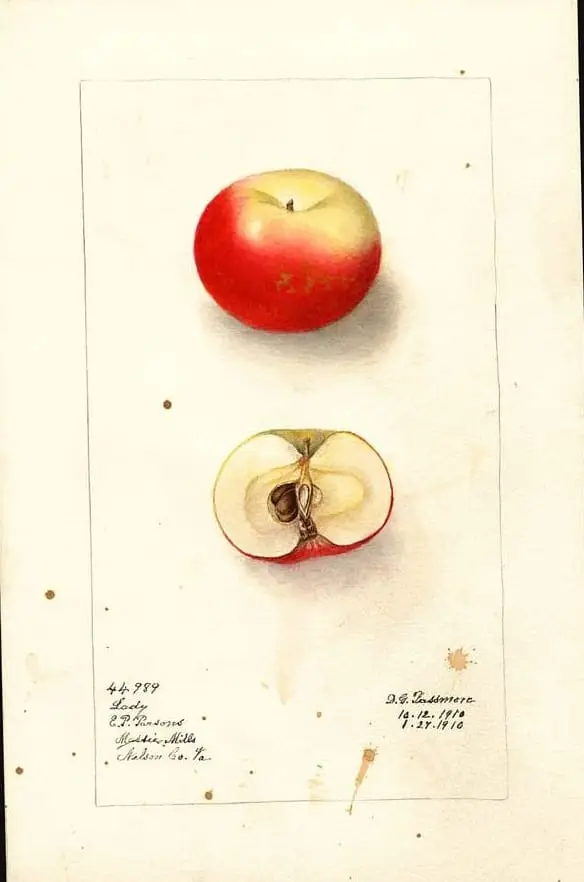
Api
A tiny, glossy, red-cheeked apple recorded in 1628 and said to have been found wild in a forest in Brittany
-
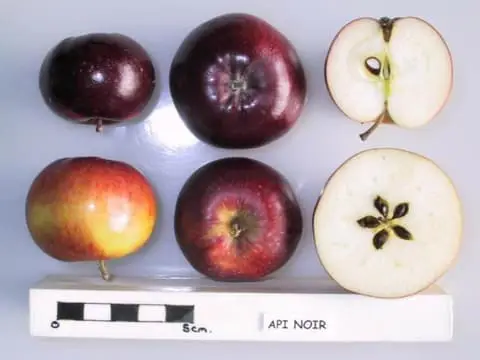
Api Noir
-
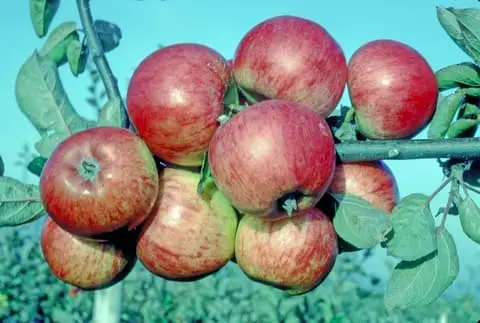
Barre
-
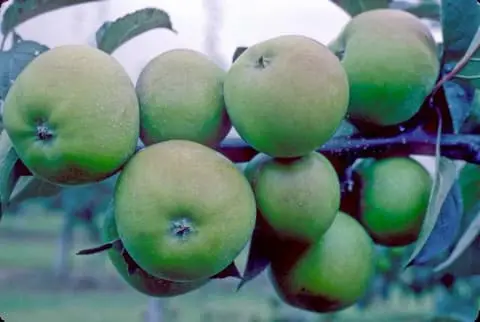
Bassard