Apple varieties, United Kingdom
Cox's Orange Pippin
Raised at Colnbrook about 1825; DNA shows its parents are Margil and Rosemary Russet, not Ribston Pippin
History
Cox’s Orange Pippin was raised at Colnbrook Lawn, near Slough in Buckinghamshire, by Richard Cox, a Bermondsey brewer who had retired there to spend his last years gardening1,2. The National Fruit Collection dates it to about 1825, and Charles Turner introduced it about 18501,3. Hogg recorded that it was “said to have been from a pip of Ribston Pippin”2, and the UK’s National Apple Register of 1971 gave its parents as Ribston Pippin and perhaps Blenheim Orange5.
DNA has overturned that account. In 2020 Muranty and colleagues found that Margil, an old apple from Normandy described in 1608, is one parent, and that Ribston Pippin appears not to be4. In 2022 Howard and colleagues identified the other parent as Rosemary Russet, an apple first recorded in 1831 and itself an offspring of Nonpareil5. Margil is also a parent of Ribston Pippin4, and Howard’s team suggests that the old error may have come from confusing Ribston Pippin with Margil, which it probably resembled5.
Cox’s Orange Pippin became a prolific parent. In a DNA survey of more than 1,400 mostly old cultivars it was the inferred parent of 50 first-generation offspring, among them James Grieve and Laxton’s Superb, and appeared as a parent in more parent–offspring trios than any other cultivar4. The National Fruit Collection lists its sports, among them Queen Cox and Kortegaard Cox1.
In England and Wales, Cox and its clones covered 3,144 hectares in 2004, more than any other named variety, but 1,697 hectares by 2012, second to Bramley’s Seedling6. A 2025 census of growers supplying 92 per cent of the British crop sold to major retailers found 259 hectares of Cox, 5 per cent of their apple orchards; more than a third of these orchards were over 21 years old, though 38.35 hectares had been planted in the previous five years7.
The fruit
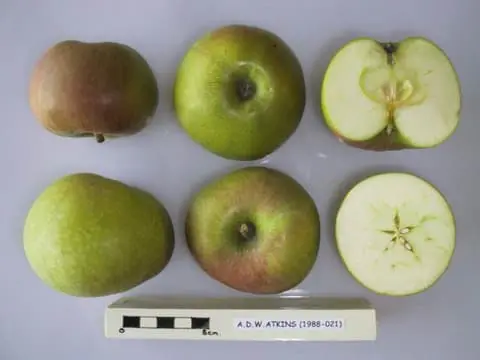
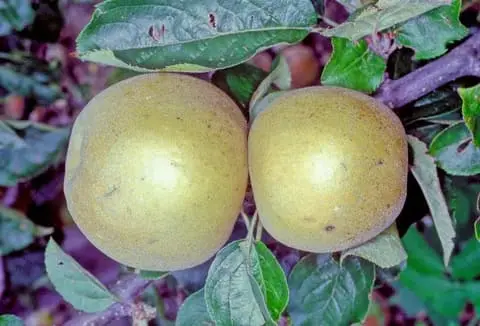
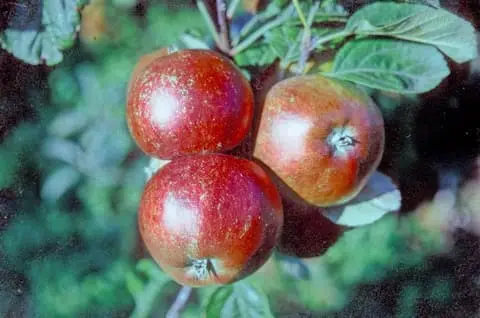
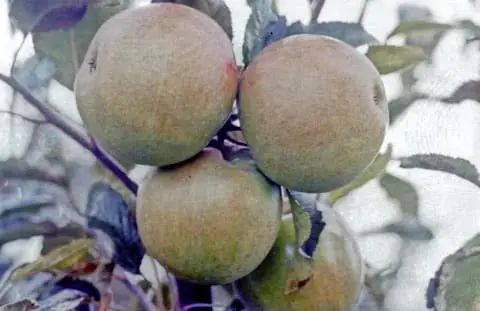
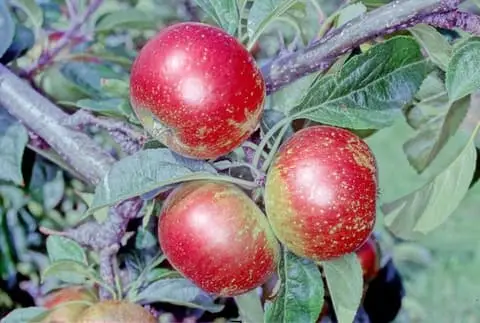
The fruit is medium-sized and roundish to conical2,3, about 62 mm wide and 56 mm high1. The greenish to golden-yellow skin is largely covered by a dark or brownish-red flush with faint stripes and patches of grey russet2,3. The yellowish flesh is tender, crisp, juicy and sweet2,3, and the National Fruit Collection describes its flavour as rich, aromatic and nutty1. Hogg counted it “one of the best dessert apples”2, and Bunyard wrote that it was “generally considered to be the richest flavoured of English Apples”3.
At the National Fruit Collection at Brogdale, Kent, it starts to flower around 9 May and is picked in late September1,8. Hogg gave its season as October to February2. In modern British stores it keeps in cold air only until mid-October, but until late March in a controlled atmosphere with 1.2 per cent oxygen9.
Growing
Bunyard described its growth as slender and its cropping as moderate3, while Hogg found it well suited to dwarf and pyramid trees on paradise stock, on which it bore freely2. In unsprayed trials in Denmark in 1987–90 it was among the varieties most susceptible to scab, although other studies had rated it low or medium; its susceptibility to powdery mildew has been rated medium to high10. Cox’s Orange Pippin is diploid4.
Where the sources disagree
- Date. The National Fruit Collection gives about 18251 and Bunyard 18253; Hogg gave 18302.
- Parents. Tradition had it grow from a pip of Ribston Pippin2, and Blenheim Orange was later suggested as the other parent5; the National Fruit Collection’s record still reads “Ribston Pippin x Unknown”1. Two DNA studies name Margil and Rosemary Russet instead and exclude both Ribston Pippin and Blenheim Orange4,5. The DNA evidence is much the better supported.
- Scab. Published ratings of its susceptibility range from low to high10.
Family tree
Parents, grandparents and great-grandparents, as the entries in the atlas record them.
- Cox's Orange Pippin United Kingdom, about 1825
- Parent Margil France, probably by 1608
- Parent Rosemary Russet United Kingdom, by 1831
- Parent Nonpareil France, by the mid 1500s
Offspring in the atlas
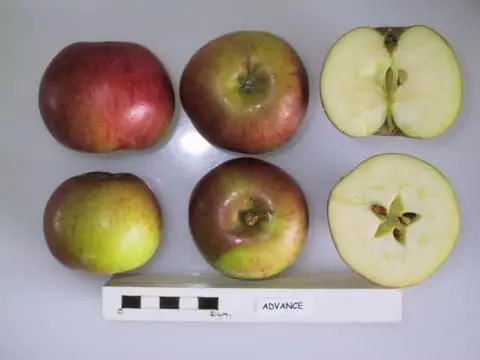
- Advance × Gladstone; United Kingdom, 1908
- Alkmene × Geheimrat Doktor Oldenburg; Germany, 1930
- Allington Pippin × Reine des Reinettes; United Kingdom, before 1884
- Arthur W. Barnes × Gascoyne's Scarlet; United Kingdom, 1902
- Atalanta (Netherlands) × Reinette Rouge Etoilee; Netherlands, 1935
- Auralia × Schoner von Nordhausen; Germany, by 1967
- Ballard Beauty United Kingdom, 1946
- Barnack Orange × Barnack Beauty; United Kingdom, 1904
- Barry × McIntosh; United States, by 1936
- Carswell's Honeydew United Kingdom, 1939
- Carswell's Orange United Kingdom, 1938
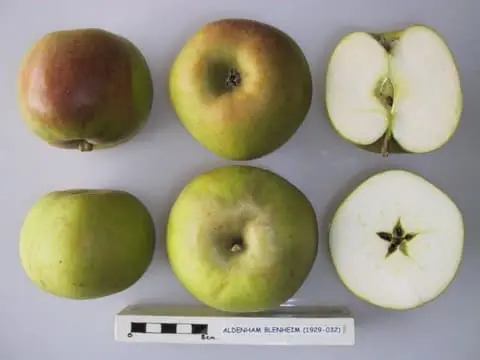
- Celt × Blenheim Orange; United Kingdom, 1943
- Chad's Favourite × Northern Greening; United Kingdom, by 1939
- Channel Beauty United Kingdom, by 1922
- Charles Ross × Peasgood's Nonsuch; United Kingdom, by 1890
- Cherry Cox Denmark, about 1942
- Chivers Delight × Barthélemy du Mortier; United Kingdom, 1936
- Cleeve × Duchess of Oldenburg; United Kingdom, before 1930
- Clivia × Geheimrat Doktor Oldenburg; Germany, by 1961
- Clopton Red United Kingdom, 1946
- Cox's Early Export × Reine des Reinettes; New Zealand, by 1950
- Crimson Cox United Kingdom, about 1913
- Dalice United Kingdom, between 1933 and 1937
- Delectable × Queen; United Kingdom, by 1952
- Directeur van de Plassche × Jonathan; Netherlands, 1935
- Dunning × Early McIntosh; United States, 1923
- Eden × John Standish; United Kingdom, 1948
- Edith Hopwood United Kingdom, by 1925
- Elektra × Geheimrat Doktor Oldenburg; Germany
- Ellison's Orange × Cellini; United Kingdom, by 1904
- Epicure × Wealthy; United Kingdom, 1909
- Exquisite × Cellini; United Kingdom, 1902
- Fairie Queen × James Grieve; United Kingdom, by 1937
- Feltham Beauty × Gladstone; United Kingdom, by 1908
- Fiesta × Idared; United Kingdom, 1972
- Fortune × Wealthy; United Kingdom, 1904
- Francis (Thorrington) United Kingdom, by 1925
- Freyberg × Golden Delicious; New Zealand, 1934
- Gloucester Cross United Kingdom, 1913
- Golden Bounty × Emneth Early; United Kingdom, about 1940
- Golden Nugget × Golden Russet; Canada, 1932
- Hereford Cross United Kingdom, 1913
- Herefordshire Russet × Golden Delicious; United Kingdom, 1975
- Herring's Pippin × Cellini; United Kingdom, by 1908
- High View Pippin × Sturmer Pippin; United Kingdom, 1911
- Holstein Germany, about 1918
- Houblon × Peasgood's Nonsuch; United Kingdom, by 1901
- Ingrid Marie × Cox's Pomona; Denmark, about 1910
- Ivette × Golden Delicious; Netherlands, 1950
- James Grieve × Potts' Seedling; United Kingdom, by 1892
- Jan Steen × Sternreinette (Reinette Rouge Etoilee); Netherlands, by 1955
- Joybells × Queen; United Kingdom, by about 1914
- Jupiter × Starking; United Kingdom, 1966
- Kalco Germany, by 1967
- Kidd's Orange Red × Delicious; New Zealand, 1924
- King Cox United Kingdom, by 1959
- King George V United Kingdom, about 1898
- Koningin Juliana × Reinette Rouge Etoilee; Netherlands, 1935
- Kortegaard Cox Denmark, 1914
- Langley Pippin × Gladstone; United Kingdom, by 1898
- Laxton's Favourite × Exquisite; United Kingdom, 1925
- Laxton's Pearmain × Cellini; United Kingdom, 1897
- Laxton's Rearguard × Court Pendu Plat; United Kingdom, 1907
- Laxton's Royalty × Court Pendu Plat; United Kingdom, 1908
- Laxton's Superb × Cellini; United Kingdom, 1897
- Laxton's Triumph × Reine des Reinettes; United Kingdom, 1902
- Laxton's Victory × Exquisite; United Kingdom, 1926
- Leonie de Sonnaville × Jonathan; Netherlands, by 1974
- Lucullus × Jonathan; Netherlands, 1935
- Lynn's Pippin × Ellison's Orange; United Kingdom, 1942
- Mary Barnett × Dumelow's Seedling; United Kingdom, about 1920
- Meridian × Falstaff; United Kingdom, by 1999
- Merton Beauty × Ellison's Orange; United Kingdom, 1933
- Merton Charm × McIntosh; United Kingdom, by 1960
- Merton Delight × Golden Pippin; United Kingdom, by 1959
- Merton Joy × Sturmer Pippin; United Kingdom, 1946
- Merton Pearmain × Laxton's Superb; United Kingdom, 1934
- Merton Pippin × Sturmer Pippin; United Kingdom, by 1948
- Merton Prolific × Northern Greening; United Kingdom, 1914
- Merton Russet × Sturmer Pippin; United Kingdom, 1921
- Merton Worcester × Worcester Pearmain; United Kingdom, 1914
- Millicent Barnes × Gascoyne's Scarlet; United Kingdom, about 1903
- Mimi × Jonathan; Netherlands, 1935
- Newport Cross × Devonshire Quarrenden; United Kingdom, 1920
- Oranje de Sonnaville × Jonathan; Netherlands, by 1971
- Owen Thomas × Gladstone; United Kingdom, 1897
- Oxford Sunrise × Lane's Prince Albert; United Kingdom, by 1942
- Paroquet × Peasgood's Nonsuch; United Kingdom, by 1897
- Pioneer (1) × Worcester Pearmain; United Kingdom, by 1934
- Polly Prosser × Duke of Devonshire; United Kingdom, 1946
- President Boudewijn × Jonathan; Netherlands, 1935
- Primus × Reinette Rouge Etoilee; Netherlands, 1935
- Prince Charles × Lord Lambourne; United Kingdom, between 1940 and 1945
- Prince Edward × Cox's Pomona; United Kingdom, by 1897
- Prins Bernhard × Jonathan; Netherlands, 1935
- Prinses Beatrix × Jonathan; Netherlands, 1935
- Prinses Irene × Jonathan; Netherlands, 1935
- Prinses Margriet × Jonathan; Netherlands, 1935
- Prinses Marijke × Jonathan; Netherlands, 1935
- Queen Cox United Kingdom, by 1953
- Red Ingrid Marie Denmark
- Redstart × Beauty of Bath; United Kingdom, about 1950
- Renown × Peasgood's Nonsuch; United Kingdom, by 1908
- Rewena × Duchess of Oldenburg; Germany, by 1991
- Rival × Peasgood's Nonsuch; United Kingdom, by 1900
- Rosy Blenheim United Kingdom, by 1925
- Rubens (Wageningen) × Reinette Rouge Etoilee; Netherlands, by 1954
- Ruby (Thorrington) United Kingdom, by 1925
- Saint Cecilia United Kingdom, 1900
- Saint Everard × Margil; United Kingdom, by 1900
- Saint Martin's × Bess Pool; United Kingdom, by 1896
- Šampion × Golden Delicious; Czechia, 1960
- Schweizer Orange × Ontario; Switzerland, 1935
- South Park × Winter Queening; United Kingdom, about 1940
- Stowell Cox × Democrat; Australia
- Sunburn United Kingdom, by 1925
- Sunset × James Grieve; United Kingdom, about 1918
- Tydeman's Late Orange × Laxton's Superb; United Kingdom, 1930
- Wardington Seedling United Kingdom, by about 1938
- Wayside × Worcester Pearmain; United Kingdom, 1930
- William Crump × Worcester Pearmain; United Kingdom, by 1908
- William Peters × Cox's Pomona; United Kingdom, by 1917
- Winston × Worcester Pearmain; United Kingdom, 1920
- Winston coloured sport × Worcester Pearmain; United Kingdom, by 1952
- Woolbrook Pippin United Kingdom, 1903
- Worcester Cross × Wealthy; United Kingdom, 1920
197 varieties in the atlas descend from Cox's Orange Pippin.
Sources
- Cox's Orange Pippin, National Fruit Collection (Defra and the University of Reading). Supports: raised "in about 1825" by Richard Cox at Colnbrook Lawn, Slough, Buckinghamshire, and introduced by Charles Turner in about 1850; juicy and sweet with "a rich, aromatic, nutty flavour"; synonyms including Cox's Orange, Cox, Cox Orange, Orange de Cox, Cox's Orangen Reinette and Reinette Orange de Cox; parentage recorded as "Ribston Pippin x Unknown"; sports including Queen Cox and Kortegaard Cox; height 56 mm and width 62 mm (Smith, 1971); 10% flowering on 9 May and picking in late September at the collection.
- The Fruit Manual, 5th ed., p. 55: Cox's Orange Pippin, Robert Hogg, Journal of Horticulture Office, Internet Archive, 1884. Supports: raised at Colnbrook Lawn, near Slough, Bucks, by Mr Cox, formerly a brewer at Bermondsey, who retired there to devote his last years to gardening; originated in 1830 and "said to have been from a pip of Ribston Pippin"; medium-sized, roundish-ovate fruit; greenish-yellow skin streaked with red, dark red over three-fourths of the surface where sunned, with patches of ash-grey russet; yellowish, very tender, crisp, juicy and sweet flesh with a rich flavour; "One of the best dessert apples", in use from October to February; suited to dwarfs or pyramids on the paradise stock, and a free bearer.
- A Handbook of Hardy Fruits, vol. 1, p. 43: Cox's Orange, E. A. Bunyard, John Murray, Internet Archive, 1920. Supports: raised in 1825 by Mr Cox, a retired brewer of Colnbrook Lawn, near Slough, and introduced by Mr Charles Turner about 1850; the names Orange de Cox and Cox's Orangen Reinette; a dessert apple, round and conical; golden yellow with a brownish-red flush, russet and faint stripes; tender, yellow, juicy flesh; growth slender, fertility moderate; "Generally considered to be the richest flavoured of English Apples".
- Using whole-genome SNP data to reconstruct a large multi-generation pedigree in apple germplasm, H. Muranty and others, BMC Plant Biology 20: 2, 2020. Supports: a study of over 1,400 mostly old cultivars; Margil, an old variety from Normandy described in 1608, inferred as a parent of Cox's Orange Pippin (Table S5: one Mendelian error), and Ribston Pippin "appears not to have been a parent"; Margil also a parent of Ribston Pippin; Cox's Orange Pippin inferred as the parent of 50 first-generation offspring, including James Grieve and Laxton's Superb, and as a parent in more trios (45) than any other genotype; ploidy 2n (Additional file 1, Table S1).
- Pedigree reconstruction for triploid apple cultivars using single nucleotide polymorphism array data, N. P. Howard and others, Plants, People, Planet; University of Reading repository, 2022. Supports: the parentage given in the UK National Apple Register (Smith, 1971): Ribston Pippin and possibly Blenheim Orange, both triploids, now shown to be false; Rosemary Russet identified as the second parent of Cox's Orange Pippin, itself an offspring of Nonpareil and first recorded in 1831; the likely resemblance of Ribston Pippin to Margil as a cause of the error.
- Survey of Orchard Fruit at October 2012, England and Wales, Department for Environment, Food and Rural Affairs (Defra), 2013-05-30. Supports: Cox (and clones) on 3,144 ha in 2004, more than any other named variety, and 1,697 ha in October 2012, when it was the second most popular variety after Bramley's Seedling (Table 2).
- Orchard and Storage Census Report 2025, British Apples & Pears Limited, 2025. Supports: respondents representing 92% of the picked crop sold to UK supermarkets and other major retailers; Cox on 259 ha, 5% of apple hectares; 37% of Cox orchards over 21 years old; 38.35 ha of Cox planted in the last five years.
- National Fruit Collection: introduction, National Fruit Collection (Defra and the University of Reading). Supports: the collection is located at Brogdale Farm, near Faversham, Kent.
- Storage conditions recommended for major apple varieties in the UK, NIAB, Apple Best Practice Guide. Supports: Cox's Orange Pippin stored in air at 1.5–2.0 °C until mid-October, and in scrubbed controlled atmosphere at 3.5–4.0 °C with 1.2% oxygen until late March.
- Susceptibility of 15 apple cultivars to apple scab, powdery mildew, canker and mites, H. Lindhard Pedersen, J. Vittrup Christensen and P. Hansen, Fruit Varieties Journal 48(2): 97–100, 1994. Supports: unsprayed trials in Denmark, 1987–1990, placing Cox's Orange among the cultivars highly susceptible to scab, while other studies rated it low or medium; powdery mildew susceptibility medium in this study and medium to high in others.