Dutch Mignonne
The record of the National Fruit Collection, at Brogdale in Kent, describes it1:
Thought to have been raised in The Netherlands. It was brought to England in about 1771 by Thomas Harvey of Catton, Norwich. It was introduced in about 1820 by George Lindley as Dutch Mignonne as its true name was not known. Fruits have firm, juicy flesh with slightly acid, little sweet, faint aromatic flavour.
Family tree
Offspring in the atlas
- Altlander Pfannkuchenapfel × Boiken; Germany, 1840
- Dulmener Rosenapfel × White Astrachan; Germany, about 1870
- King Cole × Jonathan; Australia, by 1912
- Neue Goldparmane × Reine des Reinettes; Germany, 1905
- Szechenyi Renet × Alantapfel; Hungary, by 1876
Sources
- Dutch Mignonne (accession 1953 - 047), National Fruit Collection, Brogdale, Kent (Defra). Supports: the description quoted; the use; the fruit's size, shape and colours and the flesh, from the collection's characterisation; the picking time at Brogdale (early october); the other names.
- Using whole-genome SNP data to reconstruct a large multi-generation pedigree in apple germplasm, Hélène Muranty and others, BMC Plant Biology 20:2, 2020. Supports: its ploidy, diploid (supplementary table S1).
More from Netherlands
-
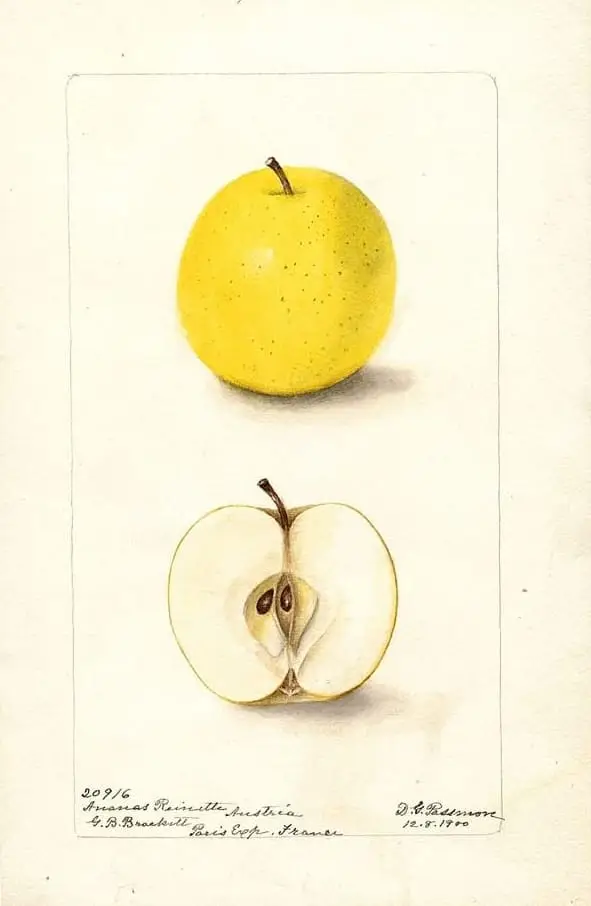
Ananas Reinette
Long thought Dutch, first described in Germany in 1826; DNA names Golden Harvey as one of its parents
-
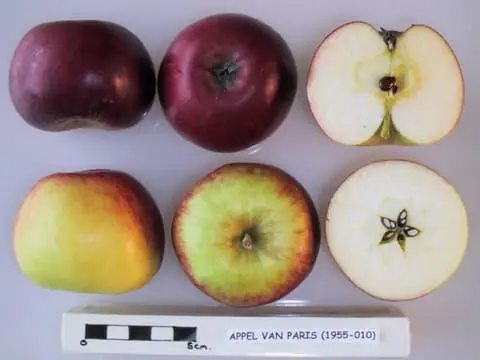
Appel van Paris
-
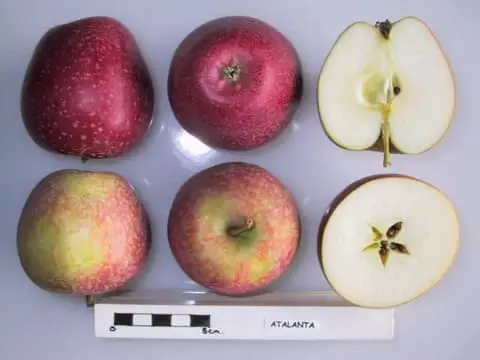
Atalanta (Netherlands)
-
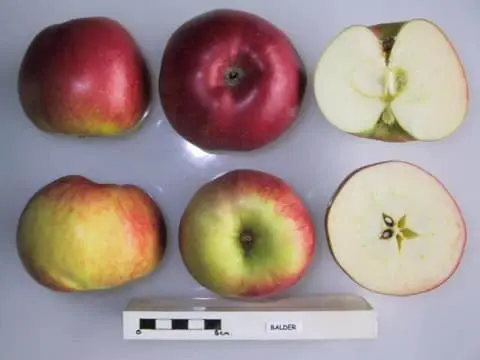
Balder
-
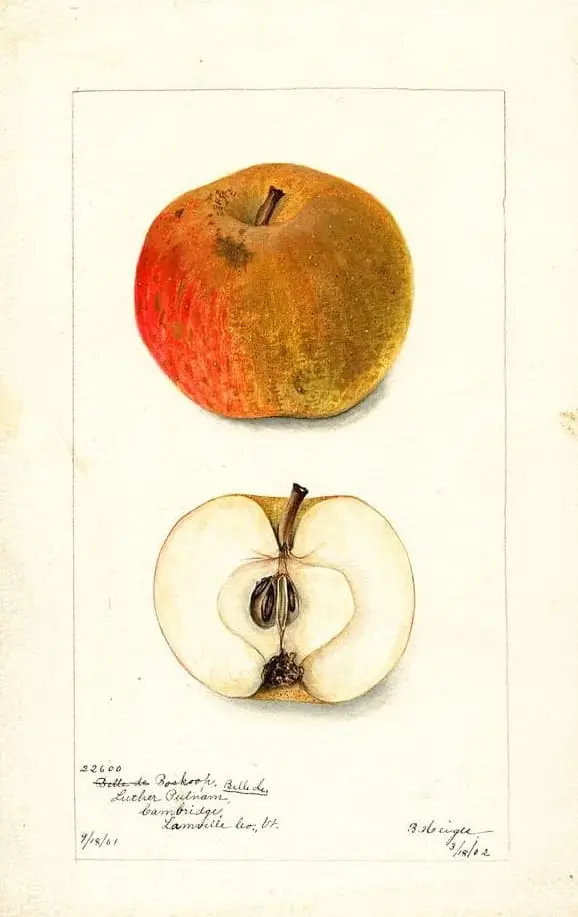
Belle de Boskoop
Found at Boskoop in 1856 and much grown in the Netherlands and Germany; DNA shows Kasseler Renette is one parent
-
Bellida
-
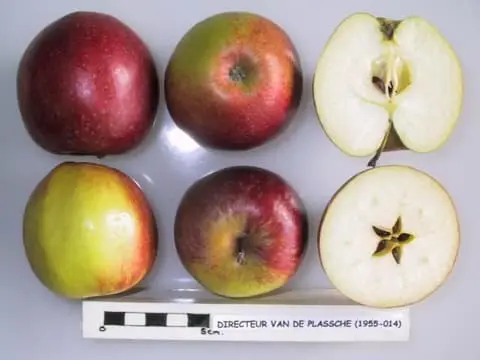
Directeur van de Plassche
-
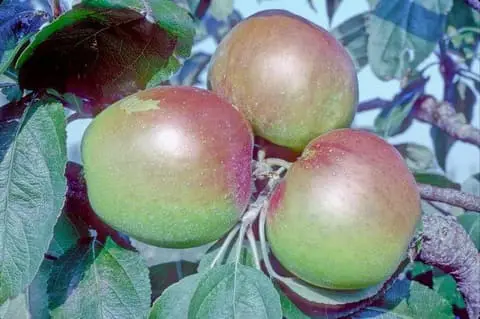
Dutch Codlin