Aroma
Crossed in 1947 from Ingrid Marie and Filippa and released by Balsgård in 1973; second in Swedish orchards in 2023
History
Aroma was bred in Sweden from a cross of Ingrid Marie and Filippa1,2,3. According to Norway’s Institute of Bioeconomy Research (NIBIO), the cross was made at Alnarp in 1947 and the seeds were sown the next year at the Balsgård breeding station, which registered and released the new variety in 19731. SNP data from a 2025 survey of Danish genebank material confirm Ingrid Marie and Filippa as its parents6.
It was known abroad before its release: the Pometum, the University of Copenhagen’s fruit genebank, records it in Denmark from 19572, and it went to Norway for trial in 1966 as BM 31021, soon becoming one of the main Norwegian apples1.
In 2023 it was the second apple of Swedish commercial orchards. Growers there had about 723,000 Aroma trees in 2023, up from 681,000 in 2017, against 780,000 of Ingrid Marie, and they planted roughly 100,000 new Aroma trees between 2019 and 20234.
Several redder sports have appeared, among them Amorosa, Ylvisåker, Fagravold and Hamre1. The National Fruit Collection lists Amorosa as a sport3, and in the 2025 survey the Pometum’s tree of Amorosa had the same genotype as Aroma6.
The fruit
The fruit is medium-sized to large, flat-round to conical and without ribs1; the Pometum gives 79 mm across and 64 mm high2. The smooth, glossy skin is greenish yellow to yellow, with a light red flush on the sunny side1 that may cover about three-quarters of the fruit2; the red sports are darker red almost all over1. The flesh is yellowish white, medium firm and very juicy1,2, “melting” to the National Fruit Collection3, with sugar and acid in good balance and a mild, fine aroma that NIBIO likens to Filippa’s1.
In Swedish consumer tastings in 2002 and 2003 it was rated the juiciest apple in both years; in 2002, though low in sugar, it scored highly overall, which the researchers put down to its “very aromatic flavour”5.
In Norway it is picked from late September to early October and eaten in November and December1; in Denmark it is picked in the second half of September2, and at Brogdale, in Kent, in early October3. It can be stored at 2 °C, colder than many varieties tolerate, and then keeps considerably longer1.
Growing
The tree is of medium to strong vigour, with a broad, spreading crown1,2. It starts to bear early and becomes a heavy cropper, with some tendency to crop in alternate years, and it is fairly hardy in winter1. Fruit is often set in clusters1. In store the fruit can be attacked by Gloeosporium rot1. Aroma is diploid2,6.
Uses
Aroma is a dessert apple1,3; the Pometum also lists it for cooking and for juice or cider2.
Where the sources disagree
- When the cross was made. The National Fruit Collection says Aroma was raised at Balsgård in 19453. NIBIO and the Pometum give 19471,2, and NIBIO adds that the cross was made at Alnarp and the seed sown at Balsgård the following year1.
- Scab. Den Store Danske describes Aroma as resistant to scab and powdery mildew7, and in unsprayed trials in southern Germany in 1997 and 1999 its fruit escaped scab while only a few leaves were infected2. Researchers at Balsgård, however, call it “not scab-resistant” and list no resistance gene for it5.
Family tree
Parents, grandparents and great-grandparents, as the entries in the atlas record them.
- Aroma Sweden, 1947
- Seed parent Ingrid Marie Denmark, about 1910
- Parent Cox's Orange Pippin United Kingdom, about 1825
- Parent Margil France, probably by 1608
- Parent Rosemary Russet United Kingdom, by 1831
- Parent Cox's Pomona United Kingdom, about 1825
- Seed parent Ribston Pippin United Kingdom, about 1707
- Parent Cox's Orange Pippin United Kingdom, about 1825
- Pollen parent Filippa Denmark, about 1880
- Parent Prinzen Apfel Germany, 1700s
- Parent Prinzen Apfel Germany, 1700s
- Parent Boiken Germany, by 1828
- Parent Prinzen Apfel Germany, 1700s
- Seed parent Ingrid Marie Denmark, about 1910
Offspring in the atlas
- Amorosa Sweden
Sources
- Apple varieties: Aroma (in Norwegian), NIBIO (Norwegian Institute of Bioeconomy Research), plant genetic resources: fruit varieties, 2020-03-30. Supports: a Swedish variety from a cross of Ingrid Marie and Filippa, "made at the Swedish University of Agricultural Sciences at Alnarp in 1947", the seeds sown at the Balsgård breeding station in 1948, registered and marketed by Balsgård in 1973; brought to Norway for trial in 1966 as BM 31021, quickly popular and since one of the main Norwegian varieties; red mutants including Amorosa, Ylvisåker, Fagravold and Hamre, darker red over almost the whole fruit; tree of medium vigour with a spreading crown, bearing early and later heavily, some tendency to biennial bearing, fairly winter-hardy, often setting fruit in clusters; fruit medium to large, flat-round to conical, without ribs, greenish yellow to yellow with a light red flush on the sunny side, skin medium thick, smooth, somewhat dry and glossy; flesh yellowish white, medium firm and juicy, sugar and acid well balanced, a mild, fine aroma recalling Filippa; "a particularly good eating apple"; prone to Gloeosporium rot, mostly in store; picked from late September to early October, eating ripe in November and December; can be stored at 2 °C, lower than many varieties, and then keeps considerably longer.
- The Pometum's apple key: Aroma (in Danish), University of Copenhagen, the Pometum (Pometets æblenøgle); Internet Archive copy of 3 August 2025, 2025. Supports: origin Balsgård, Sweden; a cross of Ingrid Marie and Filippa made in 1947; synonym Aroma Balsgaard; known in Denmark since 1957 and widely grown, last recommended for Danish growing in 2007; used for dessert, cooking and juice or cider; a vigorous, broad-crowned tree; in unsprayed trials in southern Germany in 1997 and 1999 no scab on the fruit, scab on a few leaves and mildew on very few shoots; flowering mid-season; diploid; picked in the second half of September; flesh very juicy with medium to much sweetness, medium acidity and much aroma; large, 64 mm high and 79 mm across, flat-round conical; skin green-yellow, about 75 per cent covered with red, smooth or waxy.
- Aroma (accession 1968-039), National Fruit Collection, Brogdale, Kent (Defra). Supports: "Raised in 1945 at Balsgard Fruit Breeding Institute, Sweden. Introduced in 1973. Fruits have very juicy, melting flesh with a good flavour."; a dessert apple; parentage "Ingrid Marie x Fillippa"; sport Amorosa; picked in early October at Brogdale.
- Fruit trees in horticulture 2023 (in Swedish), Jordbruksverket (Swedish Board of Agriculture), official statistics JO0119, 2024-11-07. Supports: Swedish commercial apple orchards in 2023: Ingrid Marie still the most common variety with 780,000 trees, "closely followed by Aroma", whose trees rose from 681,000 in 2017 to 723,000; about 100,000 Aroma trees planted in 2019–2023.
- Consumer evaluation of scab-resistant apple cultivars in Sweden, Å. Jönsson and H. Nybom, Balsgård, Swedish University of Agricultural Sciences; Agricultural and Food Science 15(4): 388–401, 2006. Supports: "The well-known and appreciated but not scab-resistant Swedish cultivar 'Aroma'" used as the reference in consumer tests in 2002 and 2003; the authors' department at Balsgård, Kristianstad; Table 1: no scab resistance gene; red covering 60 and 70 per cent of the fruit; Aroma highest for juiciness in both years; in 2002 the only low-sugar cultivar with a high overall score, "well-known and appreciated for its very aromatic flavour".
- Cultivar fingerprinting and SNP-based pedigree reconstruction in Danish heritage apple cultivars utilizing genotypic data from multiple germplasm collections in the world, B. Larsen and others, Genetic Resources and Crop Evolution 72: 2397–2411, with supplementary file 2, 2025. Supports: Table S5: Aroma with the SNP-confirmed parents Ingrid Marie and Filippa, diploid; Table S1: the Pometum accession of Amorosa with the same genotype (MUNQ 80) as Aroma.
- Aroma: apple variety (in Danish), Den Store Danske, Lex.dk, 2009-12-28. Supports: a Swedish variety from a cross of Ingrid Marie and Filippa, described as resistant to scab and powdery mildew.
More from Sweden
-
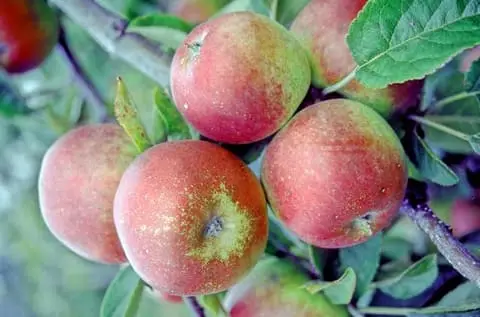
Åkerö
Named after a Södermanland manor where its 18th-century mother tree still stood in 2020; described by Eneroth in 1858
-
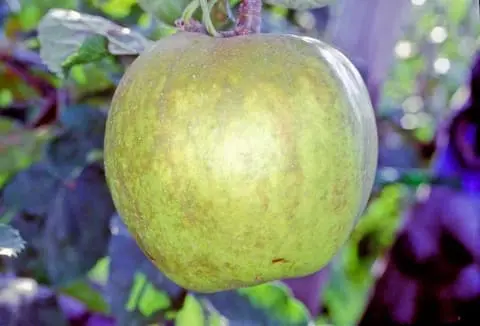
Alfa 68
-
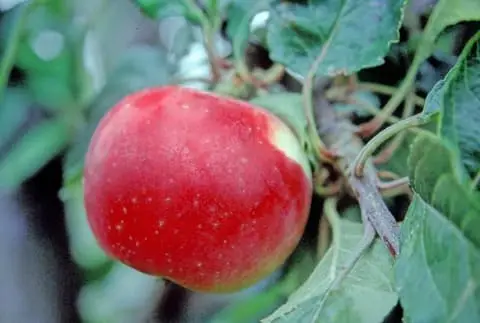
Alice
-
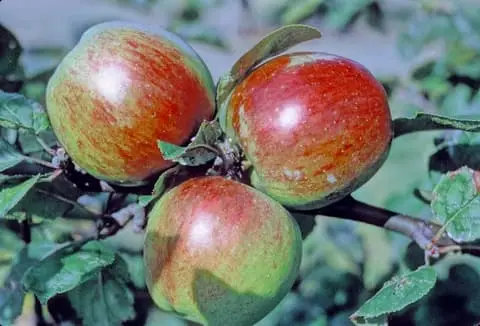
Alnarps Favorit
-
Amorosa
-
Astrachan Large Fruited
-
Birgit Bonnier
-
Eva Lotta