Apples of United States
236 varieties in the atlas came from United States. The oldest is Roxbury Russet, dated early 17th century.
Harvest
United States grew 4,922,840 tonnes of apples in 2024, 5.0% of the world's harvest; it ranked second among the world's producers.1
The figures
| Year | Tonnes |
|---|---|
| 2024 | 4,922,840 |
| 2023 | 5,203,840 |
| 2022 | 4,524,590 |
| 2021 | 4,568,810 |
| 2020 | 4,665,199 |
| 2019 | 5,028,526 |
| 2018 | 4,644,790 |
| 2017 | 5,240,670 |
| 2016 | 5,214,040 |
| 2015 | 4,556,790 |
| 2014 | 5,358,740 |
| 2013 | 4,731,694 |
| 2012 | 4,078,839 |
| 2011 | 4,281,731 |
| 2010 | 4,210,290 |
| 2009 | 4,394,267 |
| 2008 | 4,365,055 |
| 2007 | 4,122,883 |
| 2006 | 4,455,819 |
| 2005 | 4,384,832 |
| 2004 | 4,722,849 |
| 2003 | 3,982,586 |
| 2002 | 3,866,376 |
| 2001 | 4,274,201 |
| 2000 | 4,799,416 |
| 1999 | 4,822,413 |
| 1998 | 5,282,718 |
| 1997 | 4,682,797 |
| 1996 | 4,709,151 |
| 1995 | 4,798,282 |
| 1994 | 5,216,721 |
| 1993 | 4,846,680 |
| 1992 | 4,793,791 |
| 1991 | 4,402,885 |
| 1990 | 4,380,000 |
| 1989 | 4,519,000 |
| 1988 | 4,140,000 |
| 1987 | 4,872,600 |
| 1986 | 3,564,800 |
| 1985 | 3,590,000 |
| 1984 | 3,775,700 |
| 1983 | 3,800,400 |
| 1982 | 3,684,060 |
| 1981 | 3,510,620 |
| 1980 | 4,000,000 |
| 1979 | 3,685,930 |
| 1978 | 3,445,880 |
| 1977 | 3,057,015 |
| 1976 | 2,935,725 |
| 1975 | 3,415,533 |
| 1974 | 2,984,486 |
| 1973 | 2,841,741 |
| 1972 | 2,666,565 |
| 1971 | 2,890,820 |
| 1970 | 2,901,933 |
| 1969 | 3,093,302 |
| 1968 | 2,470,433 |
| 1967 | 2,451,881 |
| 1966 | 2,613,313 |
| 1965 | 2,785,146 |
| 1964 | 2,866,000 |
| 1963 | 2,609,000 |
| 1962 | 2,581,000 |
| 1961 | 2,584,000 |
Growing regions
- Washington State Desert valleys east of the Cascades, watered by snowmelt rivers, that grow two-thirds of the US apple crop
- New York State Home of the Newtown Pippin, and of the Geneva breeders who raised Cortland, Macoun, Empire and Jonagold
- Michigan's Fruit Ridge A glacial moraine north-west of Grand Rapids, two-thirds of it in Kent County, Michigan's leading apple county
Varieties from United States, oldest first
-
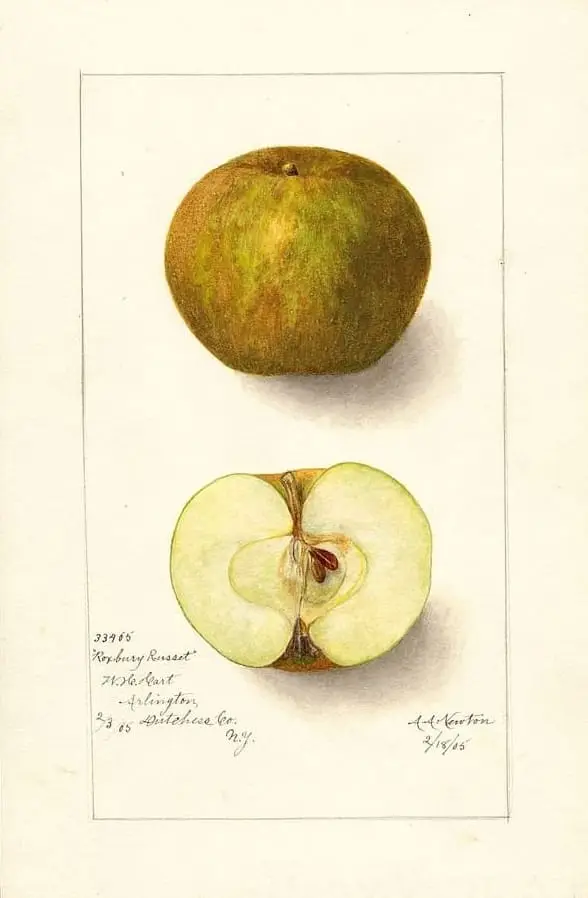
Roxbury Russet
Often called the oldest American apple; SNP data show the old French Reinette Franche to be one of its parents
-
Hewe's Crab
Colonial Virginia's prized cider crab, recorded from 1744; the tree now grown as Virginia Crab is another apple
-
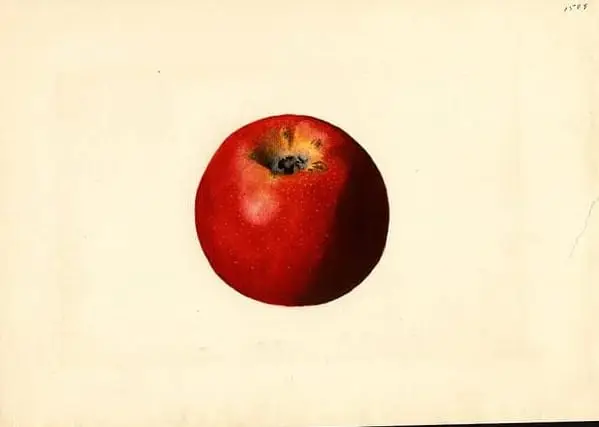
Baldwin
The United States' leading apple in 1909–13; the freezes of 1933–34 killed or ruined nearly two million of its trees
-
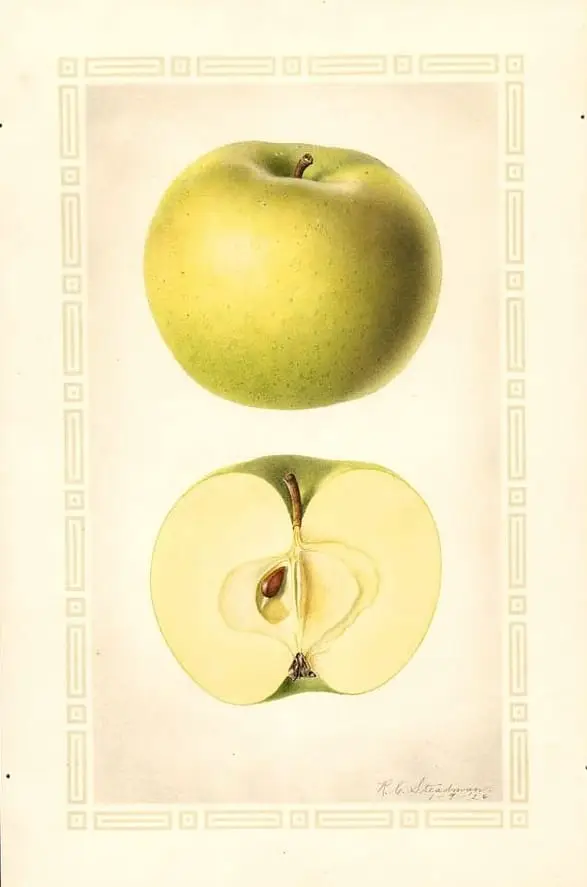
Rhode Island Greening
Probably from Green's End near Newport; second only to the Baldwin in New York in 1905, and Rhode Island's state fruit
-
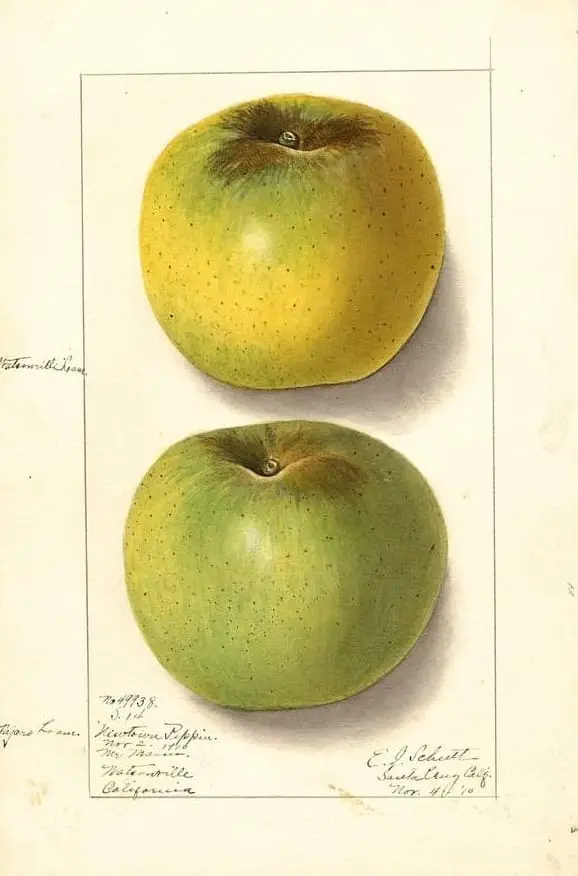
Newtown Pippin
From Newtown, Long Island: the first American apple to draw notice in Europe, sent to Franklin in London in 1759
-
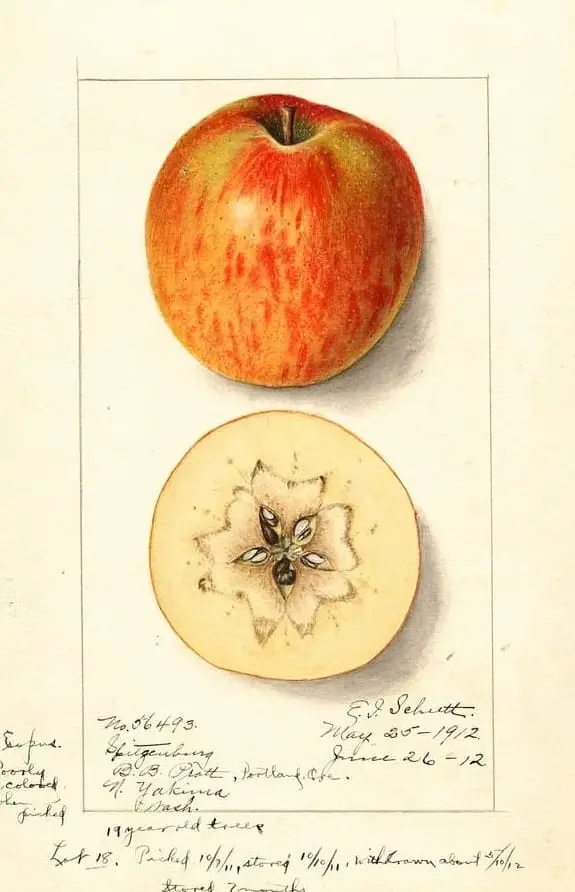
Esopus Spitzenburg
A Hudson valley apple known before 1790; DNA shows it a parent of Jonathan and probably a child of Reinette Franche
-
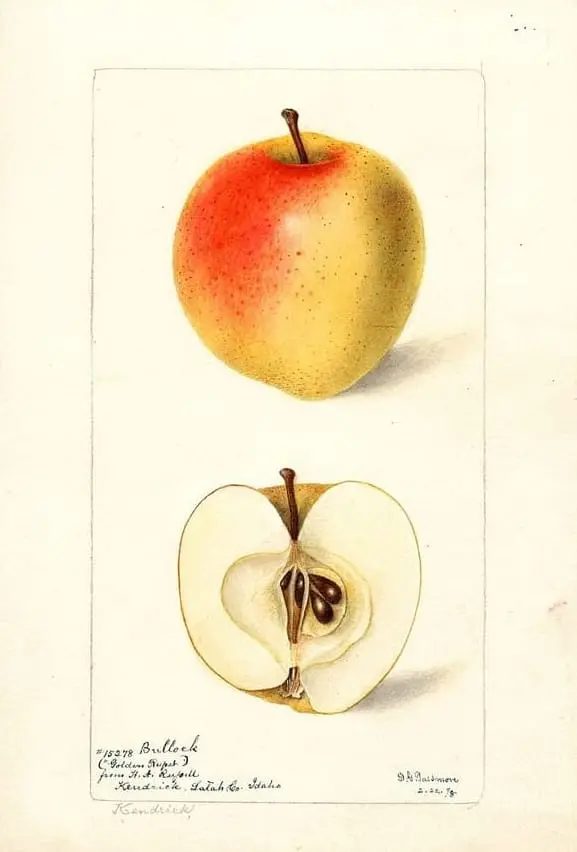
American Golden Russet
A small New Jersey russet whose flesh Downing likened to a buttery pear; Coxe knew it in 1817 as Sheep-nose
-
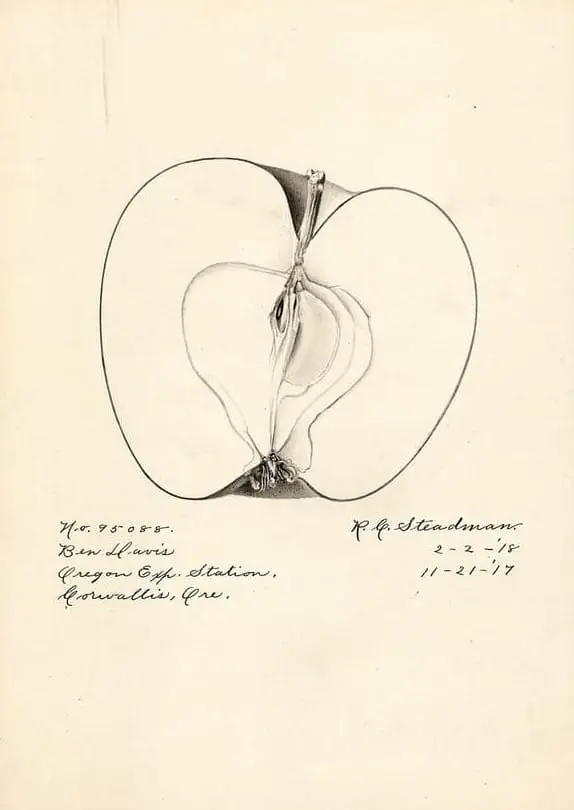
Ben Davis
A tough-skinned keeper of unknown Southern origin; in 1909–13 second only to Baldwin among American apples
-
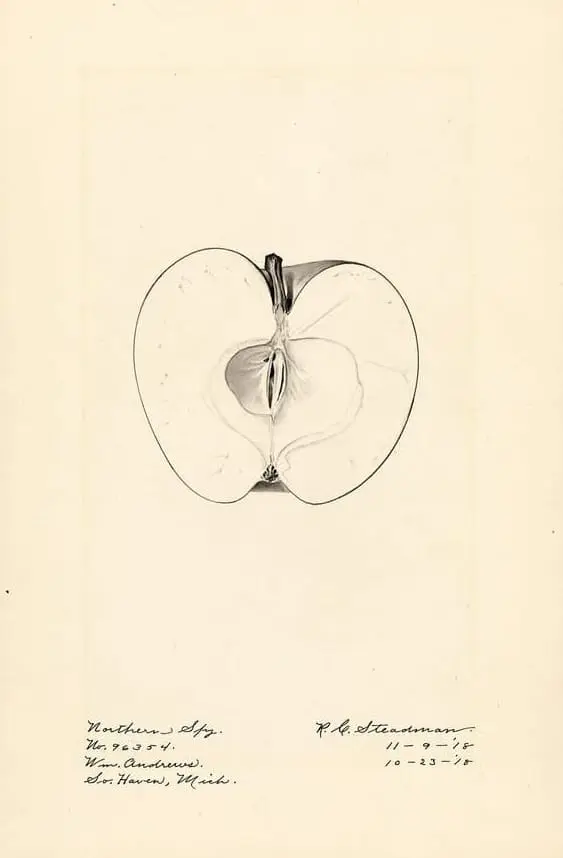
Northern Spy
Raised from Connecticut seed at East Bloomfield, New York, about 1800; third among US apples in 1909–13
-
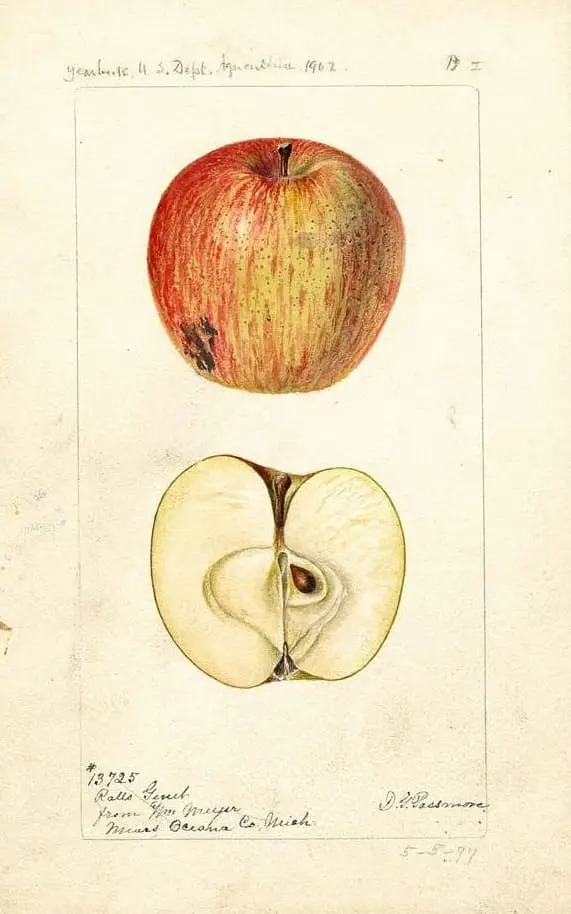
Ralls Janet
A late-blooming Virginia apple known by about 1800; in Japan, as Kokko, it became a parent of Fuji
-
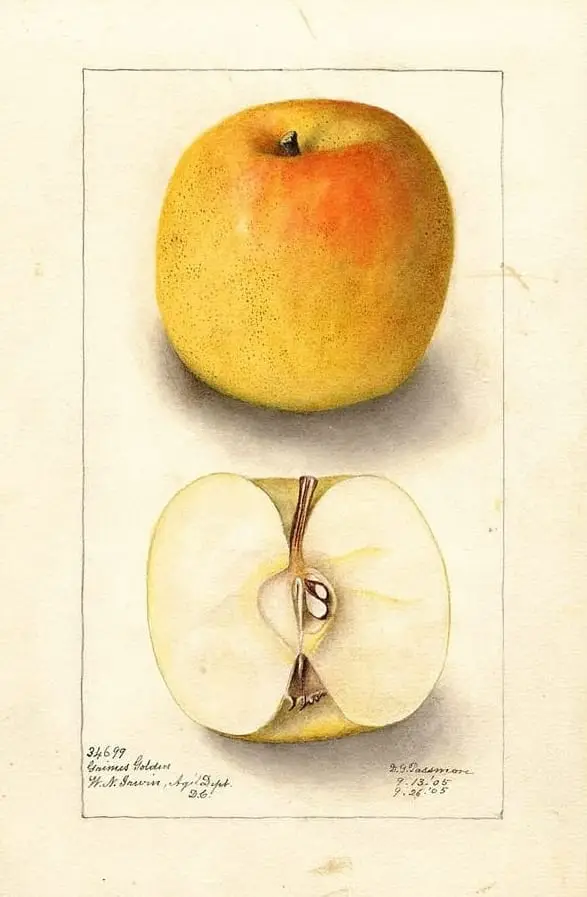
Grimes Golden
A West Virginia apple sold to New Orleans traders by 1804; DNA confirms it as a parent of Golden Delicious
-
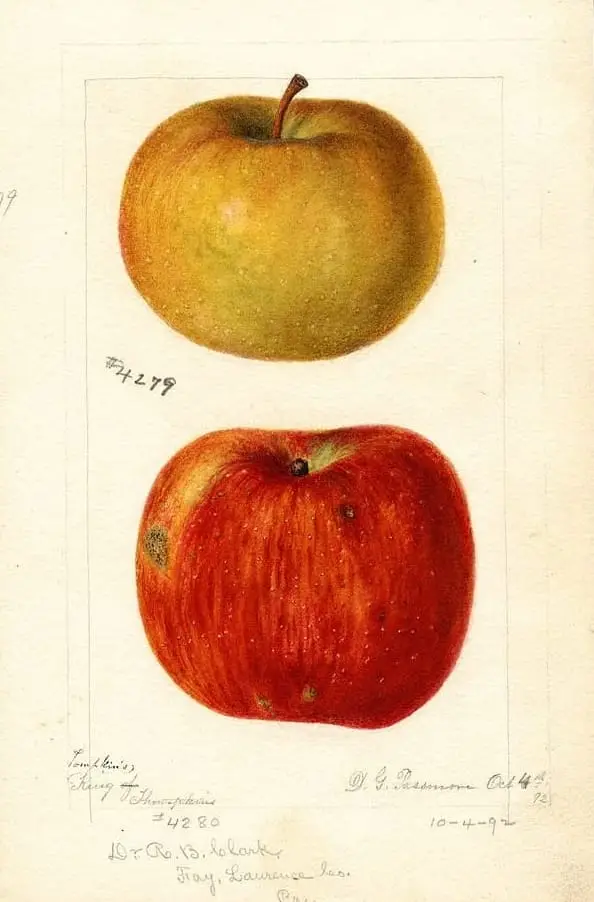
Tompkins King
Brought from New Jersey to Tompkins County, New York, in 1804; a triploid with Esopus Spitzenburg as one parent
-
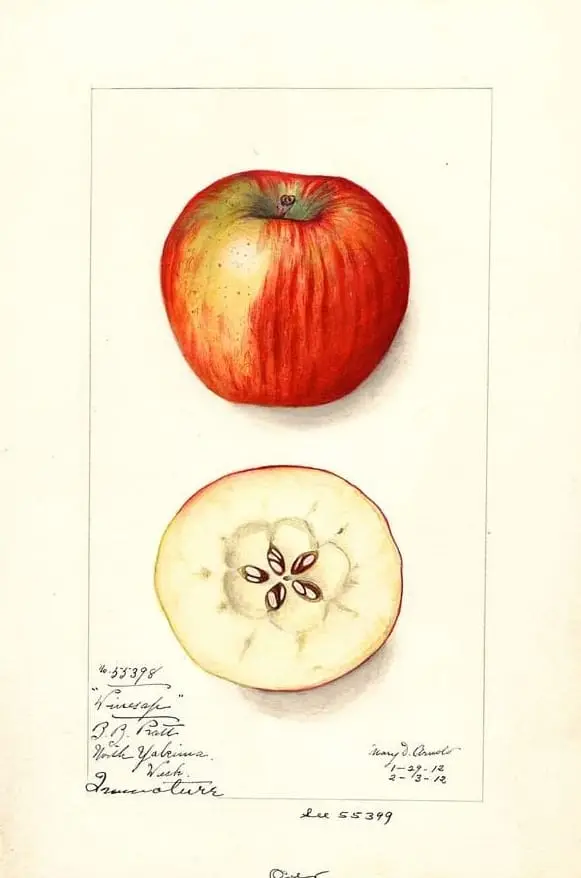
Winesap
Of unknown origin, it was "the most favored cider fruit in West Jersey" in 1817 and a parent of Delicious
-
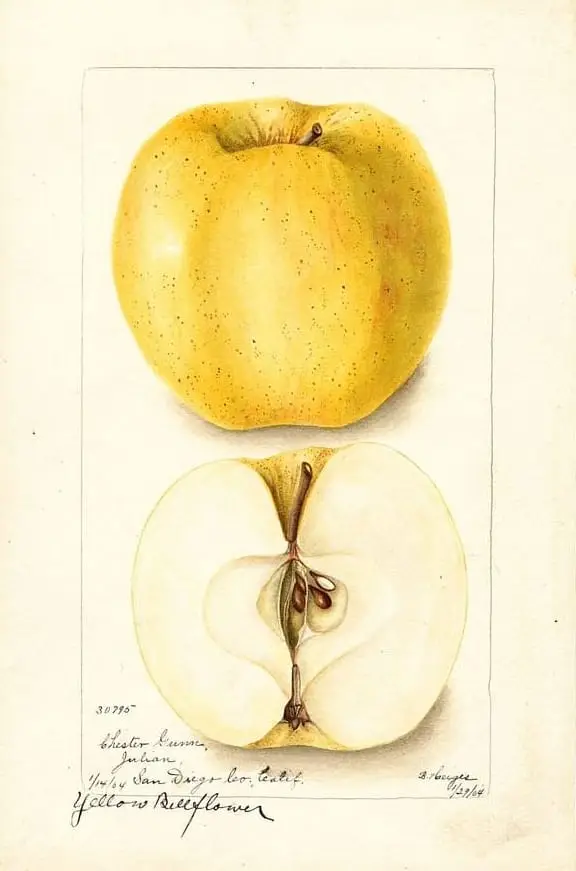
Yellow Bellflower
In 1817 the most popular apple in the Philadelphia market, it came from near Crosswicks, New Jersey
-
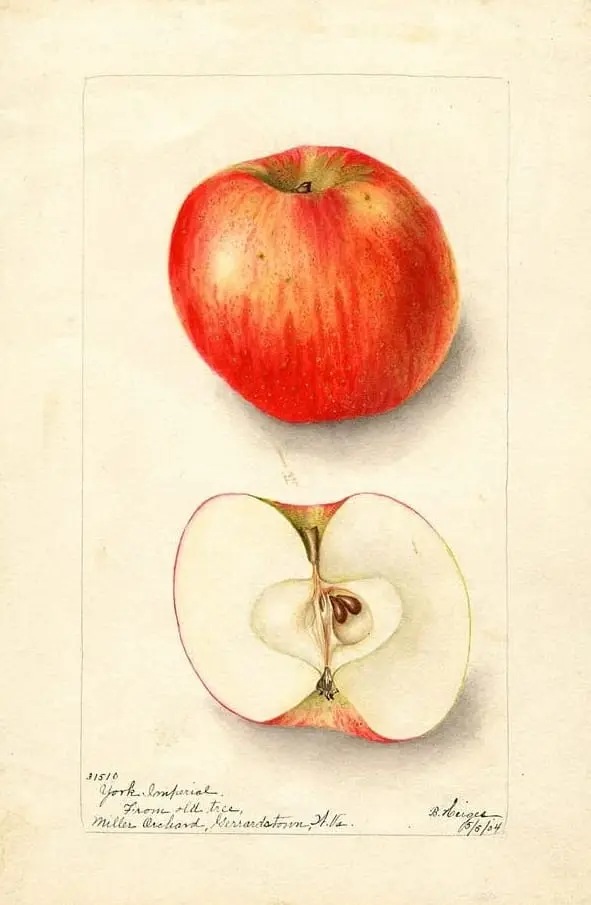
York Imperial
A lopsided Pennsylvania winter apple, named after Charles Downing called it the "imperial of keepers"
-
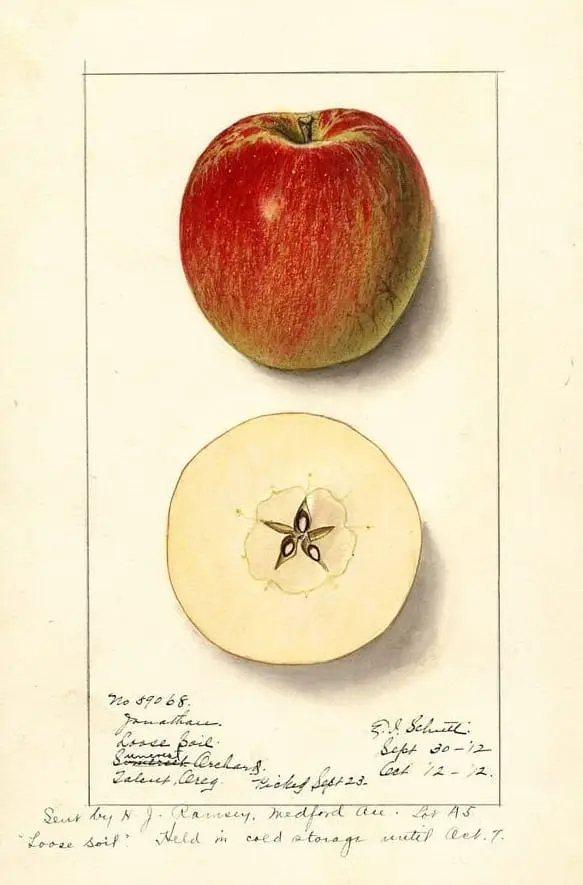
Jonathan
Named by Judge Buel after Jonathan Hasbrouck; in a 2020 DNA study only Cox's Orange Pippin had more inferred offspring
-
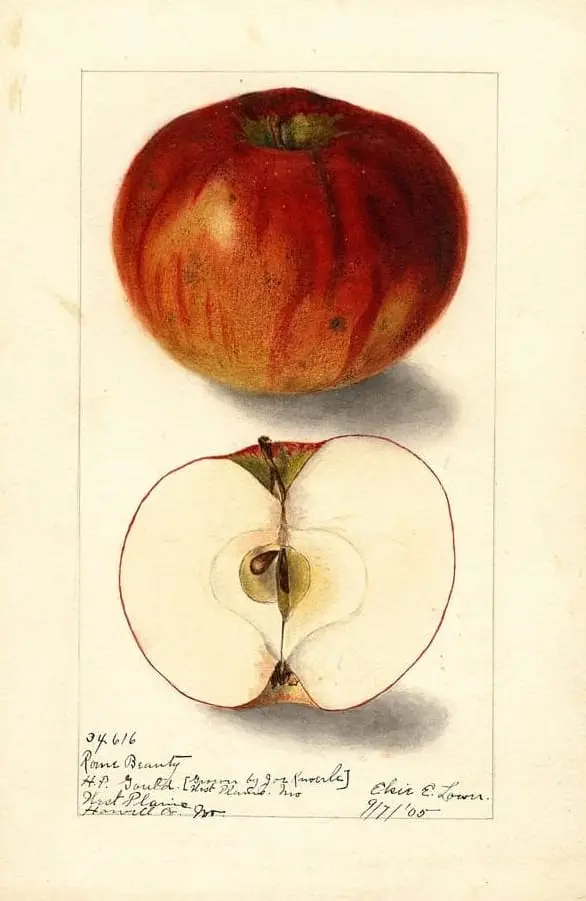
Rome Beauty
An Ohio apple that blooms late and keeps until spring; in 2020–24, 94 per cent of the US crop went to processing
-
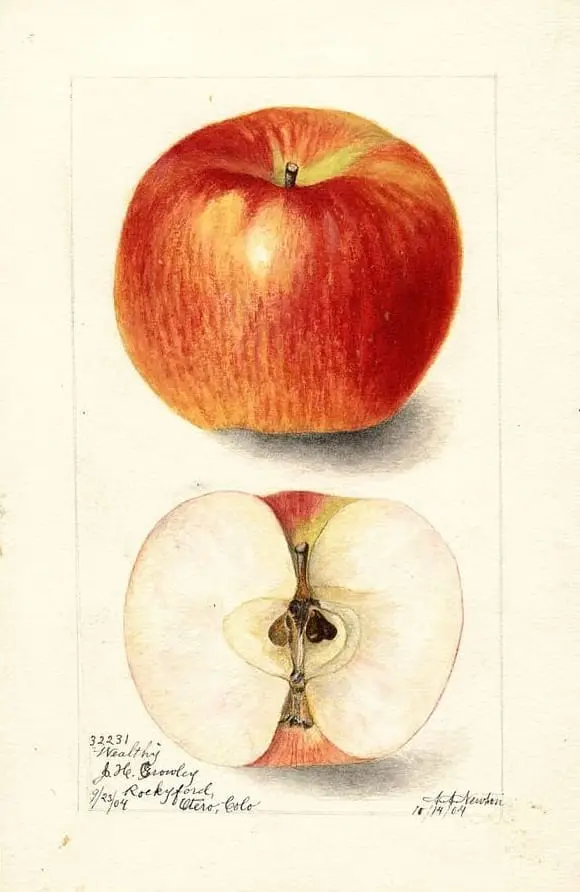
Wealthy
Peter Gideon's hardy Minnesota seedling of the 1860s; DNA names Jonathan and Duchess of Oldenburg as its parents
-
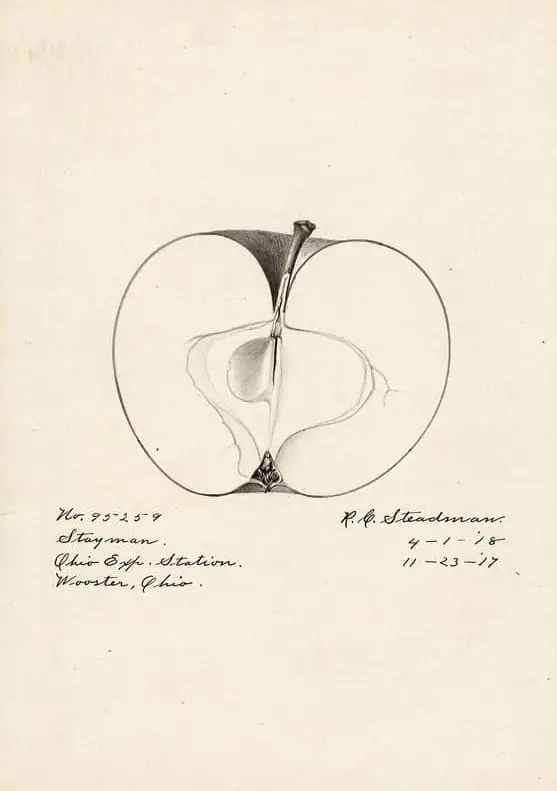
Stayman
A Winesap seedling raised at Leavenworth, Kansas, in 1866; the fifth apple of American orchards in 1928
-
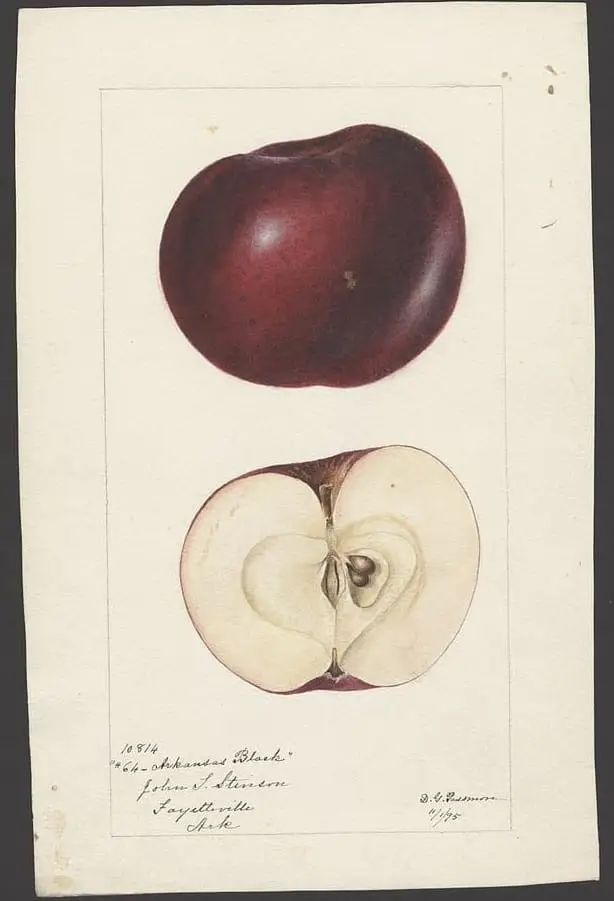
Arkansas Black
From Benton County, Arkansas, about 1870; in the sun its red skin deepens to purplish red or almost black
-
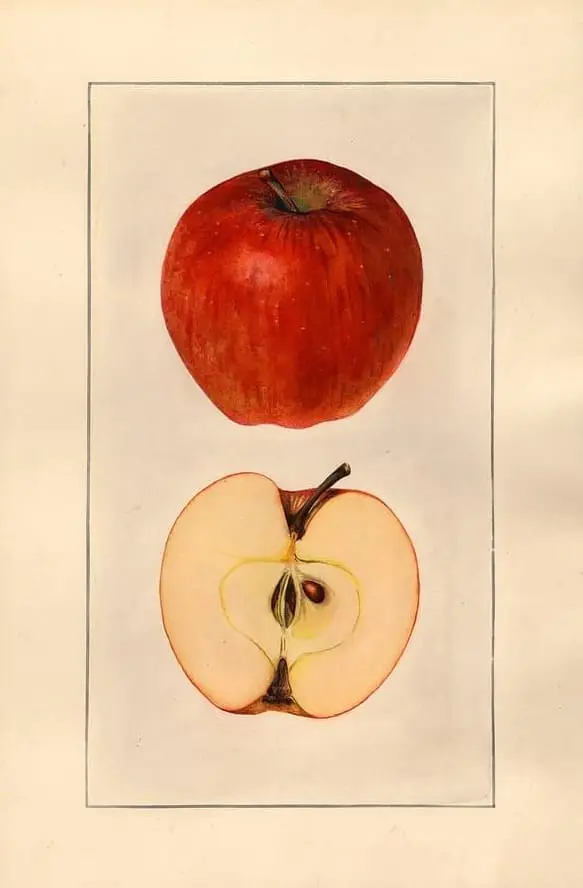
Delicious
Found by Jesse Hiatt at Peru, Iowa, and first called Hawkeye; by 1928 the most planted apple in American orchards
-
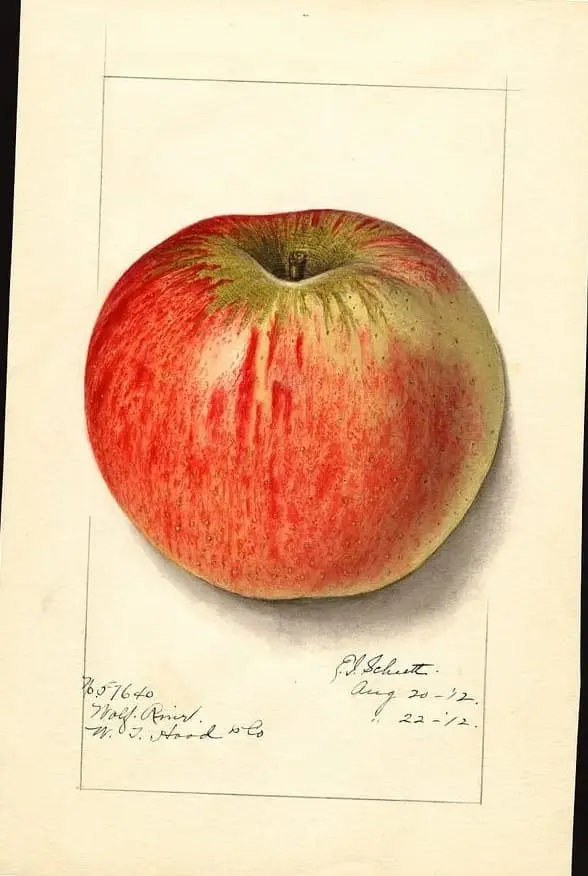
Wolf River
A large, very hardy apple raised by W. A. Springer near the Wolf River at Fremont, Wisconsin; first recorded in 1875
-
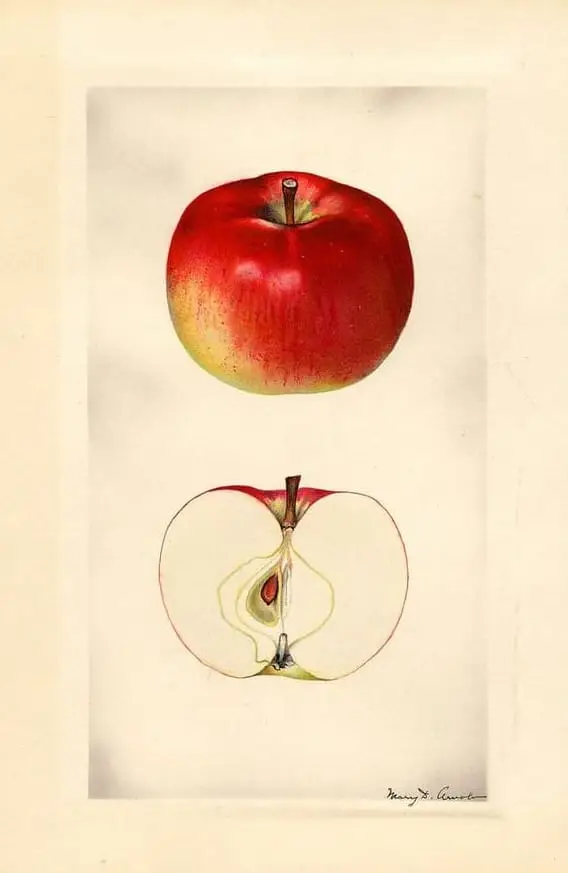
Cortland
The first apple from the Geneva station's breeding: Ben Davis × McIntosh, crossed in 1898 and introduced in 1915
-
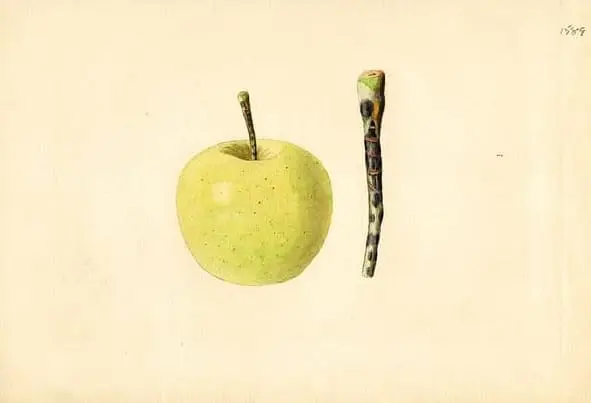
Golden Delicious
A West Virginia seedling that Stark Bro's bought for $5,000 and guarded in a locked cage with a burglar alarm
-
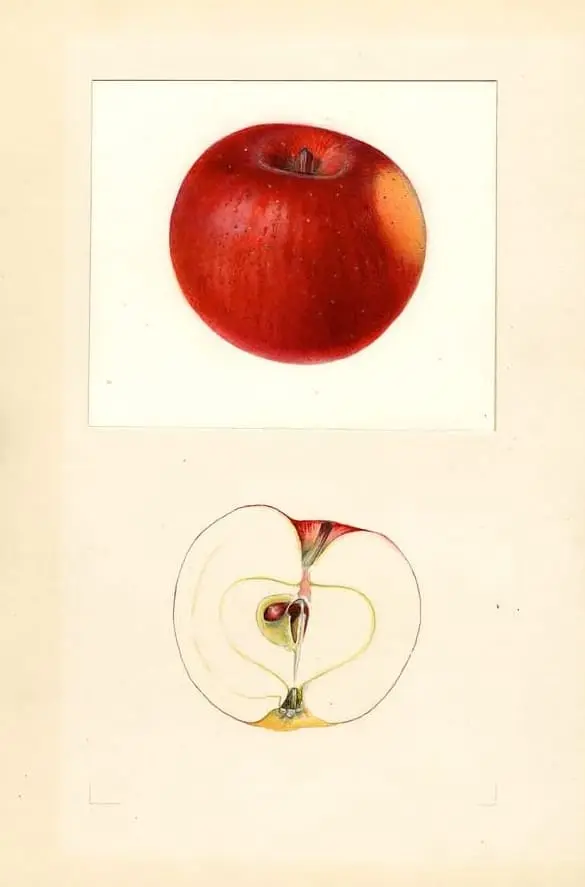
Macoun
McIntosh × Jersey Black, crossed at Geneva in 1909 and named after the Canadian pomologist W. T. Macoun
-
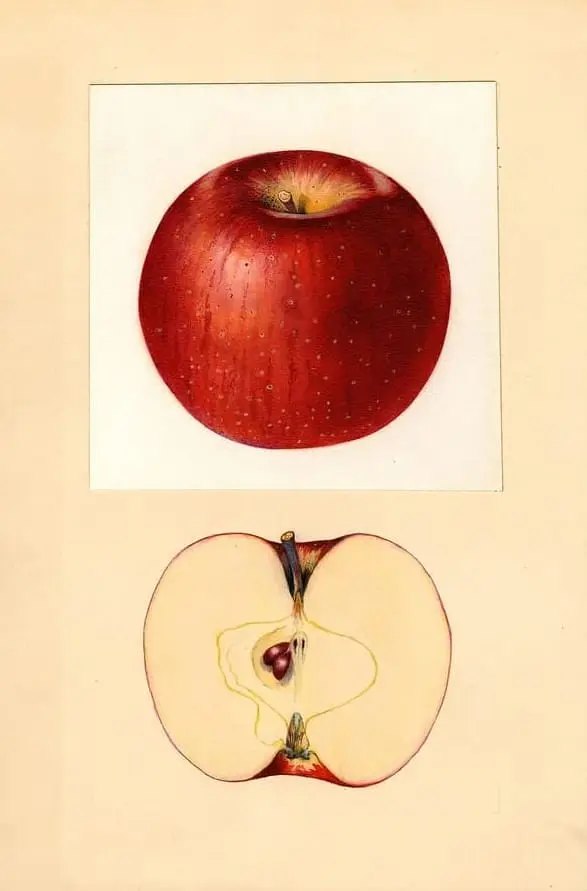
Haralson
A Malinda seedling named after the first head of Minnesota's fruit breeding farm; DNA names Wealthy as its other parent
-
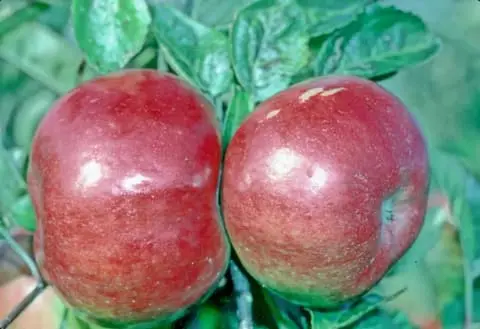
Idared
Raised in Idaho from Jonathan and Wagener and introduced in 1942; in the US today nearly all of it is processed
-
Keepsake
A hard, long-keeping Minnesota apple from a 1936 cross, introduced in 1979; DNA shows it is a parent of Honeycrisp
-
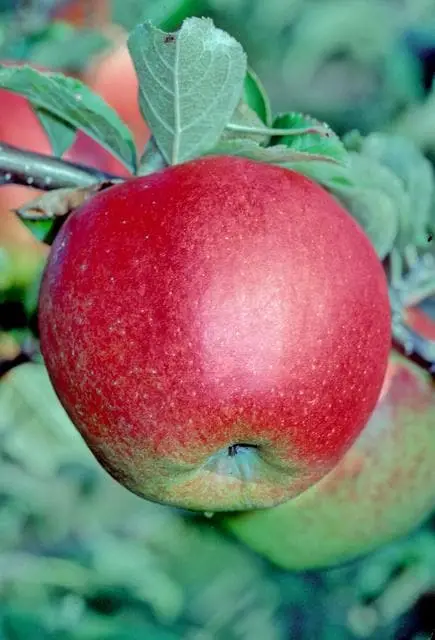
Jonagold
Golden Delicious × Jonathan, crossed at Geneva in 1943; in 1981 western Europe planted it more than any other apple
-
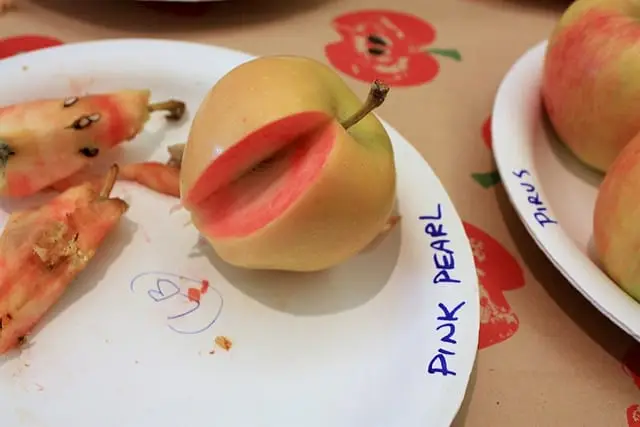
Pink Pearl
Albert Etter's best-known red-fleshed apple, a Surprise seedling from Ettersburg, California, patented in 1947
-
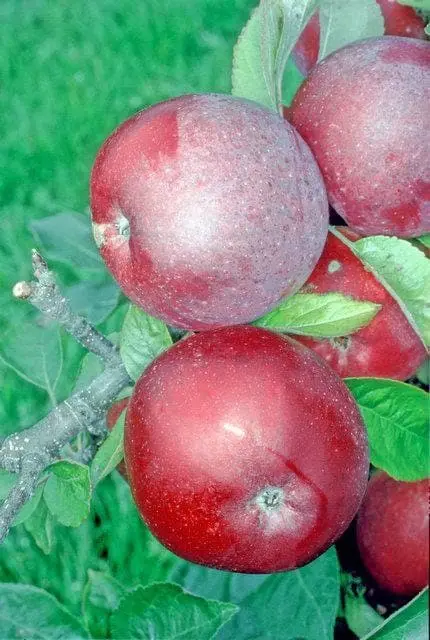
Empire
Grown from McIntosh seed gathered near Claverack in 1945, after spring frosts had destroyed Geneva's planned crosses
-
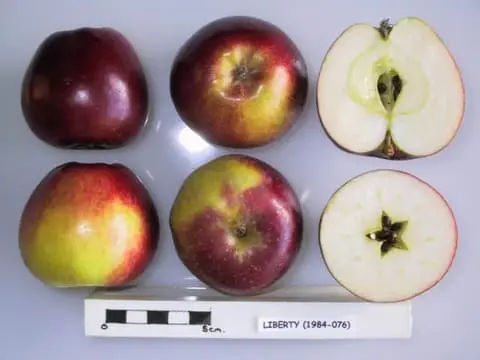
Liberty
Bred at Geneva, New York, from a 1955 cross and named in 1978 to denote its freedom from disease
-
Prima
The first apple named by the Purdue–Rutgers–Illinois scab-resistance programme, in 1970; PRI begins its name
-
Honeycrisp
Nearly discarded after winter injury, it became Minnesota's state fruit; DNA showed its recorded parents were wrong
-
Newell-Kimzey
Red-fleshed chance seedling recorded at Airlie, Oregon, in 1960; seed parent of Bill Howell's red-fleshed apples
-
Enterprise
A late, long-keeping red apple from the Purdue–Rutgers–Illinois scab-resistance programme, and a parent of WA 38
-
GoldRush
A late yellow apple of the Purdue–Rutgers–Illinois programme, named for its gold colour and "rush" of flavour
-
Minneiska
An early, very crisp Minnesota apple from a 1988 cross of Honeycrisp and Minnewashta, sold as SweeTango
-
New York 2
A late, firm and tart Cornell apple from a 1992 cross of Braeburn and Autumn Crisp; sold under the trade mark RubyFrost
-
CN 121
A seedling of open-pollinated Honeycrisp raised at Worthington, Minnesota; sold under the trade mark SugarBee
-
MN55
An early Minnesota apple from a 1997 Honeycrisp cross; sold under the trade marks First Kiss and Rave
-
WA 38
Bred at Washington State University from a 1997 cross of Enterprise and Honeycrisp; 7 per cent of the US crop in 2025/26
-
New York 1
Bred at Geneva, New York, from a 1998 cross with Honeycrisp; its fruit is sold under the trade mark SnapDragon
-
MAIA-1
A Honeycrisp × Fuji seedling bred by a growers' association; only Honeycrisp was planted more in Michigan in 2020–22
-
MAIA-L
A late, deep red open-pollinated seedling picked out at Pataskala, Ohio; sold under the trade mark Ludacrisp
-
Howell TC2
Red-skinned, red-fleshed seedling of Airlie Red Flesh, raised at Prosser, Washington, and selected in 2010
-
Howell TC3
Yellow-skinned, red-fleshed seedling of Airlie Red Flesh, raised at Prosser, Washington, and selected in 2010
-
Howell TC7
Pink-blushed apple with white and red flesh, raised at Prosser, Washington, from Airlie Red Flesh seed
And 188 more in the catalogue, A to Z
- All-Red Gravenstein
- Alton 1923
- American Beauty by 1854
- American Grindling by 1872
- American Summer Pearmain by 1817
- Ames by the 1920s
- Arkansas about 1833
- Arkcharm by 1997
- Autumn Arctic
- Banziger by about 1890
- Barkley Red Rome 1944
- Barry by 1936
- Beacon 1908
- Benoni about 1830
- Beverly Hills 1939
- Black Ben Davis about 1880
- Black Mickey 1929
- Blackjon about 1927
- Blake by 1867
- Blaxtayman 1926
- Blaze 1939
- Blue Pearmain by the early 1800s
- Blushing Golden by 1968
- Britemac 1934
- Burgundy by 1974
- Carlton 1912
- Carter's Blue by 1869
- Case Wealthy 1933
- Chehalis 1955
- Chenango Strawberry by about 1850
- Chieftain 1917
- Clear Gold
- Close by about 1925
- Collins about 1865
- Criterion 1968
- Dark Red Staymared by 1927
- Davey 1928
- Dermen McIntosh by 1966
- Dodd
- Double Red Northern Spy about 1895
- Double Red Rome Beauty about 1920
- Double-Red Baldwin 1924
- Doud Golden Delicious by 1952
- Dunning 1923
- Early McIntosh 1909
- Early Strawberry (of Great Malvern) by 1838
- Edwards by 1869
- Erlijon by 1968
- Eustis late 1600s
- Excel by 1867
- Fall Harvey by 1838
- Fall Pippin by 1806
- Fall Russet about 1880
- Fireside by 1917
- Firmgold
- Freedom (USA) 1958
- Garden Royal by 1847
- Geneva Ontario
- Giant Geniton by about 1910
- Goldspur 1960
- Hazen by 1980
- Henry Clay by 1951
- Holiday 1940
- Honeygold 1935
- Hubbardston Nonsuch by 1832
- Idagold by 1939
- Idaho Delicious by 1965
- Idajon by 1949
- Ivo by 1952
- Jefferis about 1830
- Jersey Black by 1817
- Jerseymac 1956
- Jewett's Fine Red by 1842
- Jonadel 1923
- Jonafree 1965
- Jonalicious 1933
- Jonamac 1944
- Jonared 1930
- Jongrimes by the 1920s
- Julyred
- Kendall 1912
- Kentucky Red Streak before 1864
- Kimball McIntosh 1948
- King David 1893
- Lakeland by 1950
- Lawyer Nutmeg
- Levering Limbertwig
- Lodi 1911
- Loop Spy 1925
- Loop Wealthy by 1947
- Macy by the 1920s
- Magnolia Gold 1960s
- Mandan by 1965
- McLellan about 1780
- Medina 1911
- Melon about 1800
- Melrose (2) by 1937
- Mercer by 1892
- Milton 1909
- Minjon by 1942
- Minnehaha by 1920
- Minnesota Russet by 1975
- Missing Link by 1897
- Mollie's Delicious 1948
- Monroe 1910
- Mother by 1844
- Newtown Spitzenburg by 1817
- Niagara 1950
- Nugget 1954
- Nured Rome 1927
- Ohio Nonpareil by 1848
- Oregon Spur by about 1966
- Orenco by 1903
- Oriole 1914
- Orleans 1912
- Ortley by 1817
- Ozark Gold by 1970
- Paulared 1960
- Payette 1936
- Peck's Pleasant by 1832
- Perrine Yellow Transparent about 1930
- Perrine York
- Pewaukee by 1870
- Pomme Royale by 1835
- Porter about 1800
- Prairie Spy by 1951
- Primate about 1840
- Prime Gold
- Priscilla by 1972
- Pumpkin Sweet by 1834
- Quindell 1934
- Raritan 1949
- Red Sauce 1910
- Redfree by 1981
- Redgold by 1946
- Redhook 1923
- Redwell about 1911
- Regent by 1963
- Richardson (USA) 1956
- Richared Delicious about 1915
- Roanoke 1949
- Rogers McIntosh before 1930
- Ruby Rome Beauty about 1912
- Salome by 1884
- Scarlet Staymared 1930
- Sharon 1906
- Shenandoah 1942
- Sir Prize 1955
- Smoothee 1958
- Spigold
- Spijon 1944
- Stafner Rosen by 1924
- Stark EarliBlaze 1949
- Stark's Earliest 1938
- Starking 1921
- Starkrimson Delicious about 1953
- Starkspur Golden Delicious
- Starkspur Supreme
- Starr by 1865
- State Fair 1949
- Stearns by 1900
- Stevenson Wealthy 1934
- Summer Rose by 1806
- SummerGlo 1935
- Sungold 1960
- Swaar by 1804
- Sweet Delicious 1911
- Sweet-Tart
- Texola by 1930
- Twenty Ounce by about 1844
- Vicking by 1925
- Victory (USA) by 1943
- Vista Bella 1956
- Wagener 1791
- Washington Strawberry by 1849
- Wayne by 1951
- Webster 1912
- Wellington Bloomless by 1929
- Wellspur Delicious 1952
- Westfield Seek-no-Further by 1796
- White Winter Pearmain (Graaf) by 1849
- Williams Favourite about 1750
- Winter Banana 1876
- Winter Peach by 1853
- Wrixparent 1920
- Yellospur 1959
- York-a-Red 1931
- Young America by the 1800s
Sources
- FAOSTAT: Production: Crops and livestock products, Food and Agriculture Organization of the United Nations (FAO), Updated 31 December 2025. Supports: each country's apple harvest by year (item 515, apples, in tonnes, 1961 to 2024), the shares of the world's harvest and the ranks worked out from them, and which figures FAOSTAT estimated or imputed.