Apple varieties, United States
WA 38
Bred at Washington State University from a 1997 cross of Enterprise and Honeycrisp; 7 per cent of the US crop in 2025/26
History
WA 38 was bred at Washington State University’s Tree Fruit Research and Extension Center in Wenatchee, from a cross of Enterprise and Honeycrisp made there in 19971; its patent names Bruce H. Barritt as the inventor2. The seedling, budded onto M.9 rootstock in 1999, was planted in the university’s Columbia View orchard in 2001 and selected in October 2003 after two seasons of fruit; trials followed at three sites in central Washington from 2006 and on four commercial orchards from 20081.
US Plant Patent 24,210, applied for in 2012, was granted in February 20142. Its release to Washington growers was set for winter 2012–13, open only to those on the state industry’s assessment records1; the university lists it as a 2013 release, sold under the registered trade mark Cosmic Crisp3. In the US industry’s 2026 outlook it made up about 20.1 million bushels (of 42 lb) in 2025/26, 7 per cent of the US crop, against 4 per cent on the five-year average; the forecast for 2026/27, 19.7 million bushels, was all from Washington4.
The fruit
The fruit is large and round-conical, about 84 mm across and 79 mm high, and weighs 281 g on average1,2. Some 90 per cent of the thin, smooth skin carries a dark red-purple blush, streaked rather than marbled, over a green-yellow ground, and no russet has been seen1,2. The yellow-white flesh is very crisp, firm and juicy, with a mild apple aroma and a balanced flavour, more acid in relation to its sugar than Gala or Fuji1. Cut flesh browns little or not at all for an hour or two, which suits it to fresh-cut slices and salads1,2. Consumer panels rated it above Fuji at Pullman in 2009, and preferred it to Gala for appearance and texture at Spokane in 20121.
At Wenatchee it ripens in late September, about four weeks after Gala and three before Fuji1; according to the patent it is usually picked in one pass, though the harvest can be spread over two weeks2. It loses little quality, particularly firmness, over several months in cold storage1, and keeps up to five months in common storage2.
Growing
The tree is upright and spreading, of moderately low vigour, and bears early, forming spurs on two-year-old wood; its yields are within the range of other local varieties, and it is hardy to at least USDA zone 6b1. It reaches full bloom a day or two after Fuji, usually at the end of April at Wenatchee1, and any diploid apple flowering at the same time can pollinate it2. Scab inoculum is too scarce at Wenatchee for its resistance to have been tested, but genetic markers suggest it most likely inherited the Vf resistance gene from Enterprise1; the patent says it may have some resistance to scab but is otherwise susceptible to the pests and diseases of central Washington2. In the field it has shown only moderate susceptibility to powdery mildew and fire blight, and its fruit rarely shows russet, bitter pit or sunburn there1.
Uses
WA 38 is a dessert apple2, suited to sale both straight from the tree and after medium- and long-term storage1.
Where the sources disagree
- Which parent bore the seed. The patent calls Enterprise the maternal parent2. The 2012 release paper calls Enterprise its “paternal parent” in one passage and Honeycrisp in another1.
- Season. Late September at Wenatchee in the release paper1; late September to early October in the patent, which records a harvest on 2 October2.
- Bloom on the skin. Conspicuous at harvest in the release paper1; scant in the patent2.
Family tree
Parents, grandparents and great-grandparents, as the entries in the atlas record them.
- WA 38 United States, 1997
- Seed parent Enterprise United States, 1971
- Seed parent PRI 1661-2
- Pollen parent PRI 1661-1
- Pollen parent Honeycrisp United States, about 1960
- Parent Keepsake United States, 1936
- Parent MN 447
- Parent Northern Spy United States, about 1800
- Parent MN1627
- Parent Keepsake United States, 1936
- Seed parent Enterprise United States, 1971
Sources
- 'WA 38' Apple, Kate M. Evans, Bruce H. Barritt, Bonnie S. Konishi, Lisa J. Brutcher and Carolyn F. Ross, HortScience 47(8): 1177–1179 (read in the Internet Archive's copy of the journal page), 2012-08. Supports: the cross of Enterprise and Honeycrisp made in 1997 at the Washington State University Tree Fruit Research and Extension Center, Wenatchee; budded onto M.9 in September 1999 and planted at the Columbia View orchard in April 2001; fruit evaluated in 2002 and 2003, selection for Phase 2 in October 2003; Phase 2 trees at three sites in central Washington in April 2006; Phase 3 plantings at four commercial orchards in 2008; release to Washington State growers in winter 2012–2013, participation restricted to growers on the state commission's assessment records; 90 per cent of the skin covered by a dark red-purple blush over green-yellow; conspicuous bloom at harvest; smooth skin, no russet seen; fruit large, round-conical, 8.4 cm across and 7.9 cm long; very crisp, firm and juicy, with a balanced flavour and a higher acid to sugar ratio than Gala and Fuji; mild, apple-like aroma; yellow-white flesh with "minimal to none" browning after 1 to 2 hours; suitable for fresh-cut slices and salads; consumers in Pullman in February 2009 rating it above Fuji in overall acceptance; consumers in Spokane in March 2012 preferring it to Gala for appearance and texture; ripening in late September in Wenatchee, about 4 weeks after Gala and 3 weeks before Fuji; little loss of quality, particularly firmness, after several months in cold storage; full bloom 1 to 2 days after Fuji, typically at the end of April; tree upright and spreading with moderately low vigour, precocious, spurs from 2-year-old wood, yields within the range of local cultivars, hardy to at least USDA zone 6b; scab resistance not determined at Wenatchee, but marker analysis indicating that it "most likely has inherited" Vf from "its paternal parent 'Enterprise'", while elsewhere Honeycrisp is called "its paternal parent"; only moderate susceptibility to powdery mildew and fire blight; russet, bitter pit and sunburn rare in central Washington; suited to the fresh market off the tree and from medium- and long-term storage.
- Apple tree named 'WA 38' (US Plant Patent 24,210), Bruce H. Barritt, Washington State University Research Foundation; Google Patents, 2014-02-04. Supports: Bruce H. Barritt the inventor; application filed 23 February 2012, granted 4 February 2014; a single seedling from a cross of Enterprise and Honeycrisp, Enterprise its "maternal parent"; fruit 80.0–88.3 mm across, 254–332 g, average 281 g; skin thin, "more streaked than marbled with scant bloom present"; flesh crisp, juicy, subacid, with a mild apple-like flavour, browning very little to none after one hour; harvest typically late September or early October, observed on 2 October, a single pick that can be extended over two weeks; up to five months in common storage; pollinated by any diploid apple of the same bloom season; for dessert; may have some resistance to scab from Enterprise, otherwise susceptible to the insects and diseases of central Washington.
- Apple Variety Releases, Pome Fruit Breeding Program, Washington State University Tree Fruit Research and Extension Center, Wenatchee. Supports: WA 38 listed as a 2013 release under the registered trade mark Cosmic Crisp.
- Industry Outlook 2026, Christopher Gerlach, U.S. Apple Association, 2026-08. Supports: WA 38 "the cultivar designation for" the trade mark Cosmic Crisp (p. 21); Table 6: the variety (listed as Cosmic Crisp) 20,113,679 bushels, 7 per cent of US production, in 2025/26, against 12,010,851 bushels (4 per cent) on the five-year average, and 19,740,215 bushels forecast for 2026/27; Table 7: all of the 2026/27 forecast in Washington; production in 42-pound bushels.
More from United States
-
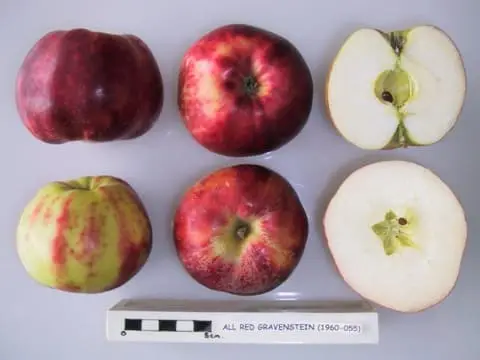
All-Red Gravenstein
-
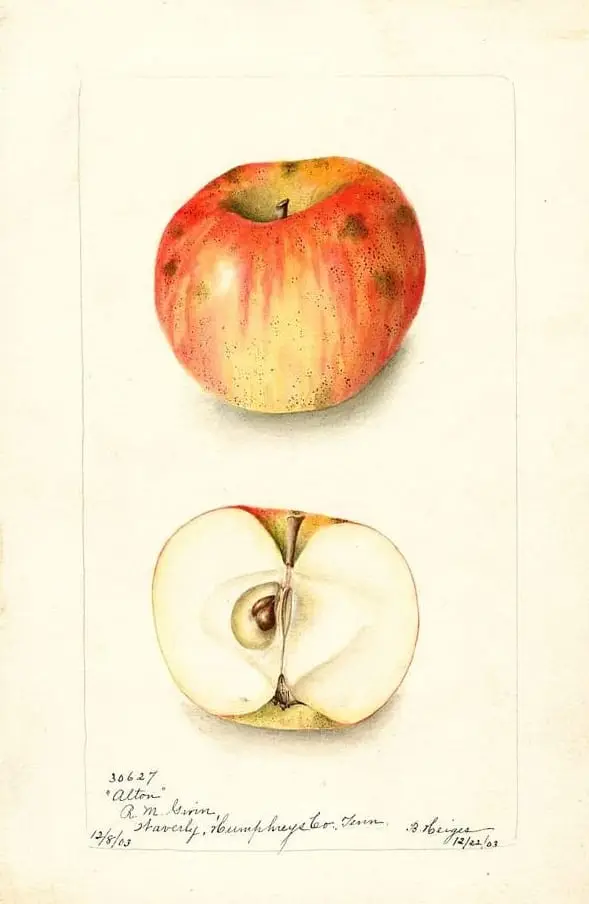
Alton
-
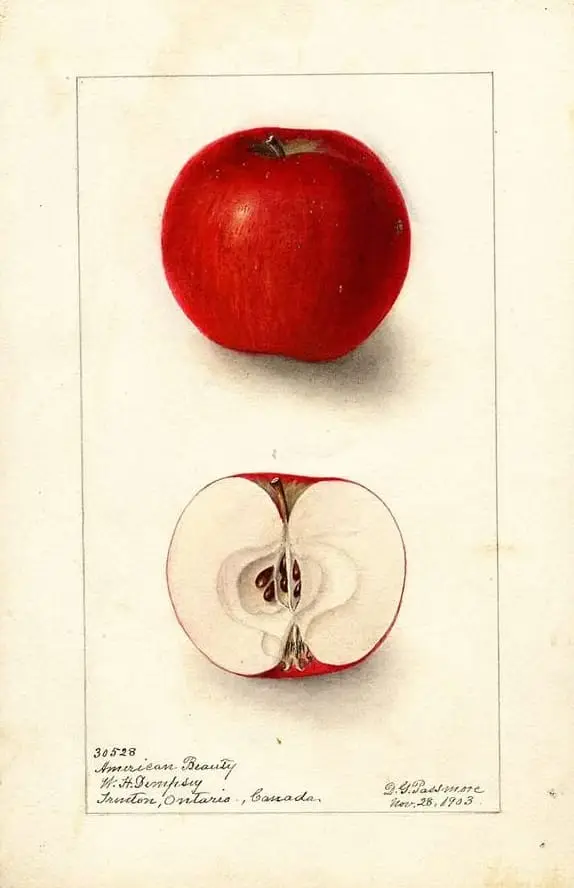
American Beauty
-
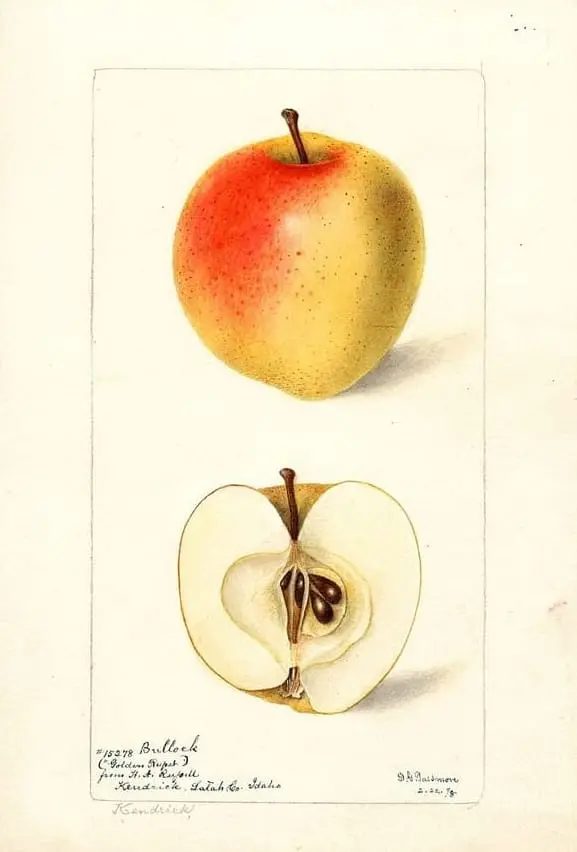
American Golden Russet
A small New Jersey russet whose flesh Downing likened to a buttery pear; Coxe knew it in 1817 as Sheep-nose
-
American Grindling
-
American Summer Pearmain
-
Ames
-
Arkansas