Gala
Raised by J. H. Kidd at Greytown, New Zealand, about 1934 from Kidd's Orange Red and Golden Delicious
History
Gala was raised by J. H. Kidd of Greytown, in New Zealand’s Wairarapa, one of the country’s pioneer apple breeders of the 1920s and 1930s2. Kidd pollinated apples by hand, hoping to give the heavy crops and good looks of American varieties the flavour of English ones2. A seedling of Delicious and Cox’s Orange Pippin, marketed as Kidd’s Orange, came first; crossing that with Golden Delicious gave Gala2. Te Ara gives 1934 for Gala and the National Fruit Collection about 19341,2. SNP data confirm both generations of this pedigree5.
Seedlings of this cross were grown and tested at the fruit research orchard at Havelock North, where Don McKenzie of the Department of Scientific and Industrial Research selected the apple and named it2,3; the name dates from 19651. McKenzie patented it in the United States in 1974 as plant patent 3,6373,4. A later owner of the patent propagated it at Louisiana, Missouri, and a correction of 1985 gave the patented variety the name Kidd’s D-83.
In March 1969 Hendrik Willem ten Hove found a bud sport with glossy bright red fruit among the trees at Matamata; it was patented in the United States in 19774 and introduced in the 1970s2. A later patent calls the sport Tenroy8, and the international marketing standard for apples lists Tenroy as a mutant of Gala whose trade mark is Royal Gala7. The National Fruit Collection lists four sports of Gala in all1. The red sport and Braeburn together made up about 77 per cent of New Zealand’s apple production in the early 2000s, and a cross between the two, made in 1984–85, gave Scifresh2. In 2025 the red sport accounted for 19.9 per cent of New Zealand’s apple exports, more than any other variety, by Stats NZ figures compiled in Fresh Facts6.
The fruit
The fruit is medium-sized, 59–65 mm high and 62–70 mm wide, and strongly ribbed at the eye1. The smooth, rather tough skin is yellow with a bright orange-red flush and darker stripes1; the patent describes a golden-yellow apple with a bright red blush, shaped like Golden Delicious but smaller3. The flesh is firm, crisp, fine-textured and juicy: yellow in the National Fruit Collection’s description, satiny white tinged with yellow in the patent’s1,3. The collection finds it sweet and slightly subacid, with a good aromatic flavour1, and the patent likens its mildly subacid flavour to that of Cox’s Orange Pippin, only sweeter3.
Growing
At Louisiana, Missouri, where the patent’s description was made, the tree was fairly small, vigorous, spreading, hardy and productive, and cropped regularly3. There it came into flower about 18 April and was picked from about 25 August to 5 September, some two weeks before Jonathan3. The fruit hangs on the tree until fully coloured and ripe without dropping early, and keeps about 60 days in ordinary storage3. At Brogdale, Kent, it starts to flower around 27 April and is picked in early October1. The red sport was picked at Matamata from 25 February to 1 April 19764. Gala is diploid5.
Uses
Where the sources disagree
Family tree
Parents, grandparents and great-grandparents, as the entries in the atlas record them.
- Gala New Zealand, about 1934
- Parent Kidd's Orange Red New Zealand, 1924
- Parent Cox's Orange Pippin United Kingdom, about 1825
- Parent Margil France, probably by 1608
- Parent Rosemary Russet United Kingdom, by 1831
- Parent Delicious United States, 1872
- Parent Winesap United States, by 1817
- Parent Cox's Orange Pippin United Kingdom, about 1825
- Parent Golden Delicious United States, 1905
- Parent Grimes Golden United States, by 1804
- Parent Kidd's Orange Red New Zealand, 1924
Offspring in the atlas
- Civni × Elstar; Italy, 1988
- Galaxy New Zealand, 1985
- IAPAR 75 Eva × Anna; Brazil, 1979
- Nicoter × Braeburn; Belgium, 1993
- Prince Gala France
- Royal Gala New Zealand, 1971
- Sciros × Splendour; New Zealand, 1984
10 varieties in the atlas descend from Gala.
Sources
- Gala (accession 1976-144), National Fruit Collection, Brogdale, Kent (Defra). Supports: raised "in about 1934" by J. H. Kidd at Greytown, Wairarapa; "named in 1965"; parentage "Kidd's Orange Red x Golden Delicious"; four sports listed; a dessert apple of medium size, 59–65 mm high and 62–70 mm wide, strongly ribbed at the eye; yellow ground with a "bright orange-red flush and deeper stripes"; skin smooth, rather tough; flesh yellow, firm, crisp, fine-textured and juicy; flavour "sweet, slightly subacid", "a sweet and good aromatic flavour"; 10% flowering on 27 April and picking in early October at Brogdale.
- Apples and pears, John Palmer, Te Ara – the Encyclopedia of New Zealand (Ministry for Culture and Heritage); archived copy, Internet Archive, 2008-11-24. Supports: J. H. Kidd of Greytown, Wairarapa, a pioneer of New Zealand apple breeding in the 1920s and 1930s, who hand-pollinated varieties hoping to combine the heavy cropping and looks of American apples with the flavour of English ones; his first success, from Delicious and Cox's Orange Pippin, sold as Kidd's Orange, which he then crossed with Golden Delicious to produce Gala, "bred in 1934"; Gala selected and named by Don McKenzie at the Department of Scientific and Industrial Research in Havelock North; its red sport "introduced in the 1970s"; the sport and Braeburn "about 77%" of New Zealand's apple production in the early 2000s; Scifresh selected from a cross of the sport and Braeburn made in 1984–85.
- US Plant Patent 3,637: Apple tree Kidd's D-8 variety, Donald W. McKenzie, United States Patent and Trademark Office; Google Patents, 1974-10-15. Supports: a seedling McKenzie found among seedlings of Kidds Orange × Golden Delicious grown under his direction in his assignee's fruit research orchard at Havelock, New Zealand; filed 1 August 1973; propagated in New Zealand and by a later assignee at Louisiana, Missouri, where it was described; flavour "mildly subacid and somewhat similar to but sweeter than that of Cox Orange"; form like Golden Delicious but smaller; golden yellow with a bright red blush; ripening about two weeks before Jonathan; fruit that hangs until fully coloured and ripe without premature drop; tree medium small, vigorous, spreading, hardy, productive, a regular bearer; first and full bloom about 18 and 30 April and picking about 25 August to 5 September at Louisiana; flesh satiny white with a yellowish tint, firm, fine and crisp; "about 60 days in ordinary storage"; use market and dessert; the certificate of correction of 26 March 1985 naming the variety Kidd's D-8.
- US Plant Patent 4,121: Apple tree--Royal Gala variety, Hendrik Willem ten Hove, United States Patent and Trademark Office; Google Patents, 1977-10-04. Supports: a mutation "of the Gala variety (U.S. Plant Pat. No. 3,637)" found by ten Hove in March 1969 as a single bud sport among the trees at Matamata, New Zealand, and first propagated in March 1970; "The new variety has been named the Royal Gala variety"; glossy bright red fruit; first and last pickings on 25 February and 1 April 1976 at Matamata.
- Using whole-genome SNP data to reconstruct a large multi-generation pedigree in apple germplasm, Hélène Muranty and others, BMC Plant Biology 20: 2, with Additional files 1 and 3, 2020. Supports: the documented parentage "'Gala' (= 'Kidd's Orange Red' x 'Golden Delicious')" in agreement with the SNP data (Table S3: 8 Mendelian errors, both parents confirmed); Kidd's Orange Red confirmed as a child of Cox's Orange Pippin and Delicious (Table S3); Gala diploid (Table S1).
- Fresh Facts 2025, pp. 16–17: Sector profile – apples, United Fresh New Zealand, 2025. Supports: "New Zealand Apple Exports by Variety 2025", from Stats NZ harmonised export data accessed on 19 August 2025: the red sport of Gala, listed as Royal Gala, 19.9%, the largest share of any variety.
- International Standards for Fruit and Vegetables: Apples, pp. 49 and 54: Non-Exhaustive List of Apple Varieties, OECD Publishing, Paris (explanatory brochure on the UNECE standard for apples, FFV-50, 2020 version), 2021. Supports: a list of varieties whose fourth column gives known trade marks under which a variety may be marketed, "for information only", the first three columns being meant for varietal names and synonyms, not trade marks (p. 49); Tenroy listed as a mutant of Gala, with Royal Gala as its trade mark (p. 54).
- US Plant Patent 27,420: Apple tree named ANABP 01, John E. Cripps, Western Australian Agriculture Authority; United States Patent and Trademark Office; Google Patents, 2016-11-29. Supports: the male parent of ANABP 01 given as "'Tenroy' Gala (U.S. Plant Pat. No. 4,121; also known as 'Royal Gala')", tying the name Tenroy to the sport patented in 1977.
More from New Zealand
-
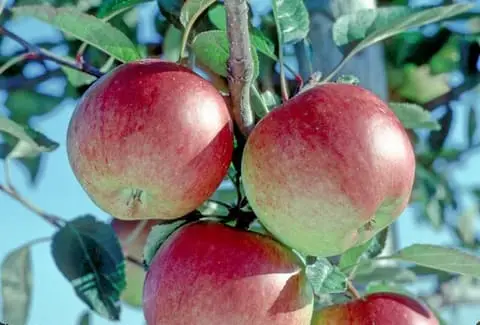
Braeburn
A Nelson chance seedling grown commercially from 1952; DNA names Delicious and Sturmer Pippin as its parents
-
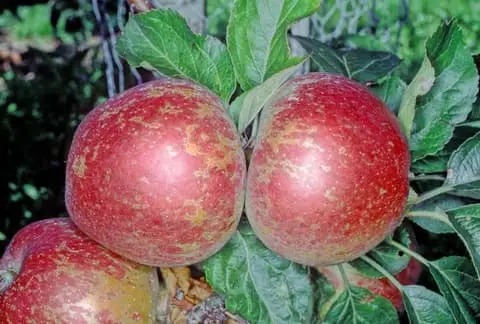
Captain Kidd
-
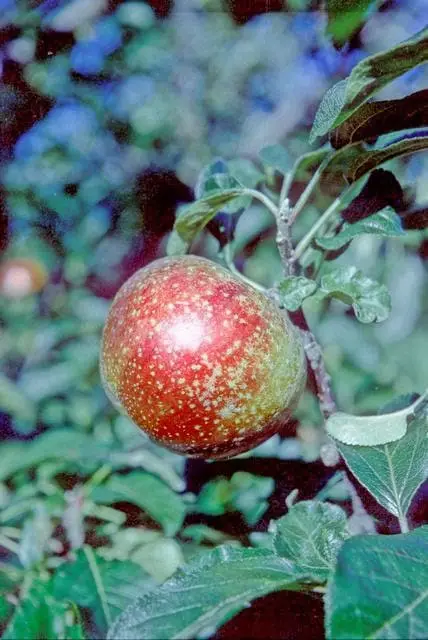
Cox's Early Export
-
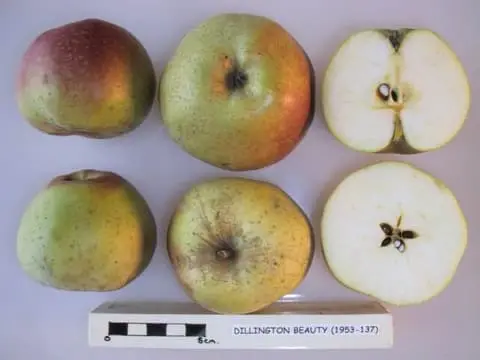
Dillington Beauty
-
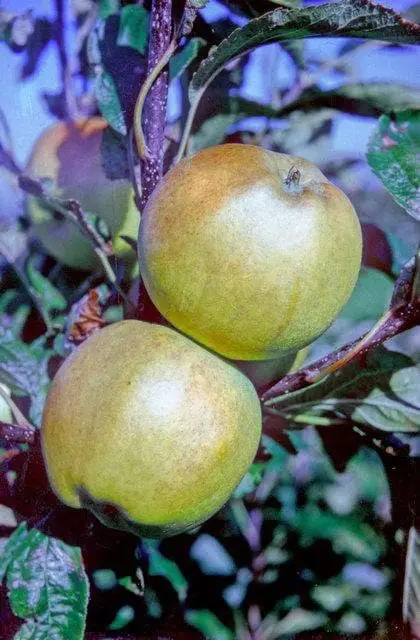
Freyberg
-
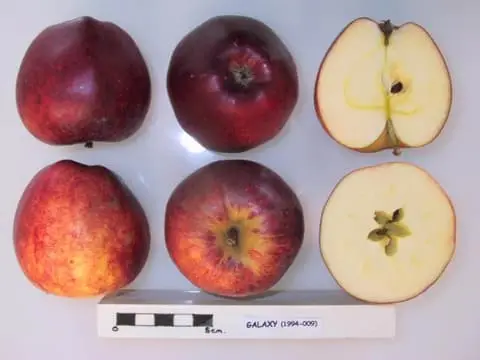
Galaxy
-
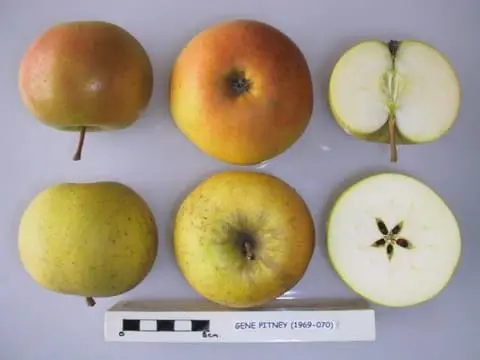
Gene Pitney
-
Hidala