Civni
Bred near Ferrara from a 1988 cross of Gala and Elstar; a late-summer apple run by its breeder, CIV, as a club variety
History
Civni comes from a cross made in 1988 near Ferrara, in northern Italy, between Gala, the seed parent, and Elstar, the pollen parent; the first selection was made in 19911. Its breeders, Michelangelo Leis, Gianfranco Castagnoli and Alessio Martinelli, assigned their rights to CIV, the Consorzio Italiano Vivaisti of San Giuseppe di Comacchio, which holds them1,2. They wanted a dessert apple sharper and longer-keeping than Gala but less acid than Elstar2, and chose this one for its ripening time, sweet flavour, fruit shape and growth habit1. It was observed from 1997 to 2001 at Cuneo, on the experimental farm of a fruit growers’ association 550 metres above sea level2.
The United States patent, granted to CIV in 2003, claims priority from an application of 14 December 20002. Canada granted plant breeders’ rights in 2013 and revoked them in 20161.
Its fruit is sold under the trade mark Rubens1,4. In 2019 Sansavini and Gregori listed Civni among the club varieties planted in Italy, as a summer apple grown in South Tyrol4; by 2025 it covered only 1 hectare there, down from 2 in 20245. CIV lists Rubens among its “club” projects, aimed at the premium end of the market, in which only official licensees may produce and sell the trees3. In 2026 CIV’s page for Rubens gave the variety as CIVPEAK6, a bud mutation of Civni that Martinelli and Leis, two of the original breeders, found at San Giuseppe di Comacchio in 2009 and chose for fruit with an intense purple-red colour over much of the skin; it was patented in the United States in 20207.
The fruit
At Cuneo in 2000 the fruit averaged 229 g and 82 mm across, a truncated cone, slightly lopsided2. The smooth, dry skin, waxy only when over-ripe, has a green-yellow ground mostly covered with red to vermilion and dark red stripes; it is more orange in hot conditions and redder in cool ones2. The creamy-white flesh is firm, juicy, sweet and aromatic, with 14 to 15 per cent Brix, and it was more acid than Gala grown alongside it (9.6 against 5.5 meq); the patent judged its balance of sugar and acid “excellent”2. In Canadian trials the fruit was medium-sized and conic, with strong narrow stripes on a yellow-green ground and firm cream flesh1.
At Cuneo in 2000 it was picked from 31 August to 8 September, against 22 to 30 August for Gala on the same farm2. In Italy it is eaten from September to May: it keeps in cold storage until March and in a controlled atmosphere until May, with fewer losses than Gala2.
Growing
The tree is about 30 per cent less vigorous than Gala and bears on spurs; it is precocious, very productive and regular, does well on M 9 rootstocks and as a slender spindle, and needs pruning and thinning to curb its heavy flowering2. It flowers in mid-season with Gala and pollinates the varieties that flower then; it is diploid2. It is susceptible to scab and slightly to powdery mildew, and it survived −10 °C and more than 40 °C without damage2.
Where the sources disagree
Family tree
Parents, grandparents and great-grandparents, as the entries in the atlas record them.
- Civni Italy, 1988
- Seed parent Gala New Zealand, about 1934
- Parent Kidd's Orange Red New Zealand, 1924
- Parent Cox's Orange Pippin United Kingdom, about 1825
- Parent Delicious United States, 1872
- Parent Golden Delicious United States, 1905
- Parent Grimes Golden United States, by 1804
- Parent Kidd's Orange Red New Zealand, 1924
- Pollen parent Elstar Netherlands, 1955
- Seed parent Golden Delicious United States, 1905
- Parent Grimes Golden United States, by 1804
- Pollen parent Ingrid Marie Denmark, about 1910
- Parent Cox's Orange Pippin United Kingdom, about 1825
- Parent Cox's Pomona United Kingdom, about 1825
- Seed parent Golden Delicious United States, 1905
- Seed parent Gala New Zealand, about 1934
Sources
- Civni (plant breeders' rights application 02-2990), Canadian Food Inspection Agency, Plant Breeders' Rights Office. Supports: holder C.I.V. Consorzio Italiano Vivaisti, San Giuseppe di Comacchio (Ferrara); breeders Gianfranco Castagnoli, Michelangelo Leis and Alessio Martinelli; the cross of Gala as seed parent and Elstar as pollen parent "made in 1988 in the zone of Ferrara", with the first selection in 1991, for maturity date, sweet flavour, fruit shape and growth habit; Canadian rights granted on 19 December 2013 and revoked on 19 December 2016; trials at Summerland, British Columbia, in 2010–12: a weak, spreading tree; medium-sized conic fruit with a yellow-green ground, a weakly defined red flush with strongly defined narrow stripes, few small lenticels and firm cream flesh; "Trade name: Rubens".
- US Plant Patent 14,177: Apple tree named 'Civni', Michelangelo Leis, Gianfranco Castagnoli and Alessio Martinelli, for C.I.V. Consorzio Italiano Vivaisti; United States Patent and Trademark Office, via Google Patents, 2003-09-23. Supports: bred in Ferrara by the three inventors, who assigned their rights to CIV, in search of a dessert apple with "higher acidity and longer storage capability" than Gala but less acid than Elstar; a cross of Elstar and Gala; priority from an application of 14 December 2000 and grant on 23 September 2003; trees observed in 1997–2001 at Cuneo, at the experimental farm of a fruit growers' association 550 m above sea level; fruit 229 g and 82 mm across on average in 2000, conical-truncated and slightly asymmetric; smooth, dry skin, slightly waxy when over-ripe, green-yellow ground, 60–100% overcolour of red to vermilion with dark red stripes, brown and "rather numerous" lenticels; colour more orange in hot conditions and redder and more extensive in cool ones; flesh creamy white, firm, juicy, sweet and aromatic, of medium texture, 14–15° Brix; acidity 9.6 meq against 5.5 for Gala in 2000; sugar–acid balance "excellent"; first and last picking on 31 August and 8 September 2000, against 22 and 30 August for Gala on the same farm; dessert use from September to May in Italy; keeping in cold storage until March and in controlled atmosphere until May, with fewer losses than Gala; tree "30% less vigorous" than Gala, of medium vigour and upright habit, bearing on spurs; pruning and thinning to reduce heavy flowering, and good results as a slender spindle; very productive, regular and precocious, doing well on M 9; flowering in mid-season like Gala, a good pollinator for varieties flowering then; diploid; tolerance of −10 °C and of over 40 °C without damage; susceptible to scab and slightly susceptible to powdery mildew.
- Melo: le nostre varietà di melo (apple varieties), CIV – Consorzio Italiano Vivaisti. Supports: Rubens listed among CIV's "club" projects, in which only official licensees may produce and market the trees, and which aim at the premium segment of the market.
- Which distribution strategy will support new exclusive apple varieties: club, trademark, or free production?, Silviero Sansavini and Roberto Gregori, Chronica Horticulturae 59(4): 6–12, International Society for Horticultural Science, 2019. Supports: Civni, with Rubens as its trade mark, in Table 1 of new exclusive (club) varieties planted in Italy, from Italy, harvested in summer and grown in South Tyrol.
- Agrar- und Forstbericht 2025, p. 41: Bestand der wichtigsten Apfel- und Birnensorten in Südtirol, Autonome Provinz Bozen – Südtirol, Abteilung Landwirtschaft, 2026. Supports: Civni, listed as "Civni- Rubens", on 2 ha of South Tyrol's apple and pear orchards in 2024 and 1 ha in 2025.
- RUBENS CIVPEAK, CIV – Consorzio Italiano Vivaisti. Supports: CIV's page for Rubens, read in October 2026, which gives the variety as CIVPEAK, marked as protected by plant breeders' rights.
- US Plant Patent 32,417: Apple tree named 'CIVPEAK', Michelangelo Leis and Alessio Martinelli, for C.I.V. Consorzio Italiano Vivaisti; United States Patent and Trademark Office, via Google Patents, 2020-11-03. Supports: CIVPEAK "discovered and selected" by Alessio Martinelli and Michelangelo Leis "as a bud mutation of ‘CIVNI’" in a cultivated area at San Giuseppe di Comacchio, Ferrara, in 2009; selected for "an intense purple-red overcolor, extended over a large part of the surface"; filed on 18 October 2018 and granted on 3 November 2020, assigned to CIV.
More from Italy
-
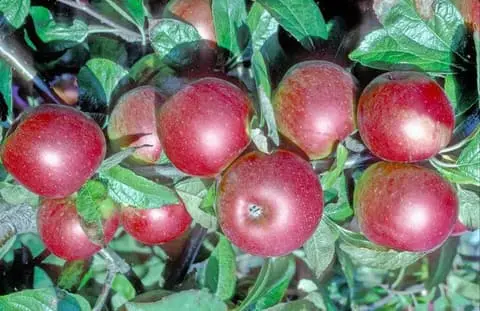
Abbondanza
-
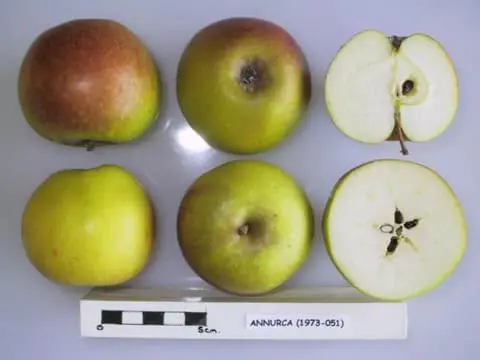
Annurca
Campania's "queen of apples", picked before it is fully red and then coloured on beds laid out on the ground
-
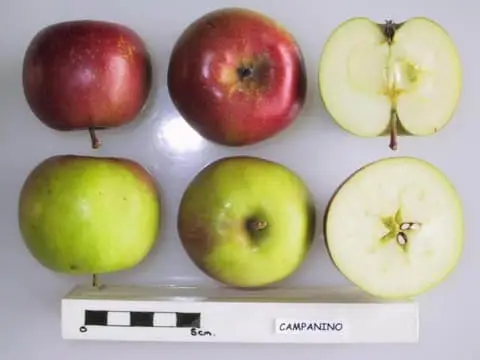
Campanino
-
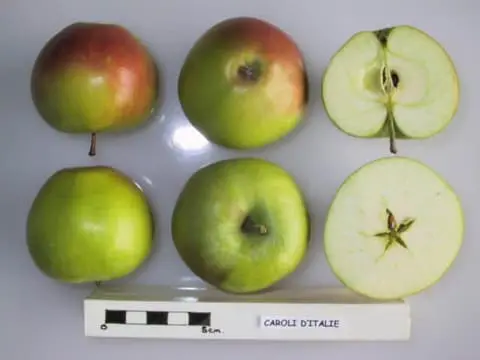
Caroli d'Italie
-
Cavallotta
-
Ciodo
-
Cola
-
Cola Gelata