Apples of New Zealand
25 varieties in the atlas came from New Zealand. The oldest is Dillington Beauty, dated by 1872.
Harvest
New Zealand grew 575,214 tonnes of apples in 2024, 0.59% of the world's harvest; it ranked 23rd among the world's producers.1 FAOSTAT estimated this figure; it is not one New Zealand reported.
The figures
| Year | Tonnes |
|---|---|
| 2024 | 575,214 (estimated by FAOSTAT) |
| 2023 | 585,847 (estimated by FAOSTAT) |
| 2022 | 578,248 (estimated by FAOSTAT) |
| 2021 | 575,146 (estimated by FAOSTAT) |
| 2020 | 566,870 (estimated by FAOSTAT) |
| 2019 | 556,312 (estimated by FAOSTAT) |
| 2018 | 480,000 (estimated by FAOSTAT) |
| 2017 | 470,000 (estimated by FAOSTAT) |
| 2016 | 550,000 (estimated by FAOSTAT) |
| 2015 | 540,000 (estimated by FAOSTAT) |
| 2014 | 490,000 (estimated by FAOSTAT) |
| 2013 | 444,178 (estimated by FAOSTAT) |
| 2012 | 437,107 (estimated by FAOSTAT) |
| 2011 | 439,418 (estimated by FAOSTAT) |
| 2010 | 444,154 (estimated by FAOSTAT) |
| 2009 | 431,000 |
| 2008 | 446,000 |
| 2007 | 421,000 |
| 2006 | 354,000 |
| 2005 | 524,000 |
| 2004 | 546,000 |
| 2003 | 501,192 |
| 2002 | 530,633 |
| 2001 | 473,726 |
| 2000 | 620,000 |
| 1999 | 545,000 |
| 1998 | 523,000 |
| 1997 | 567,000 |
| 1996 | 549,000 |
| 1995 | 527,000 |
| 1994 | 480,700 |
| 1993 | 439,000 |
| 1992 | 487,507 |
| 1991 | 380,000 |
| 1990 | 361,000 |
| 1989 | 393,000 |
| 1988 | 330,000 |
| 1987 | 338,000 |
| 1986 | 343,852 |
| 1985 | 276,594 |
| 1984 | 246,152 |
| 1983 | 233,285 |
| 1982 | 225,898 |
| 1981 | 242,031 |
| 1980 | 211,400 |
| 1979 | 180,058 |
| 1978 | 185,144 |
| 1977 | 145,539 |
| 1976 | 172,471 |
| 1975 | 159,403 |
| 1974 | 152,116 |
| 1973 | 143,138 |
| 1972 | 149,470 |
| 1971 | 126,759 |
| 1970 | 140,413 |
| 1969 | 112,300 |
| 1968 | 113,200 |
| 1967 | 105,403 |
| 1966 | 113,620 |
| 1965 | 102,900 |
| 1964 | 109,400 |
| 1963 | 84,000 |
| 1962 | 93,490 |
| 1961 | 74,400 |
Estimated or imputed by FAOSTAT, not a figure the country reported.
Growing regions
- Hawke's Bay New Zealand's largest apple region, where Gala was named and Scifresh and Scilate were bred
Varieties from New Zealand, oldest first
-
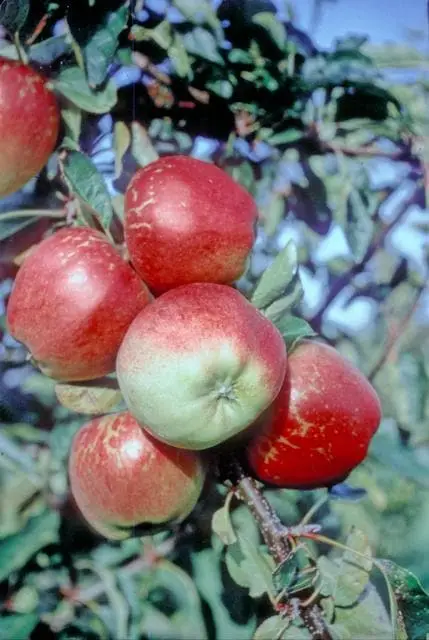
Kidd's Orange Red
J. H. Kidd's first success at Greytown, from Cox's Orange Pippin and Delicious, and a parent of Gala
-
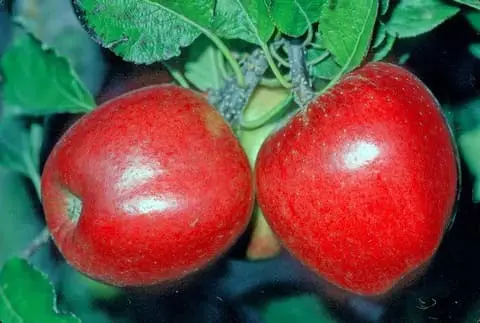
Gala
Raised by J. H. Kidd at Greytown, New Zealand, about 1934 from Kidd's Orange Red and Golden Delicious
-
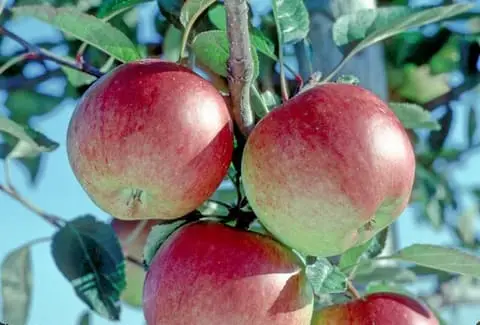
Braeburn
A Nelson chance seedling grown commercially from 1952; DNA names Delicious and Sturmer Pippin as its parents
-
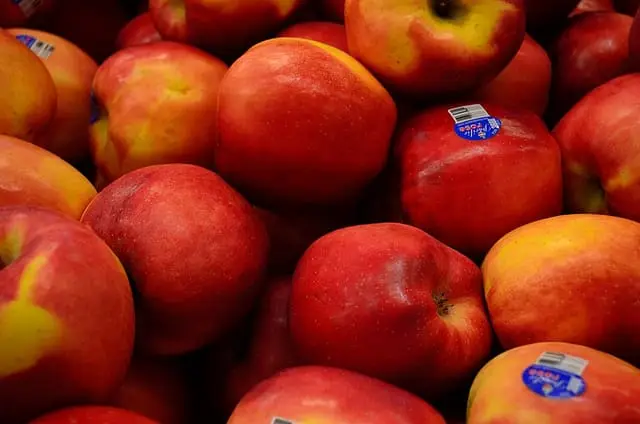
Sciros
A late rose-pink apple bred at Havelock North from Splendour and Gala; sold under the trade mark Pacific Rose
-
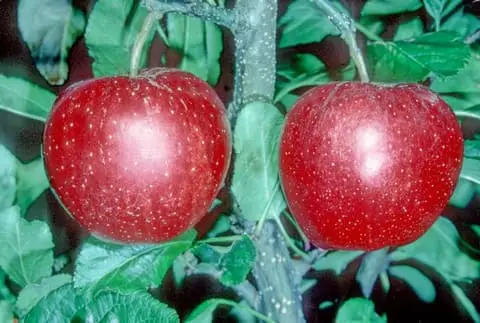
Scifresh
Bred at Havelock North from a 1985 cross of Braeburn and a highly coloured sport of Gala; sold under the trade mark Jazz
-
Scilate
A late apple from a 1985 Havelock North cross; in 2025 the second-largest share of New Zealand's apple exports
-
PremA17
An early yellow-and-red apple from a 1995 cross in Hawke's Bay; its fruit is sold under the trade mark Smitten
-
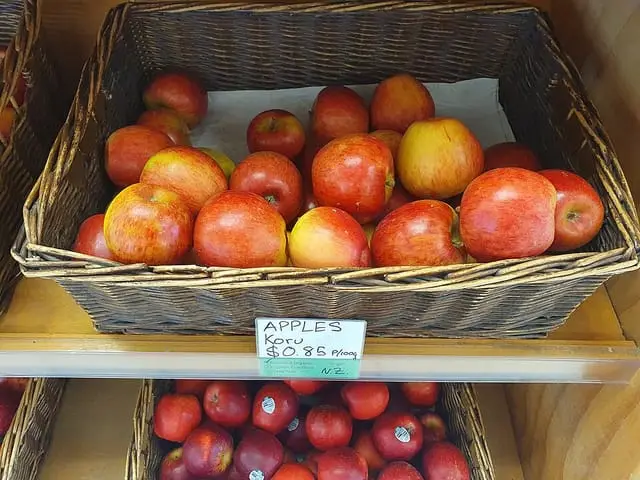
Plumac
Found in 1998 as a chance seedling in a garden at Upper Moutere, Nelson; sold under the trade mark Koru
And 17 more in the catalogue, A to Z
- Captain Kidd 1962
- Cox's Early Export by 1950
- Dillington Beauty by 1872
- Freyberg 1934
- Galaxy 1985
- Gene Pitney 1962
- Hidala 1981
- Kapai Red Jonathan 1929
- McLiver's Winesap by 1950
- Red Dougherty by 1930
- Red Statesman 1914
- Royal Gala 1971
- Splendour 1948
- Statesman Red Sport by 1960
- Telstar 1934
- Widdup by 1961
- Willie Sharp by 1905
Sources
- FAOSTAT: Production: Crops and livestock products, Food and Agriculture Organization of the United Nations (FAO), Updated 31 December 2025. Supports: each country's apple harvest by year (item 515, apples, in tonnes, 1961 to 2024), the shares of the world's harvest and the ranks worked out from them, and which figures FAOSTAT estimated or imputed.