Scifresh
Bred at Havelock North from a 1985 cross of Braeburn and a highly coloured sport of Gala; sold under the trade mark Jazz
History
Scifresh was raised from a cross between Braeburn and Tenroy, a more highly coloured sport of Gala, made in 1985 on trees at Goddard Lane, Havelock North, in Hawke’s Bay1,2,6. Plant & Food Research dates the cross to the spring of 1985, at a research orchard that had belonged to the Department of Scientific and Industrial Research (DSIR), and says that it also gave Scilate3,4. The breeder was Allan White1,2,3. The seedling was selected in 1990 for attractive, crisp fruit that ate and kept well, on a vigorous tree, and was then multiplied by budding and grafting2.
HortResearch was granted a United States plant patent for it in 2003, and the rights passed to Plant & Food Research when HortResearch merged with Crop & Food Research1; Canadian plant breeders’ rights, whose record gives its trade name as Jazz, ran from 2007 to 20252.
Scifresh is a managed variety. Te Ara explained in 2008 that new cultivars had been trademarked since 2000 to control how much fruit reached the market, to try to keep prices high and to increase the return to the breeding programme; Scifresh’s fruit, sold under the trade mark Jazz, which its exporter was developing worldwide, was then fetching high prices overseas3. Plant & Food Research names T&G Global as the licensee that markets the fruit of Scifresh and Scilate under the trade marks Jazz and Envy respectively; it has reached consumers in more than 55 countries4. By Stats NZ figures Scifresh made up 3.8 per cent of New Zealand’s apple exports in 2025, and between 2022 and 2025 the combined area of Braeburn, Cripps Pink and Scifresh fell by a third5.
The fruit
In the patent’s description from Hawke’s Bay the fruit is small to medium, about 72 mm wide, 65 mm high and 177 g, short-globose to conical and without ribs1. The smooth skin has a yellow to yellow-green ground, about three-quarters covered with red and narrow greyed-red stripes, with little or no russet1. The flesh is yellowish white, firm, juicy and crisp, with 12 per cent Brix, 0.6 per cent malic acid and a “rich aroma” at harvest1. Trial trees in British Columbia gave fruit with a very large orange-red flush and faint stripes, and very firm flesh that browned strongly an hour after cutting2. The patent classes it as a dessert apple1.
In Hawke’s Bay it flowers from about 5 October and is picked from about 12 to 30 March, at least a week before Braeburn and later than the Gala sport1; in the Okanagan valley it ripened more than a week before Braeburn and more than two weeks before Fuji BC22. The patent reports excellent eating quality after at least five months in cold air storage at 0 °C1.
Growing
The tree is of medium size and vigour, spreading, and fruits on spurs; it crops regularly1,2. The patent advises thinning in early summer and little pruning; the tree needs cross-pollination, and its resistance to pests and diseases is no different from that of other commercial apples1.
Where the sources disagree
- When the cross was made. The patent and the Canadian record give 1985, and Plant & Food Research the spring of 19851,2,4; Te Ara gives 1984–853.
- Which parent bore the seed. Scifresh’s patent and Canadian record name Braeburn and the Gala sport without saying which was the mother1,2. Plant & Food Research says that Scifresh and Scilate came from one cross4, and Scilate’s patent gives the Gala sport as its female parent7.
Family tree
Parents, grandparents and great-grandparents, as the entries in the atlas record them.
- Scifresh New Zealand, 1985
- Parent Braeburn New Zealand, by 1952
- Parent Delicious United States, 1872
- Parent Winesap United States, by 1817
- Parent Sturmer Pippin United Kingdom, by 1831
- Pollen parent Nonpareil France, by the mid 1500s
- Parent Delicious United States, 1872
- Parent Royal Gala New Zealand, 1971
- Sport of Gala New Zealand, about 1934
- Parent Kidd's Orange Red New Zealand, 1924
- Parent Golden Delicious United States, 1905
- Sport of Gala New Zealand, about 1934
- Parent Braeburn New Zealand, by 1952
Sources
- US Plant Patent 13,888: Apple tree named 'Scifresh', Allan G. White, for the Horticulture and Food Research Institute of New Zealand (HortResearch); United States Patent and Trademark Office, via Google Patents, 2003-06-17. Supports: Scifresh selected from seedlings of a cross of Braeburn and the sport of Gala patented as US Plant Patent 4,121, "made in 1985 on trees at Goddard Lane, Havelock North, Hawkes Bay"; Allan G. White as inventor; filed in 2001 by HortResearch and granted on 17 June 2003; the assignment to Plant & Food Research on the merger of HortResearch and Crop & Food Research; harvest at least a week before Braeburn and later than the Gala sport; fruit small to medium, 72 mm wide, 65 mm high and 177 g, short-globose to conical, without ribs; smooth skin, yellow to yellow-green ground, about 75% covered with red and greyed-red stripes 1–2.5 mm wide, little or no russet; flesh yellow-white, firm (9.2 kgF), juicy and crisp; 12% Brix and 0.6% malic acid at harvest, "rich aroma"; use dessert; "excellent eating quality for at least 5 months" in refrigerated air at 0 °C; flowering from about 5 October and harvest from about 12 to 30 March in Hawke's Bay; tree of medium size and vigour, spreading, bearing on spurs, cropping regularly; thinning in early summer and minimal pruning; cross-pollination required; no pest or disease resistance different from other commercial apples.
- Scifresh (plant breeders' rights application 01-2884), Canadian Food Inspection Agency, Plant Breeders' Rights Office. Supports: holder The New Zealand Institute for Plant and Food Research; "Trade name: Jazz"; breeder Allan White, Havelock North; the cross of Braeburn and the Gala sport in 1985; selection at Havelock North in 1990, for appearance, eating quality, crispness and storage ability of the fruit and vigour and thriftiness of the tree, then increase by budding and grafting; rights granted on 16 November 2007 and ending on 16 November 2025; trials at Summerland, British Columbia, in 2005–06, showing a very large area of orange-red flush with weakly defined stripes, very firm yellowish flesh with a strong tendency to brown one hour after cutting, a medium-vigour, upright to spreading tree bearing on spurs only, and maturity in the Okanagan valley more than a week before Braeburn and more than two weeks before Fuji BC2.
- Apples and pears, John Palmer, Te Ara – the Encyclopedia of New Zealand; archived copy, Internet Archive, 2008-11-24. Supports: the Department of Scientific and Industrial Research at Havelock North; new cultivars trademarked since 2000 "to control the amount of fruit in the marketplace", to try to keep prices high and to increase the return to the breeding programme; Scifresh fruit, "sold under the trademark Jazz", then attracting high prices overseas, the mark being developed worldwide by its exporter; Scifresh selected from a cross between the Gala sport and Braeburn "made by Allan White of HortResearch in 1984–85".
- Crafting a crunch – 40 years of apple innovation, Plant & Food Research (Bioeconomy Science Institute), 2025-11-04. Supports: one breeding cross, made "in the spring of 1985" at the institute's Hawke's Bay research orchard, formerly the DSIR's, that produced both Scifresh and Scilate; T&G Global as the commercial partner that licensed the two varieties and markets their fruit as Jazz and Envy apples, in that order; the fruit of the two reaching consumers in more than 55 countries.
- Fresh Facts 2025, pp. 16–17: Sector profile – apples, United Fresh New Zealand, 2025. Supports: apple exports by variety in 2025, from Stats NZ export data accessed on 19 August 2025: Scifresh, listed as Jazz, 3.8%; the total planted area of Braeburn, Cripps Pink and Scifresh (again listed as Jazz) down by a third between 2022 and 2025 (Ministry for Primary Industries, June 2025).
- Royal Gala (accession 1979-047), National Fruit Collection, Brogdale, Kent (Defra). Supports: "a more highly coloured clone of Gala", with the synonym Tenroy, the name used here for the sport.
- US Plant Patent 20,477: Apple tree variety named 'Scilate', Allan G. White, for The New Zealand Institute for Plant and Food Research; United States Patent and Trademark Office, via Google Patents, 2009-11-10. Supports: Scilate from a cross made in 1985 at Havelock North with the Gala sport as "female parent" and Braeburn as "male parent"; Scifresh named among the closely related varieties.
More from New Zealand
-
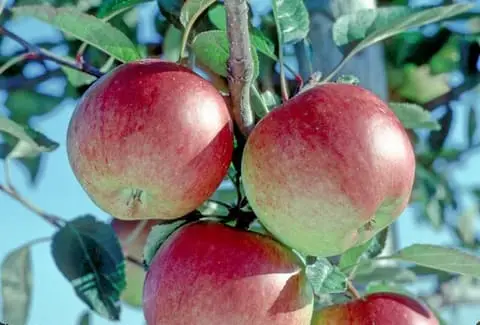
Braeburn
A Nelson chance seedling grown commercially from 1952; DNA names Delicious and Sturmer Pippin as its parents
-
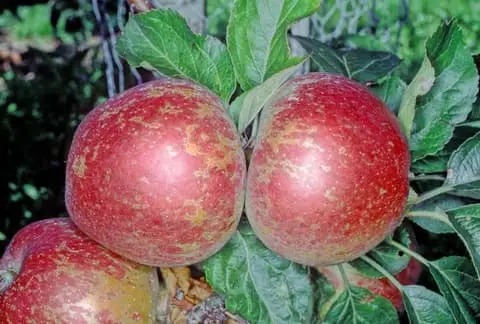
Captain Kidd
-
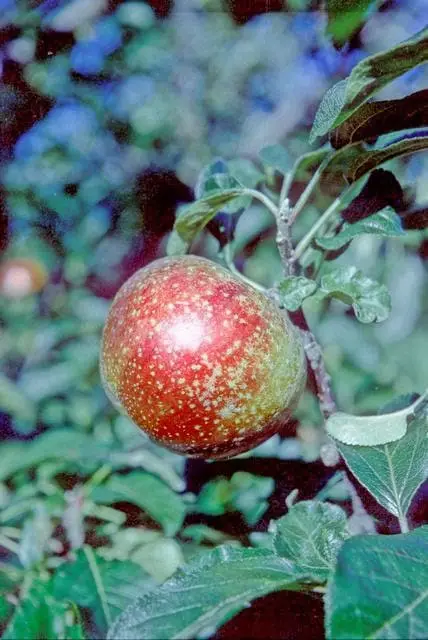
Cox's Early Export
-
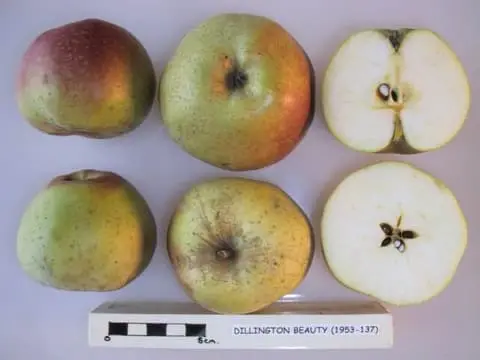
Dillington Beauty
-
Freyberg
-
Gala
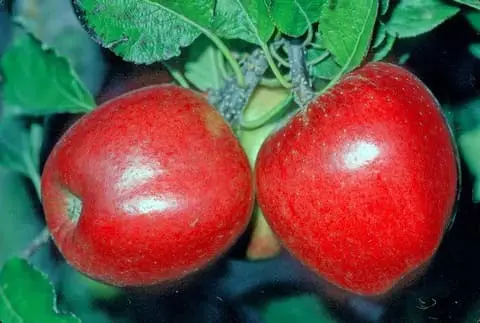
Raised by J. H. Kidd at Greytown, New Zealand, about 1934 from Kidd's Orange Red and Golden Delicious
-
Galaxy
-
Gene Pitney