Apple varieties, United States
Howell TC3
Yellow-skinned, red-fleshed seedling of Airlie Red Flesh, raised at Prosser, Washington, and selected in 2010
History
Howell TC3 was raised by Bill Howell at Prosser, Washington, from the same parentage as Howell TC21,2. Howell, a technologist in plant virology at Washington State University’s research centre in Prosser from 1973 to 2012, planted three red-fleshed varieties from a Michigan nursery and, finding their fruit poor, raised seedlings from them after Honeycrisp had pollinated them4.
The patent records TC3 as an open-pollinated seedling of Airlie Red Flesh from 2001, with Honeycrisp the likely pollen parent1. It was selected in 20101,2, according to the patent for the quality of its fruit and the red colour of its flesh, and it differs from its parents in its yellow skin, red flesh and flavour1. Howell applied for a patent on 31 December 2014, and US Plant Patent 28,546 was granted on 24 October 20171,2.
The fruit is sold under the trade mark Lucy Glo2,3, one of the Lucy family of trade marks with Lucy Rose and Lucy Gem3. Proprietary Variety Management of Yakima chose the names with focus groups, Chelan Fresh Marketing and Stemilt Growers were licensed to grow, pack and sell the fruit, and the first apples were sold from the 2018 crop4. A second cultivar, Howell TC13, is now also listed under Lucy Glo3.
The fruit
The fruit is medium-sized and rounded, without ribs, 7.62 cm wide and 7 cm high1,2, and weighs about 204 g (0.45 lb in the patent)1. The skin is yellow-green turning yellow, with a red blush1,2; its marketer calls it a blushing gold5. The flesh is red marked with white, crisp and very juicy, with a faint aroma, 15 °Brix and a sweet-tart taste with notes of berry1,2. Capital Press described it as “a little tangy”4, and Chelan Fresh describes it as tart with a hint of sweetness5.
In the patent trials at Prosser and Wapato it ripened about four days after Honeycrisp1,2; Proprietary Variety Management gives mid to late September, and late September for Howell TC133. It keeps well for four months in common storage1, but Chelan Fresh’s sales manager said in 2019 that it bruises easily, letting the red flesh show through4.
Growing
The tree is semi-vigorous1,2. At Prosser it began to flower on 22 April and was in full bloom on 30 April, about a day before Honeycrisp; the buds are red-purple and the petals red-purple at the edges, fading to white at the centre1. It proved hardy at Prosser and Wapato, and no resistance or susceptibility to disease was noted1.
Uses
The patent gives it for the fresh market and for processing1. Chelan Fresh suggests it for eating fresh and in salads, and for juice, which comes out a vivid pink5.
Where the sources disagree
- Parentage. The patent records an open-pollinated seedling of Airlie Red Flesh, with Honeycrisp only the likely pollen parent1, and the register lists Airlie Red Flesh, open-pollinated2; Proprietary Variety Management and Chelan Fresh call it a cross of Airlie Red Flesh and Honeycrisp3,5. Howell himself called the red-fleshed parent a crab apple4.
- When it was selected. In 2010 according to the patent and the register1,2; Capital Press reported that Howell had the apple by 20094.
Family tree
Parents, grandparents and great-grandparents, as the entries in the atlas record them.
- Howell TC3 United States, 2001
- Seed parent Newell-Kimzey United States, about 1960
- Pollen parent Honeycrisp United States, about 1960
- Parent Keepsake United States, 1936
- Parent MN 447
- Parent Northern Spy United States, about 1800
- Parent MN1627
- Parent Keepsake United States, 1936
Sources
- Apple tree named 'Howell TC3' (US Plant Patent 28,546), William Edward Howell, inventor; Google Patents, 2017-10-24. Supports: variety denomination 'Howell TC3'; inventor William Edward Howell; application filed 31 December 2014, granted 24 October 2017; created in a planned breeding programme at Prosser, Washington, from "an open pollination cross in 2001" of Airlie Red Flesh (seed parent) "with the likely pollen parent being 'Honeycrisp'"; selected in 2010 for fruit quality and red flesh; "distinguished from its parents by its yellow skin and red flesh color and by its flavor"; description from the 2013 and 2017 seasons at Prosser and Wapato; tree semi-vigorous; first bloom 22 April and full bloom 30 April at Prosser; Table 1: light pink bloom, 1 day before Honeycrisp; buds red-purple at the balloon stage, petals red-purple at the edges fading to white in the centre; fruit 7.62 cm wide and 7 cm high, 0.45 lb, rounded, without ribs; skin yellow-green fading to yellow with a red blush; flesh red with white, crisp and very juicy; 15 °Brix; faint aroma; harvest about 4 days after Honeycrisp; "Crisp, juicy, sweet-tart with berry notes"; "Stores well in common storage for 4 months"; hardy at Prosser and Wapato; no disease resistance or susceptibility noted; use "Fresh Market and processing".
- Register of New Fruit and Nut Cultivars List 50: Apple (Howell TC3), Ksenija Gasic, John E. Preece and David Karp; apple section by Sarah Kostick and Kate Evans; HortScience 55(7): 1164–1201 (read in the Internet Archive's copy of the journal page), 2020. Supports: entry "Howell TC3 (Lucy Glo)" and the cross-reference "Lucy Glo. See Howell TC3"; origin Prosser, Washington, by W. E. Howell; "Airlie Red Flesh O.P.; crossed 2001; selected 2010"; USPP 28,546 of 24 October 2017; fruit medium, 7.62 cm across, rounded, yellow-green with a red blush; flesh red, crisp, very juicy; faint aroma; sweet-tart with notes of berry; 15 °Brix; ripens 4 days after Honeycrisp; semi-vigorous; blooms late April in Prosser.
- Lucy Glo, Proprietary Variety Management (PVM), Brandt's Fruit Trees. Supports: the cultivars "Howell TC3" and "Howell TC13" listed under the trade mark Lucy Glo; the Lucy family "licensed under the tradenames" Lucy Glo, Lucy Rose and Lucy Gem; parentage given as "Arlie Red Flesh x Honeycrisp"; "Yellow with blush"; harvest "TC3 mid to late September, TC13 late September".
- New apple varieties red inside and out, Dan Wheat, Capital Press, 2019-12-31. Supports: Bill Howell a research technologist in plant virology at Washington State University's research and extension centre in Prosser from 1973 to 2012; three red-fleshed varieties planted from a Michigan nursery, "not very good quality fruit"; seed collected from them after pollination by Honeycrisp; "by 2009" he had what he later trademarked as Lucy Rose and Lucy Glo; Howell calling the other parent "a crab apple"; Proprietary Variety Management of Yakima choosing the names with focus groups; Chelan Fresh Marketing and Stemilt Growers licensed to grow, pack and sell; first sales from the 2018 crop; Lucy Glo "a little tangy" with yellow skin; Tim Evans of Chelan Fresh Marketing: the Glo "prone to bruising and the red flesh can come through".
- Lucy Apple, Chelan Fresh. Supports: Lucy Glo "a tasty and tart apple with a hint of sweetness", with "a blushing gold skin" and naturally red inside; for salads, eating fresh as a snack, or juicing "for a vibrant pink beverage"; presented as a cross of Honeycrisp and Airlie Red Flesh.
More from United States
-
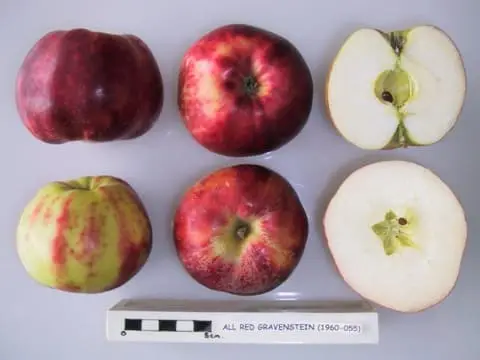
All-Red Gravenstein
-
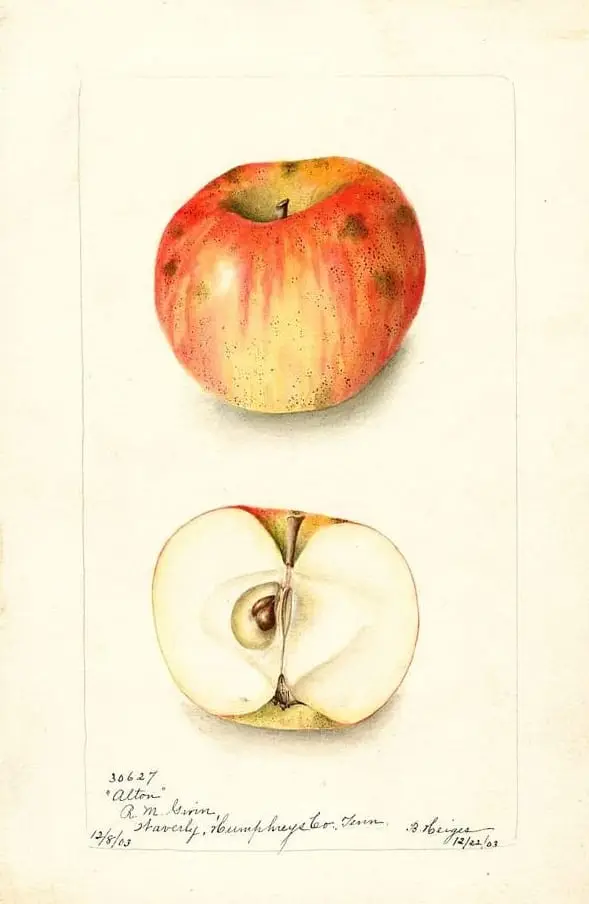
Alton
-
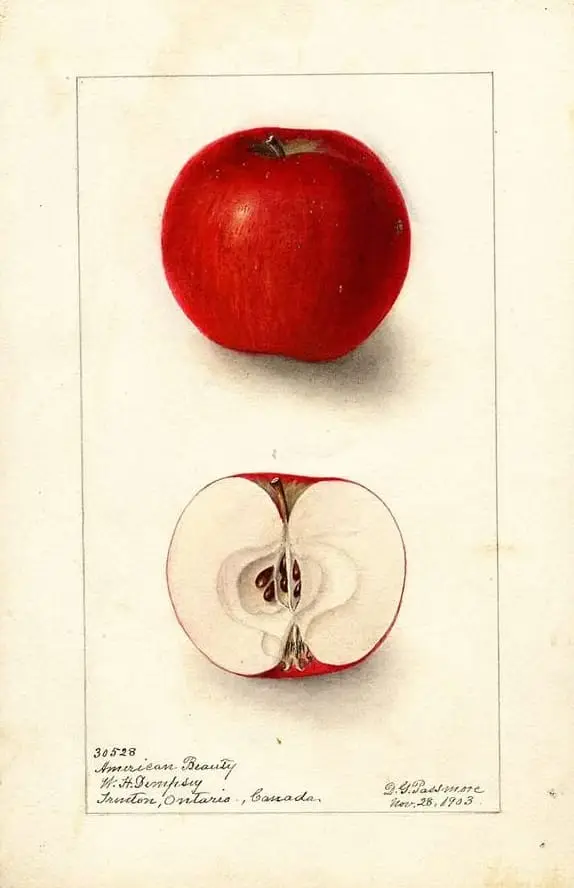
American Beauty
-
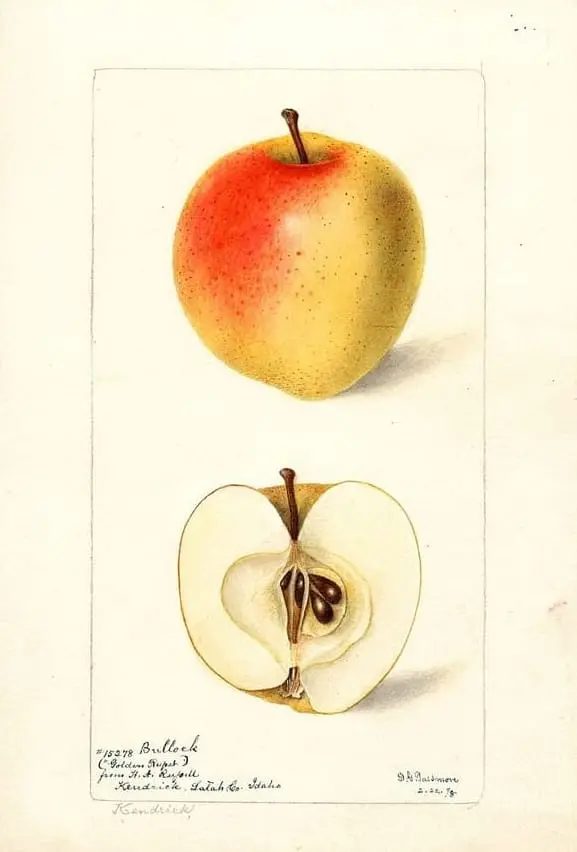
American Golden Russet
A small New Jersey russet whose flesh Downing likened to a buttery pear; Coxe knew it in 1817 as Sheep-nose
-
American Grindling
-
American Summer Pearmain
-
Ames
-
Arkansas