Apple varieties, United States
MAIA-L
A late, deep red open-pollinated seedling picked out at Pataskala, Ohio; sold under the trade mark Ludacrisp
History
MAIA-L was raised by MAIA, a breeding association founded and run by commercial growers to produce apples for the Midwestern United States; its grower-members raise and judge the seedlings and release varieties by consensus5. In 1999 Mitch Lynd let Honeycrisp and other chosen varieties be pollinated openly at Pataskala, Ohio, so that their seedlings could be tested, and this seedling was planted there as a one-year-old tree in 2001, among several hundred siblings1. Judged from 2005, it stood out over several years for its growth, early cropping, fruit quality and harvest time, and Lynd propagated it by grafting in 20101.
US Plant Patent 30,472, applied for in July 2017, was granted on 7 May 2019, naming William Dodd, David Doud, John Mitchel Lynd and Gregory Miller as inventors1. Its fruit is sold under the trade mark Ludacrisp2,4, and by the autumn of 2020, 89,204 trees of it had been planted2.
The fruit
Described in the patent after two months’ storage, the apples weigh 178 to 299 g, 232 g on average, and are conical, regular and symmetrical1. The thick skin has a dark, intense red over-colour, lightly striped, over a yellow ground, covering most of the surface of fruit grown in full sun; russet spreads out of the stalk cavity, and there is a little around the eye1. The flesh is yellow-white, crisp, firm, breaking and juicy, with a sweet, very aromatic smell and a complex, floral, sweet-tart flavour1.
Mitch Lynd describes the colour as a consistent bright scarlet, the texture as crisp and breaking, close to Honeycrisp’s, and the flavour as fruity, with tones of pineapple, strawberry and grape and an even balance of sweet and tart2. MAIA’s newsletter also noted a “non-fermentable sweetness” that made it of interest for hard cider as well as for eating2.
At Pataskala it ripens in late October, five weeks after Honeycrisp1; MAIA gives four weeks after Gala3, and Lynd the end of the Golden Delicious harvest2. Lynd found that it keeps in good condition until late April in ordinary storage2.
Growing
The patent describes a fast-growing, vigorous, spreading tree with large leaves, very productive, cropping every year with little attention, and resistant to fire blight, apple scab and powdery mildew1. It flowers with Golden Delicious and needs a diploid pollinator in bloom at the same time1; its S-alleles are S10 and S242. In Lynd’s experience it bears at the tips of its shoots, with the best fruit at the tips of short ones and the rest thinned off, and it is about as frost-resistant as Golden Delicious2.
Where the sources disagree
- Seed parent. The patent names Honeycrisp, open-pollinated1, as does MAIA’s 2020 table of its releases2; MAIA’s 2025 newsletter and the brand’s website give Sweet 16, open-pollinated3,4.
- When it was selected. The patent describes judging from 2005 and propagation in 20101; MAIA’s 2020 newsletter says that Lynd Fruit Farm first picked it out in 20102.
- Fire blight. Resistant, according to the patent1; about as susceptible as Golden Delicious, according to Lynd2.
- Spurs. Productive spurs throughout the tree in the patent1; a tip bearer with very few spurs, according to Lynd2.
Family tree
Parents, grandparents and great-grandparents, as the entries in the atlas record them.
- MAIA-L United States, 1999
- Seed parent Honeycrisp United States, about 1960
- Parent Keepsake United States, 1936
- Parent MN 447
- Parent Northern Spy United States, about 1800
- Parent MN1627
- Parent Keepsake United States, 1936
- Seed parent Honeycrisp United States, about 1960
Sources
- Apple tree named 'MAIA-L' (US Plant Patent 30,472), William Dodd, David Doud, John Mitchel Lynd and Gregory Miller, inventors; Midwest Apple Improvement Association, assignee; Google Patents, 2019-05-07. Supports: variety denomination 'MAIA-L'; identified among seedlings from an open-pollinated Honeycrisp block, a pollination sanctioned as part of the association's breeding project, at Pataskala, Ohio; "Parentage: 'Honeycrisp' female parent and unknown male parent; open pollination conditions cultivated by Mitch Lynd at Pataskala, Ohio in 1999"; planted as a one-year-old tree at Pataskala in 2001 among several hundred siblings; evaluated from 2005 and identified over several years as superior for growth habit, precocity, fruit quality and harvest time; propagated by grafting by Mitch Lynd at Pataskala in 2010; application filed 31 July 2017, granted 7 May 2019; ripening in late October, five weeks after Honeycrisp; a fast-growing, vigorous tree with large leaves, round and spreading, very productive, bearing annually with minimal inputs, with productive spurs throughout the tree; bloom with Golden Delicious, needing cross-pollination from diploid varieties; fruit picked on 20 October 2016 and described after two months' storage: 178–299 g, average 232 g, conical, regular and symmetrical; skin thick, not cracking, with light striping, the over-colour dark and intense red covering a very large area of fruit grown in full sun, over a yellow ground; russet extending out of the stalk cavity and a little around the basin; flesh yellow-white, crisp, firm, breaking, juicy, with a sweet, very aromatic aroma; flavour "Sweet-tart, complex, floral"; use fresh market, dessert; resistant to fire blight, apple scab and powdery mildew.
- MAIA News, Autumn 2020, Midwest Apple Improvement Association (MAIA), 2020. Supports: key to the association's releases (p. 2): trade mark name Ludacrisp, cultivar name MAIA-L, "Honeycrisp, open pollinated", patent PP30472; 89,204 MAIA-L trees planted since its release; Lynd Fruit Farm, Pataskala, "first picked out MAIA-L ... from their test block of MAIA seedlings in 2010"; quick facts from Mitch Lynd, on 35 eight-year-old trees on B9: colour "consistently bright scarlet red", texture crisp and breaking, "approaching the quality of Honeycrisp", flavour "fruity" with tones of pineapple, strawberry and grape and an equal sweet-tart balance, harvest at the end of Golden Delicious, keeping in good condition until late April in normal storage, a tip bearer with very few spurs, the best apples on the tips of short shoots and the rest to be thinned off, frost resistance, fire blight susceptibility and vigour about those of Golden Delicious; its "non-fermentable sweetness" making it of interest for fresh market and hard cider; S-alleles S10 S24.
- The Ortet, Volume Ten, Midwest Apple Improvement Association (MAIA), 2025. Supports: Ludacrisp (MAIA-L): "Parents/Cross: Sweet 16, open-pollinated"; plant patent USPP 30,472; harvest four weeks after Gala (p. 6).
- Ludacrisp apples, MAIA (ludacrispapples.com). Supports: Ludacrisp a registered trade mark; the apple "originating from the open-pollination of the Sweet 16 apple variety".
- Why All the New Apple Varieties?, Rob Crassweller and Robert Pollock, Penn State Extension, 2023-11-25. Supports: MAIA founded and maintained by commercial growers to produce cultivars for the Midwestern United States, available to all US and Canadian growers; any grower may join for an annual fee and royalties; grower-members make the crosses, plant and evaluate the seedlings, and release cultivars by consensus.
More from United States
-
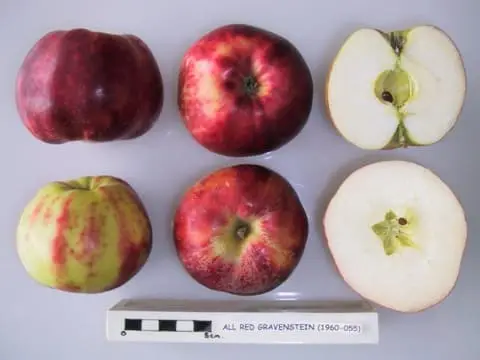
All-Red Gravenstein
-
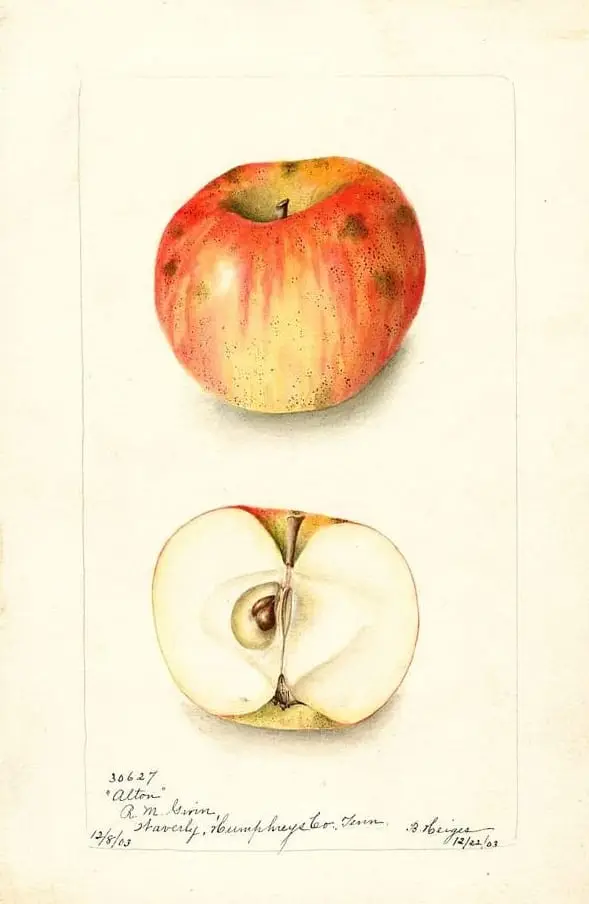
Alton
-
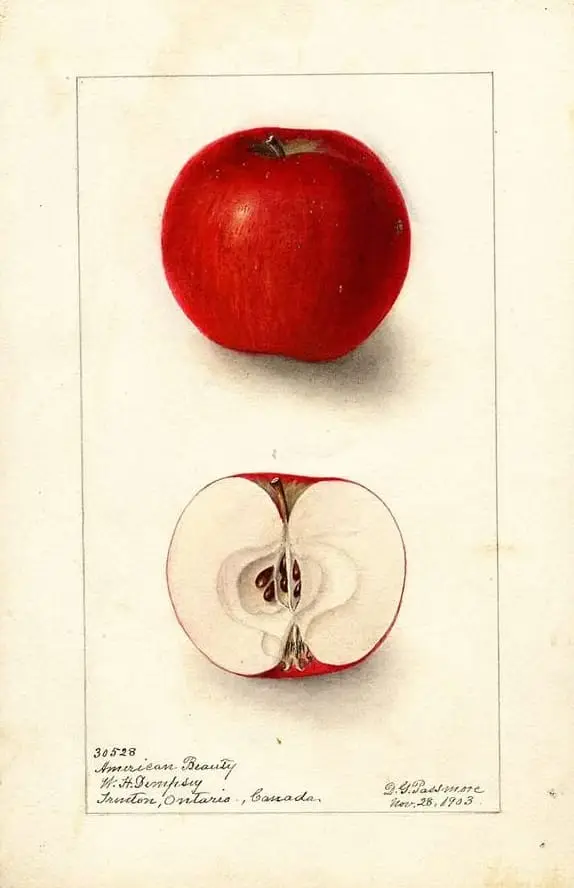
American Beauty
-
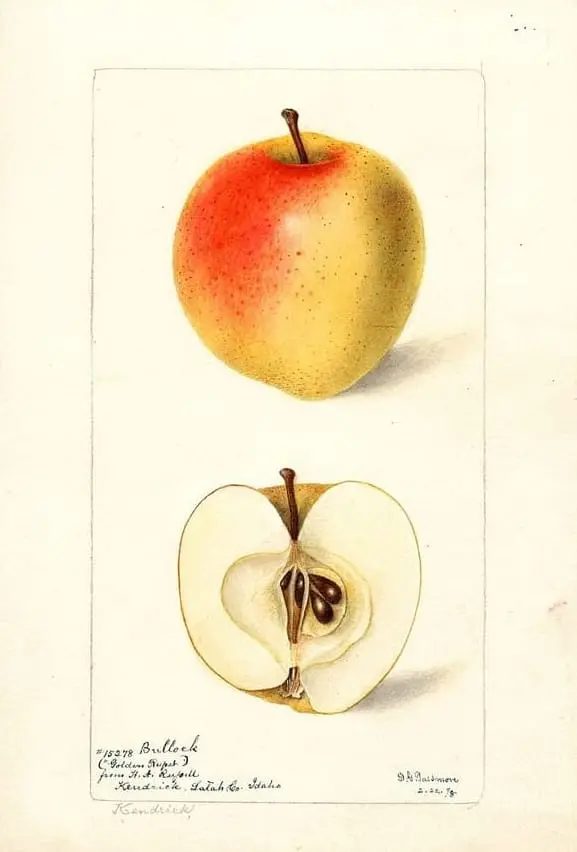
American Golden Russet
A small New Jersey russet whose flesh Downing likened to a buttery pear; Coxe knew it in 1817 as Sheep-nose
-
American Grindling
-
American Summer Pearmain
-
Ames
-
Arkansas