Mince pies
Shortcrust pies filled with a mincemeat of dried fruit, grated butter, spice and a Bramley apple, left a day to stand.
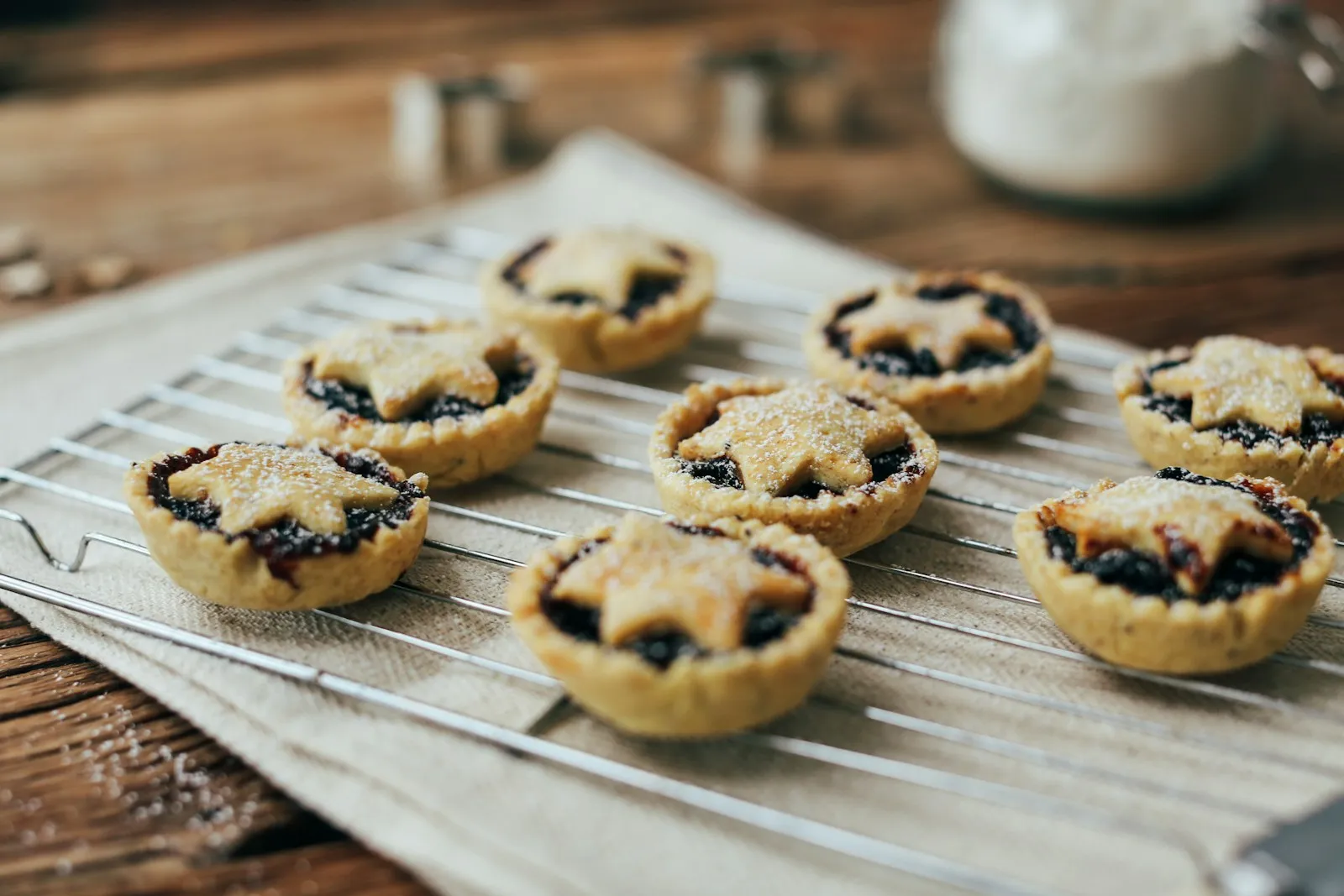
- Makes
- 12 pies, with some mincemeat left over
- Preparation
- overnight
- Cooking time
- 20 to 25 minutesThe mincemeat stands for 24 hours before the pies are made.
- Kind
- Pies and tarts
- From
- United Kingdom, England
- Source
- Mince pies, Thane Prince, BBC Food, 2013
Allergens
- Contains
-
- wheat (gluten): plain flour (all-purpose flour)
- milk: butter
- egg: egg yolks, eggs
- Check the label for
-
- sulphites: raisins, currants, candied peel
Suits vegetarians. Contains alcohol.
Worked out from the ingredients as written. Products differ, so read their labels. How allergens are worked out
Adjust the recipe
Scale to what I have
Ingredients
For the mincemeat
-
or muscovado sugar
-
a Bramley's Seedling
For the pastry
-
and a little more for dusting
To finish
Tick what you have: copying then takes only what is left.
You will need
- a large bowl
- a bun tin or a muffin tin
- two round pastry cutters, one a size smaller than the other
- a wire rack
- sterilised jars, for the mincemeat left over
Method
The day before
-
For this step: 150 g (1 cup) raisins; 150 g (1 cup) currants; 75 g (2¾ ounces) candied peel; 3 tablespoons brandy; 150 g (⅔ cup) butter; 125 g (9 tablespoons) dark brown soft sugar (dark brown sugar); 1 teaspoon mixed spice; 1 cooking apple; 1 orange; 1 lemon; 1 vanilla pod (vanilla bean)
The pastry
-
For this step: 350 g (2¾ cups) plain flour (all-purpose flour); 150 g (⅔ cup) butter; 50 g (6½ tablespoons) icing sugar (confectioners' sugar); 1 orange
-
For this step: 2 egg yolks; 2 to 3 tablespoons water
The pies
-
For this step: 2 eggs
-
For this step: 50 g (1¾ ounces) demerara sugar
Timers come with you from page to page on this site, and ring while it is open in your browser and this device is not silenced. They cannot ring once the tab is closed or the phone is asleep, so the screen stays on while one runs.
Notes
- This site also has a recipe for mincemeat on its own, after Isabella Beeton's "Excellent Mincemeat" of 1861: see Mincemeat, among the recipes.2
Older ways
-
Isabella Beeton's mince pies of 1861 were filled with her mincemeat No. 1309, which had a pound and a half of lean beef and three pounds of beef suet in it, with raisins, currants, apples, candied peel and brandy.2 Eliza Acton's own mincemeat of 1845 began with an ox tongue boiled tender, or the inside of a roast sirloin.3
Today: To taste the older kind, stir some finely chopped cooked lean beef into the mincemeat as you fill the pies: Beeton's had three parts of beef to ten of raisins and currants together.
-
Beeton and Acton both lined their tins with puff paste and covered the pies with it.2,3
Today: To make them so, use rolled-out puff pastry in place of the shortcrust, for both the cases and the lids.
The apples
The recipe followed asks for one Bramley apple, peeled, cored and grated into the mincemeat.1 Older mincemeats name other apples: Eliza Acton's "Superlative Mincemeat" of 1845 takes golden pippins, pared and cored, to the weight of its four lemons3, and the mince pie meat in Fannie Farmer's Boston cookery book of 1896 calls for Baldwin apples, twice the amount of the chopped beef.4
Varieties the sources name:
- Bramley's Seedling (United Kingdom)
- Golden Pippin (England)
- Baldwin (North America)
Where it is from
This recipe
It follows Mince pies. The source uses metric measures; the US amounts are this site's conversions. This site has no kitchen and has not cooked the recipe.
What was changed: The source gives the oven as 180 °C, 160 °C fan, gas mark 4; we give the conventional setting, and the site adds the others. It names the water for the pastry only in its method; we list it, with the source's amount. It asks for free-range eggs and egg yolks. It cuts twelve cases and twelve lids; we cut one of each for every pie, so that the steps hold when the recipe is scaled. It covers the mincemeat and wraps the pastry in cling film; we say only to cover and to wrap. Its tip on keeping the mincemeat for a month is left out. The American amounts are our conversions. The steps are in our own words.
How the recipes are chosen and converted
Print or download
- PDF, metric measures, A4 paper
- PDF, US measures, Letter paper
- Recipe data (schema.org JSON-LD), metric measures
- Recipe data (schema.org JSON-LD), US measures
- Cooklang file, metric measures
- Cooklang file, US measures
- Plain text (Markdown), metric measures
- Plain text (Markdown), US measures
The files give the source's quantities. A recipe app can import this page from its address.
You have changed the quantities. Printing keeps them; the files above give the source's quantities.
With your quantities and measures:
About this dish
English Heritage traces mince pies to the Middle Ages, when pies of meat sweetened with dried fruit and spiced were dear enough to be kept for feasts such as Christmas and Easter.5
Meat was still in some of them in the nineteenth century.5 Eliza Acton’s own mincemeat of 1845, her “Author’s Receipt”, begins with an ox tongue boiled tender, to which she adds beef suet, raisins, currants and two pounds of apples3; Isabella Beeton’s book of 1861 has three mincemeats, one of them with lean beef, which fills her mince pies of puff paste, “seasonable at Christmas time”.2 By the twentieth century, English Heritage says, the suet was all that was left of the meat.5
In the United States, Fannie Farmer’s Boston Cooking-School Cook Book of 1896 says that mince pies should always be baked with two crusts, and adds: “For Thanksgiving and Christmas pies, Puff Paste is often used for rims and upper crusts.”4 Its mince pie meat is lean beef, boiled until tender, chopped and added to twice its amount of chopped apples, with beef suet, quinces, sugar, molasses, cider, raisins, currants, citron, brandy and spices.4
In a YouGov survey of December 2023, 72% of the adults in Great Britain who celebrate Christmas said that they or their household would eat mince pies that year: 85% of those aged 65 and over, against 54% of those aged 18 to 24.6
Sources
- Mince pies, Thane Prince, BBC Food, 2013. Supports: the recipe followed: its ingredients, quantities, oven setting, baking time, yield and method; the mincemeat left to stand for 24 hours.
- The Book of Household Management, Isabella Beeton; published by S. O. Beeton; Project Gutenberg, 1861. Supports: three mincemeats, Nos. 1293 (lemon mincemeat, without meat), 1309 (with lean beef) and 1310 ("Excellent Mincemeat"); the mince pies (No. 1311): puff paste lining the tins and covering the pies, filled with mincemeat No. 1309, "Seasonable at Christmas time"; the mincemeat No. 1309, with 1 1/2 lb of lean beef, 3 lb of beef suet, raisins, currants, apples, candied peel and brandy; the "Excellent Mincemeat" (No. 1310), without meat, with suet, baked apples and boiled lemons.
- Modern Cookery, in All Its Branches (fourth edition), Eliza Acton; Longman, Brown, Green and Longmans, London; the University of Leeds Library copy at the Internet Archive, 1845. Supports: "Mincemeat (Author's Receipt)", page 357: an unsalted ox tongue boiled tender, or the inside of a roast sirloin, with beef kidney-suet, raisins, currants and two pounds of apples; "Superlative Mincemeat", page 357: four large lemons with their weight of golden pippins, pared and cored; "Mince Pies (Entremets)", page 358: tins lined with puff paste and covered with it.
- The Boston Cooking-School Cook Book, Fannie Merritt Farmer; Little, Brown, and Company, Boston; the Harvard University copy at the Internet Archive, 1896. Supports: page 393: "Mince pies should be always baked with two crusts. For Thanksgiving and Christmas pies, Puff Paste is often used for rims and upper crusts."; the Mince Pie Meat of lean beef, beef suet, Baldwin apples, quinces, sugar, molasses, cider, raisins, currants, citron, brandy and spices, the beef boiled until tender, chopped and added to twice its amount of chopped apples.
- Meat to sweet: A history of the mince pie, Sam Bilton, English Heritage, 18 December 2015. Supports: the mince pie's medieval origins; spiced pies of meat sweetened with dried fruit, too costly for every day and served on feast days such as Easter and Christmas; meat still in Acton's mincemeat of 1845 and in one of Beeton's two of 1861; by the twentieth century the suet the only trace of meat left.
- How do Britons celebrate Christmas?, Matthew Smith, YouGov, 19 December 2023. Supports: of the Britons who tend to celebrate Christmas, 72% said that they or their household would eat mince pies that year; and, in the survey's tables linked from the article (4,128 adults in Great Britain, 7 to 13 December 2023, the question put to the 3,654 who tend to celebrate Christmas), 85% of those aged 65 and over and 54% of those aged 18 to 24.
From The World of Apples, apple.io/recipes/mince-pies/
In these collections
More of this kind
-
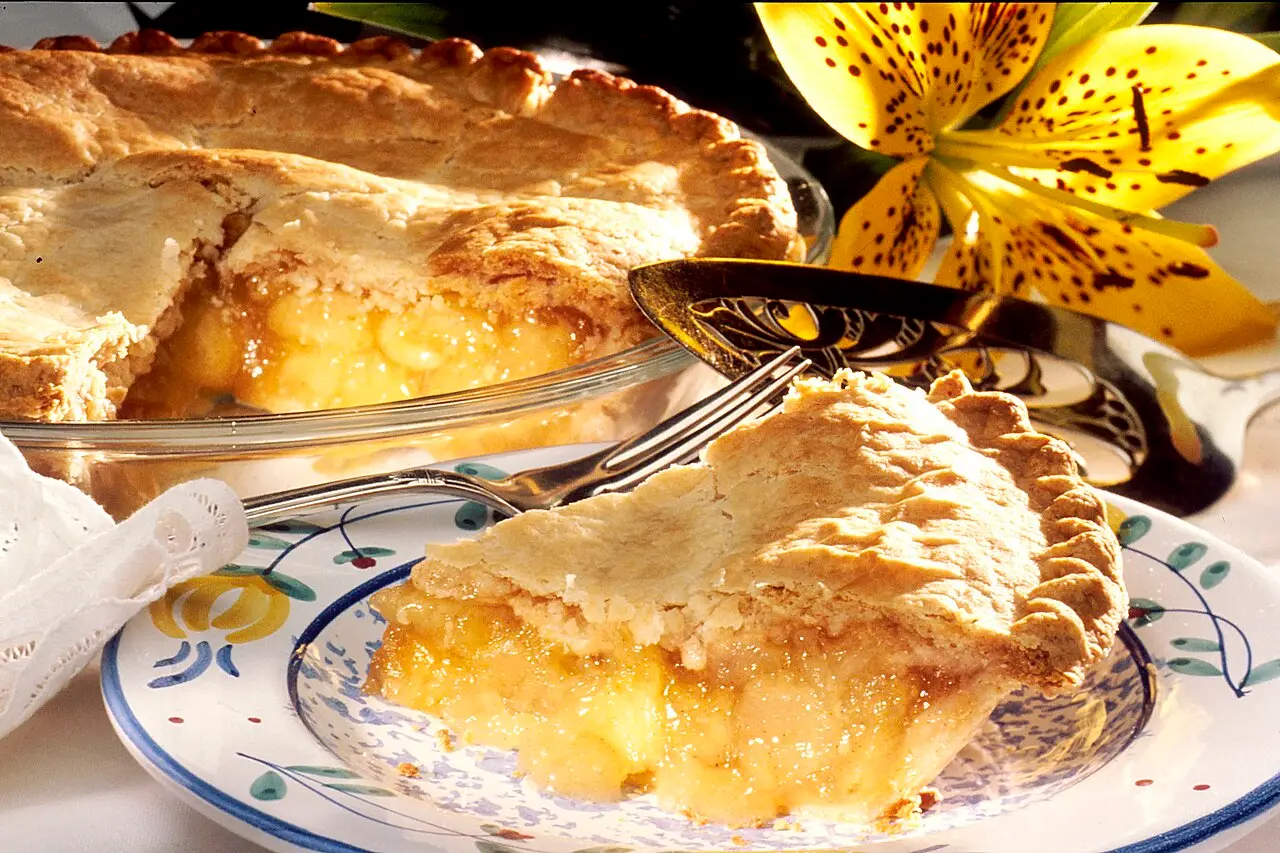
Apple pie
Sliced tart apples under sugar, cornflour and cinnamon, baked between two crusts of shortening pastry.
-
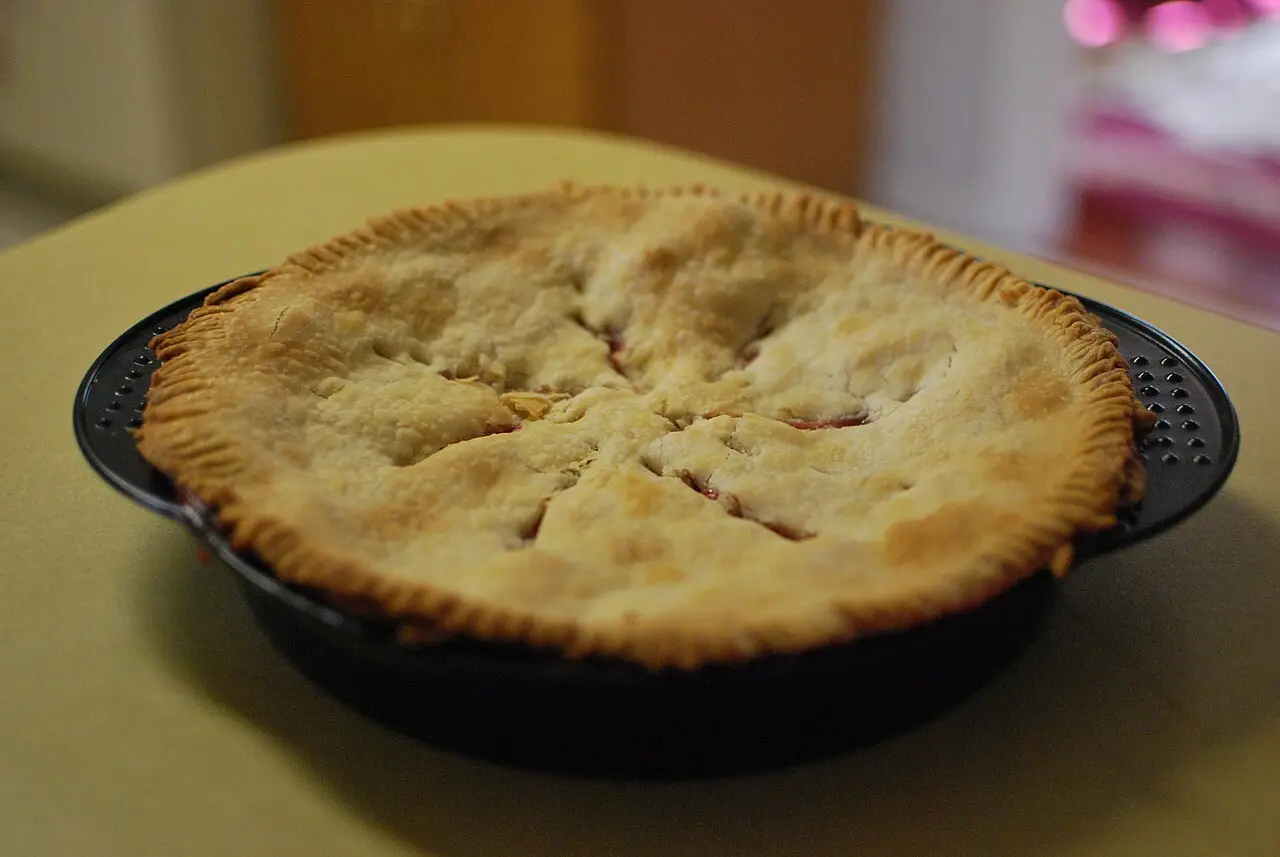
Cranberry-apple pie
A two-crust apple pie in which fresh cranberries take the place of some of the apples.
-
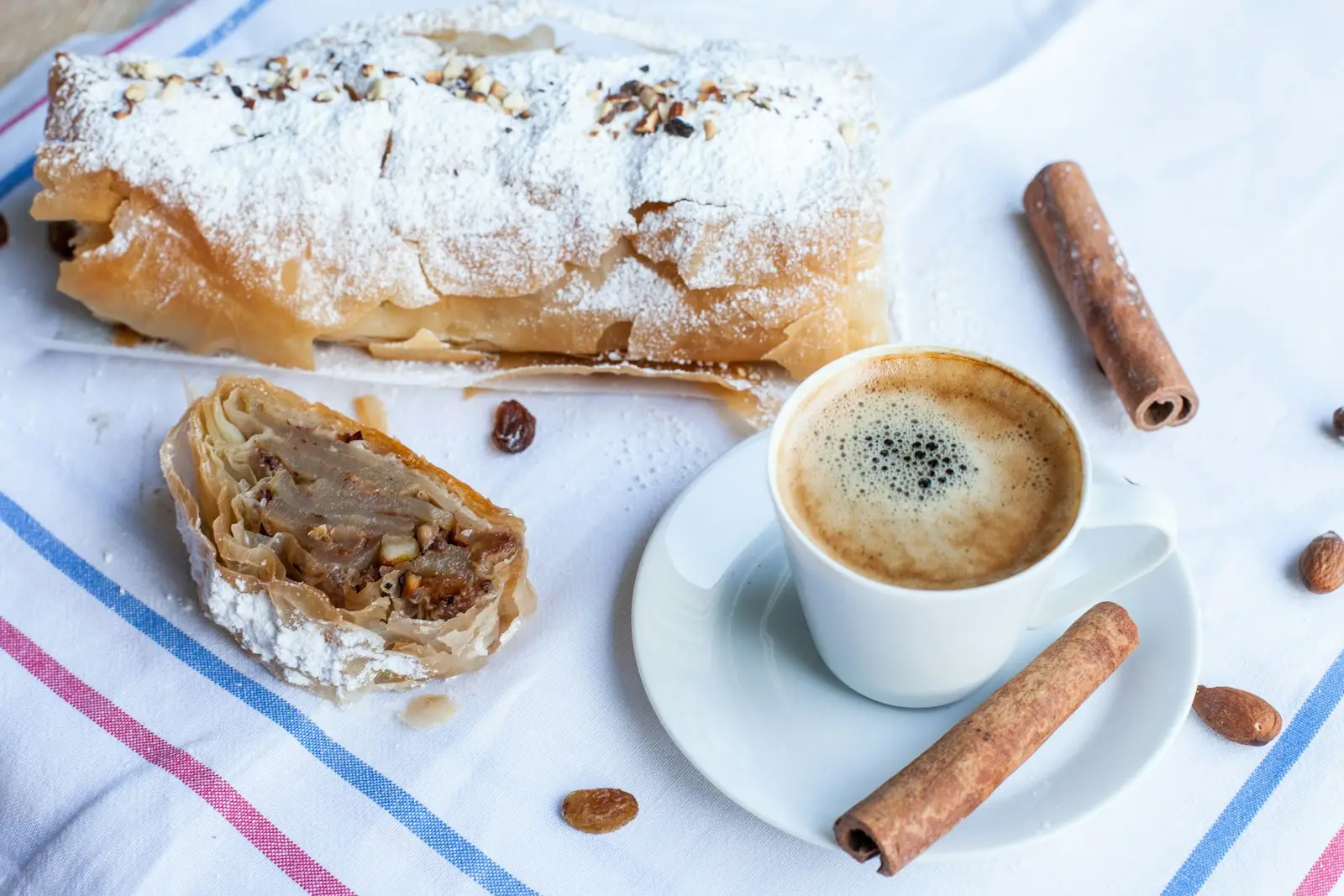
Apple strudel
Sourish apples, rum-soaked raisins and walnuts on buttered crumbs, rolled in a dough pulled by hand until wafer-thin.
-
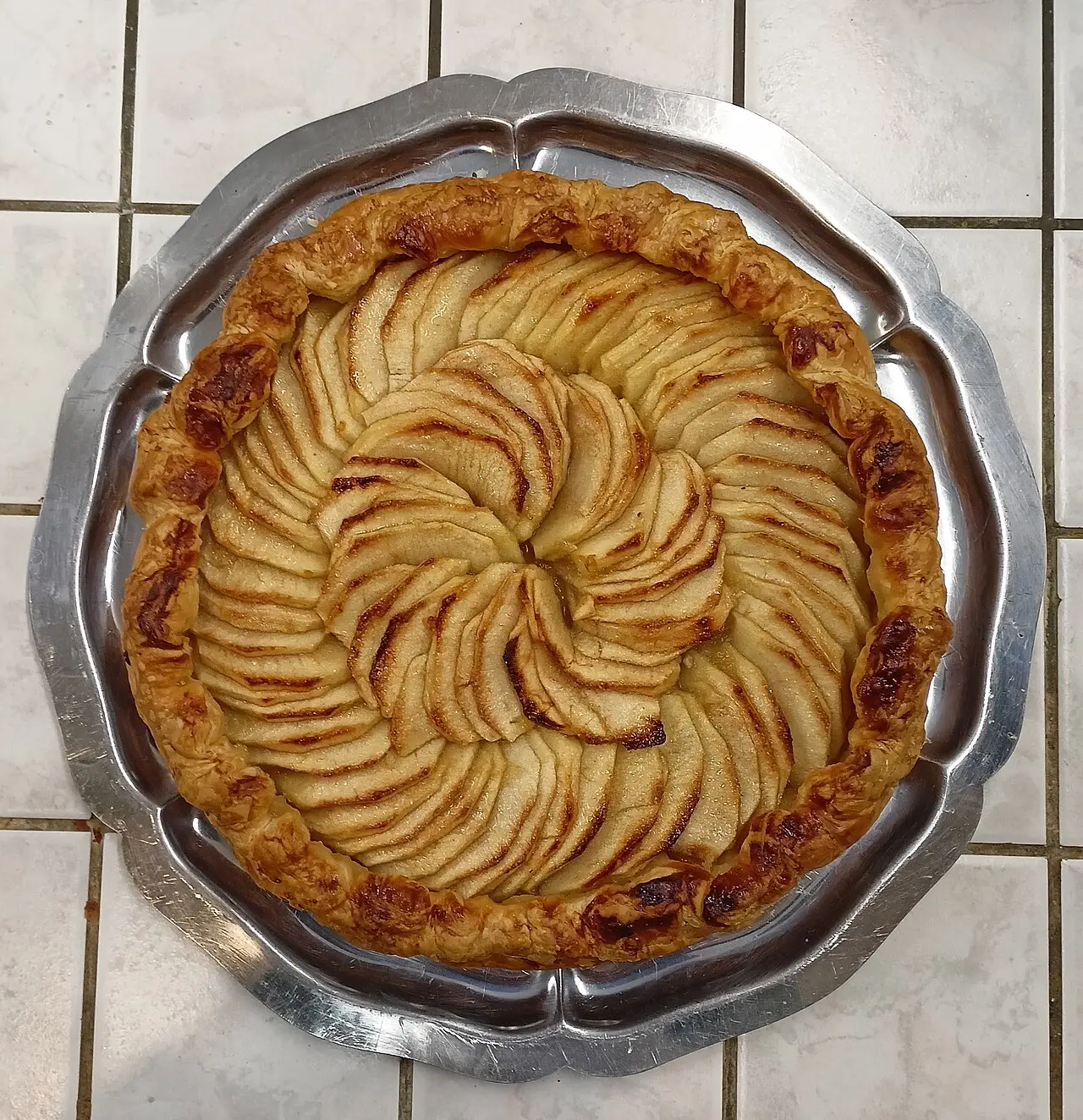
Flan de pommes
A puff pastry case filled with apples cooked in butter and sugar, baked and glazed with apricot jam.