Apple recipes Collection
Christmas
Mince pies and Christmas pudding, Advent's baked apples and æbleskiver, rosolli on Christmas Eve.
Isabella Beeton’s Book of Household Management of 1861 sends roast goose to table with a tureen of well-made apple sauce, calls the bird in perfection from Michaelmas to Christmas, and wants the same sauce with roast pork.1 In Charles Dickens’s A Christmas Carol, dated December 1843, the Cratchits’ Christmas goose is “eked out by apple-sauce and mashed potatoes”.2 In the United States, the Christmas dinner menu of Fannie Merritt Farmer’s Boston Cooking-School Cook Book of 1896 puts roast goose, potato stuffing and apple sauce on one line.8 Beeton’s mincemeat, which has apples in it, is made in early December, and her mince pies are “seasonable at Christmas time”.1
John Bickerdyke wrote in 1889 that the chief ingredients of the old wassail bowl were strong ale, sugar, spices and roasted apples, and he called keeping wassail on Twelfth Night and Christmas Eve an ancient custom.4 Cups and Their Customs said in 1869 that the wassail bowl was still drunk on Christmas Eve in many parts of England, and gave lamb’s wool, hot ale with the pulp of roasted apples, as a drink of nearly the same composition.3 In Devonshire, Bickerdyke adds, the apple trees were wassailed with cider on the eve of the Epiphany, with words such as “Here’s to thee, old apple tree”.4
In German a baked apple is a Bratapfel, which a dictionary of the language says is usually served in Advent, filled with nuts, raisins, sugar, marzipan or the like and spiced with cinnamon.5 In Theodor Storm’s poem Knecht Ruprecht, written in 1862, Ruprecht has his little sack with him, for apples, nuts and almonds are what good children like to eat.6 A German public broadcaster’s account of Saint Nicholas’s Day counts apples, with nuts, among the saint’s traditional gifts.7
The newer recipes here follow current ones, each named on its page. Beeton’s mince pies are “seasonable at Christmas time”1, and the Christmas pudding is named for the feast. The Bratapfel is the dictionary’s dish of Advent5; æbleskiver, among the oldest Danish baked goods, have belonged to Christmas baking for about a hundred years, and are mostly made without apple today11; rosolli, a salad of beetroot that may hold apple, is on Finland’s traditional Christmas table.12 Of the older recipes, the apple sauce, the mincemeat and the lamb’s wool are tied to the season by the sources above. The baked apples are an American bulletin’s, of 196910; the red cabbage with apples is a German dish, which a cookery book printed in London in 1873 calls excellent with roast goose9. No source read here ties either of those two to Christmas: this site has set them beside the rest.
Recipes
-
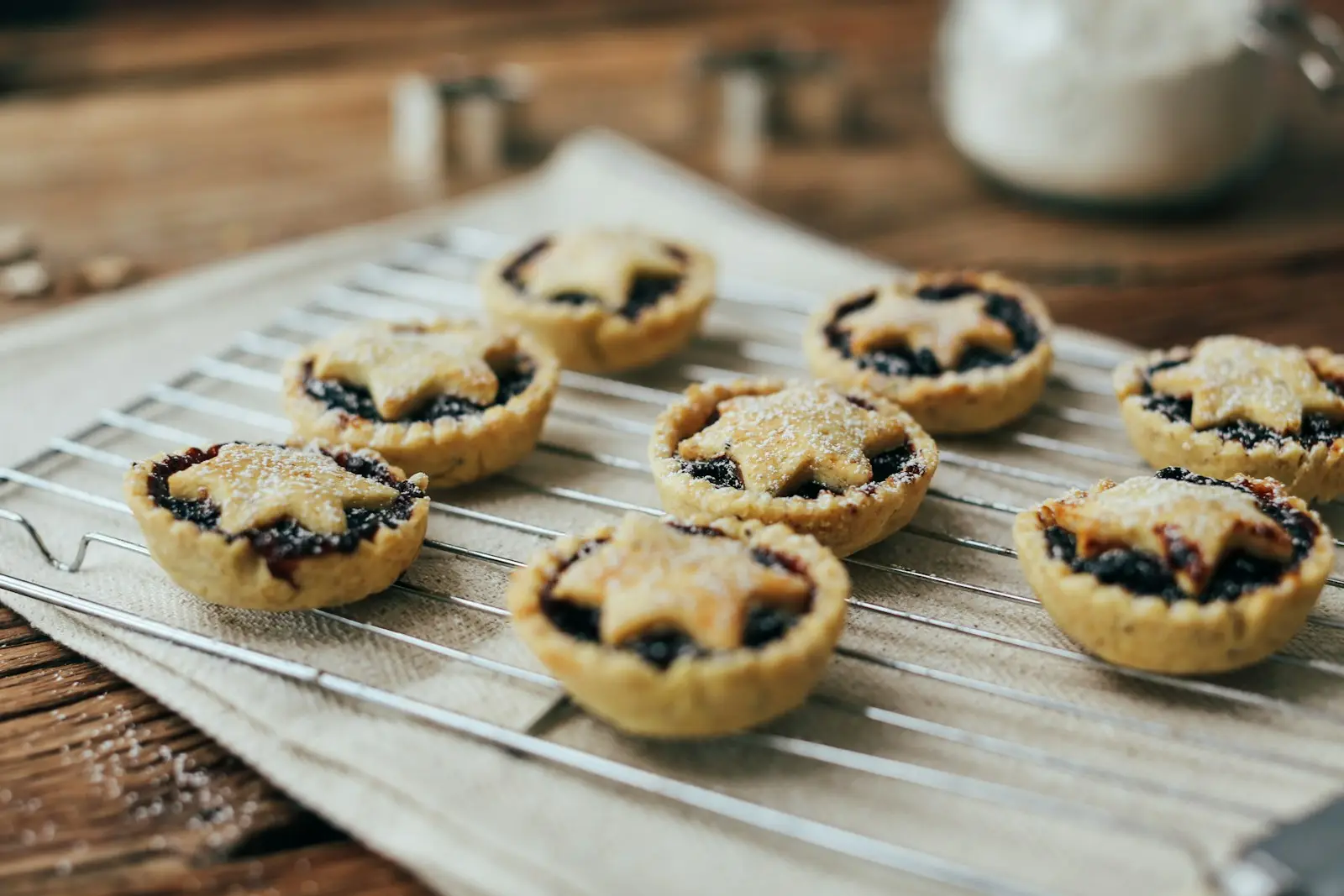
Mince pies
Shortcrust pies filled with a mincemeat of dried fruit, grated butter, spice and a Bramley apple, left a day to stand.
-
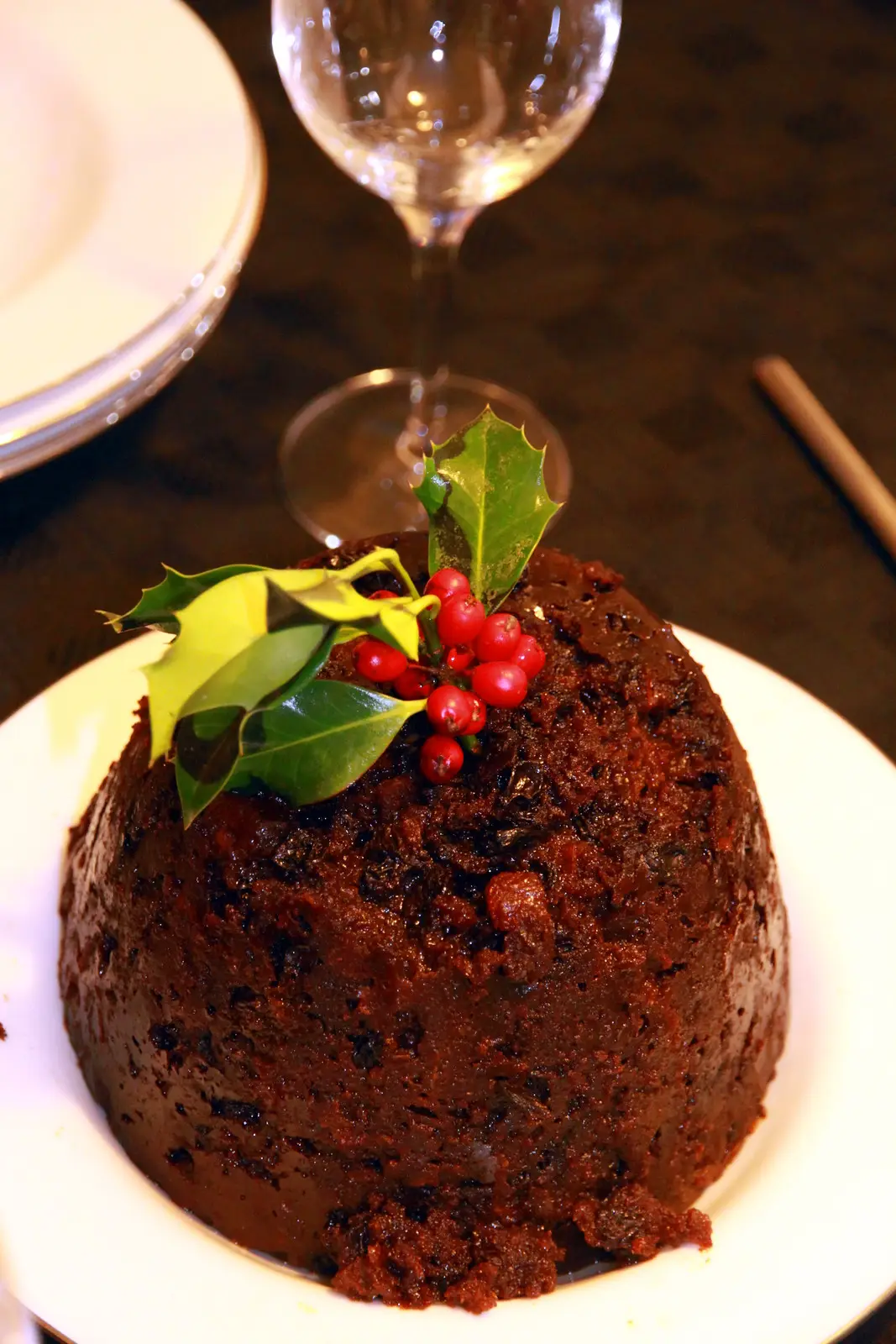
Christmas pudding
A steamed pudding of rum-soaked dried fruit, a grated Bramley apple, breadcrumbs and ground almonds, with rum cream.
-
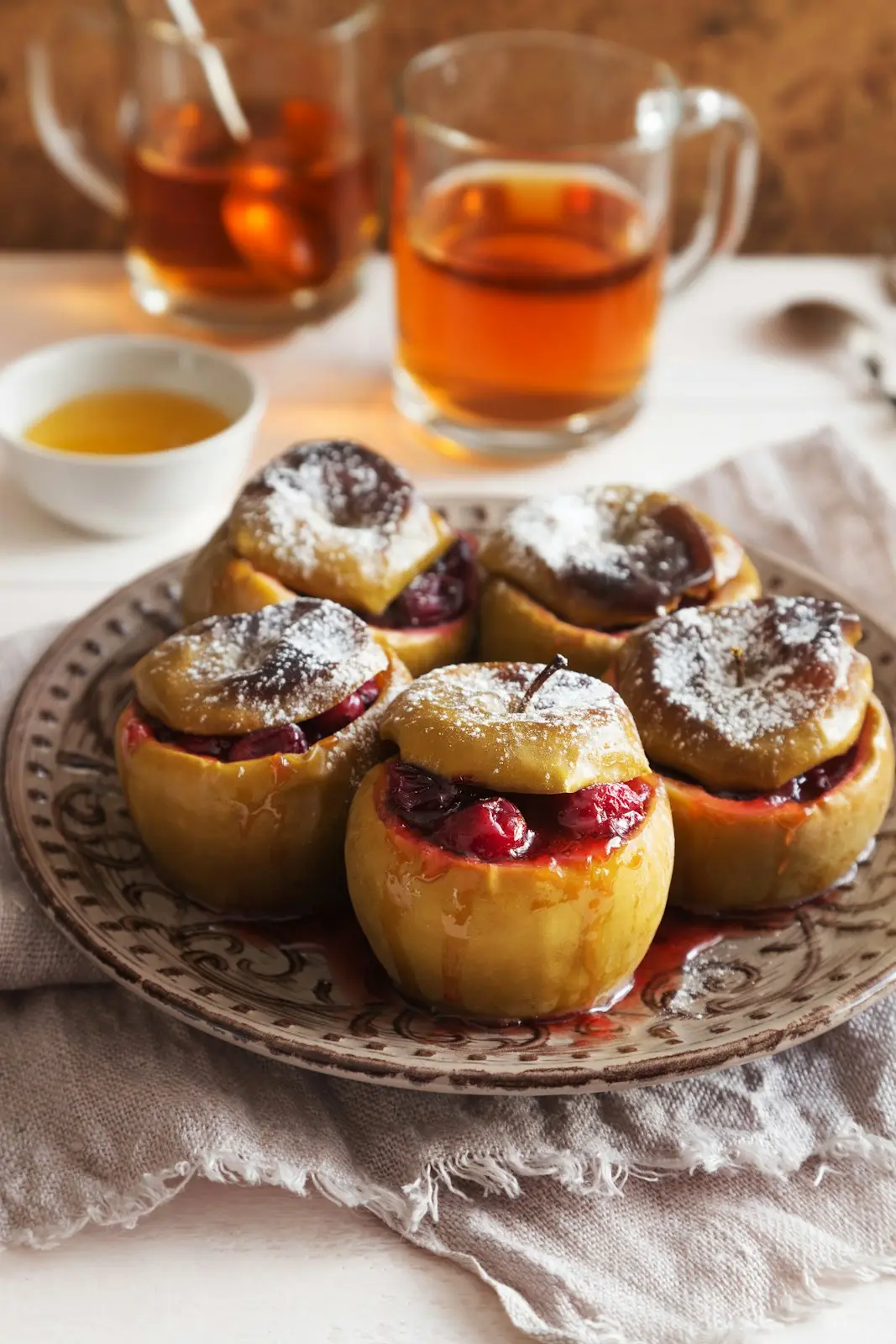
Bratapfel
Tart red apples stuffed with marzipan, toasted nuts, orange zest and cinnamon, baked, and eaten warm with vanilla sauce.
-
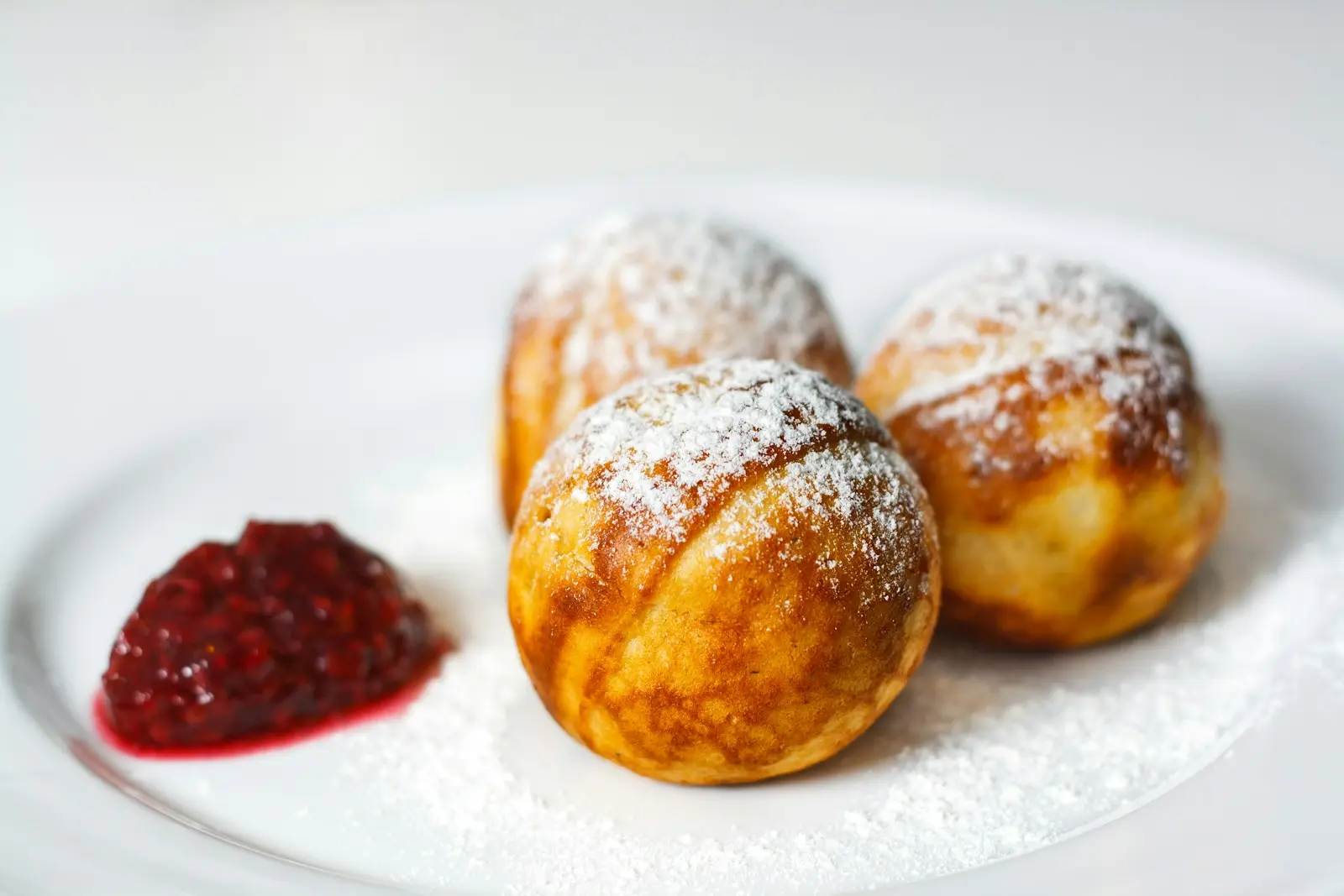
Æbleskiver
Balls of buttermilk batter baked in a pan with round hollows, with apple at the centre, eaten with jam and icing sugar.
-
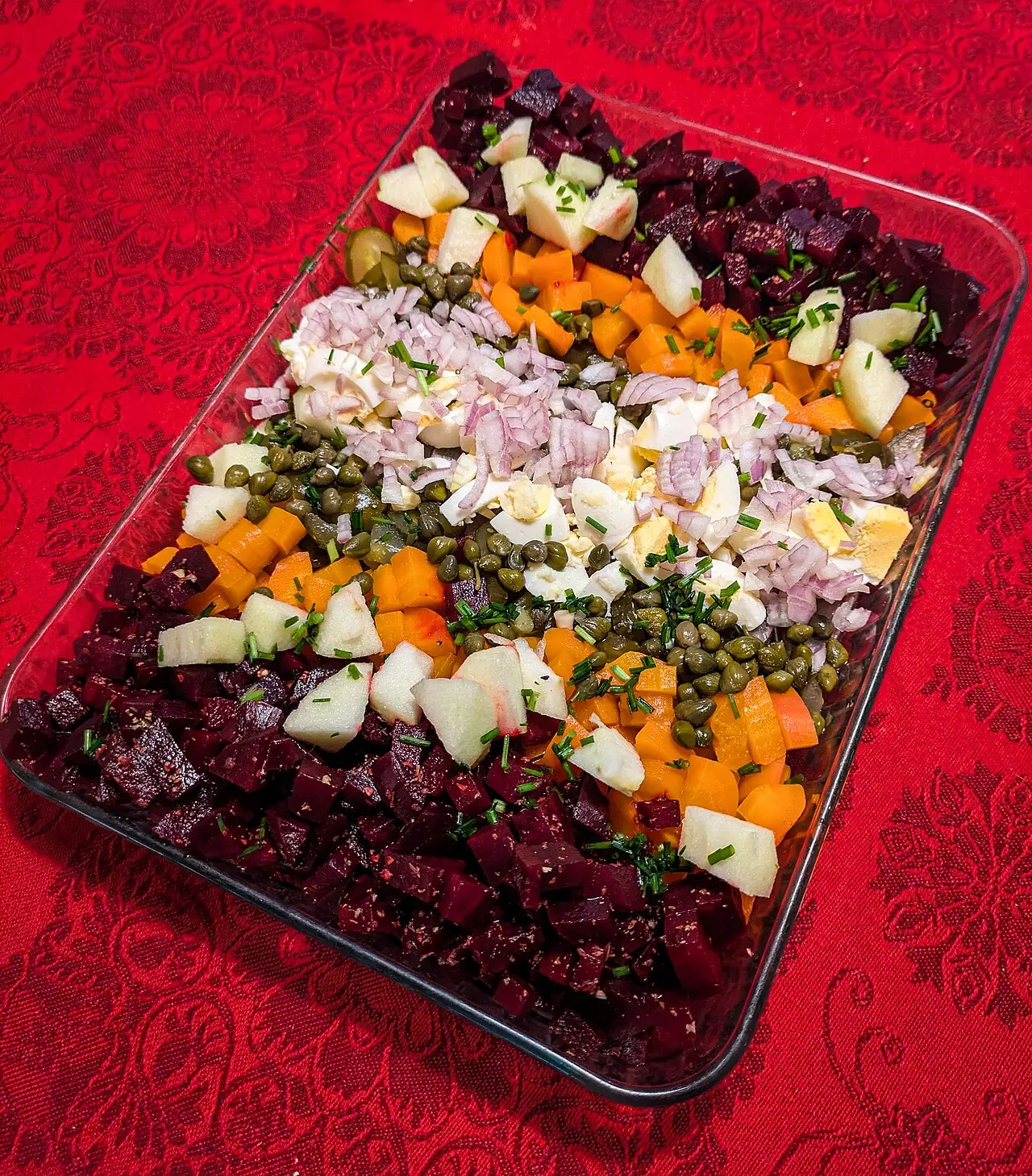
Rosolli
Cubes of beetroot, carrot, potato, sour apple, pickled cucumber and onion, served cold with a dressing of whipped cream.
-
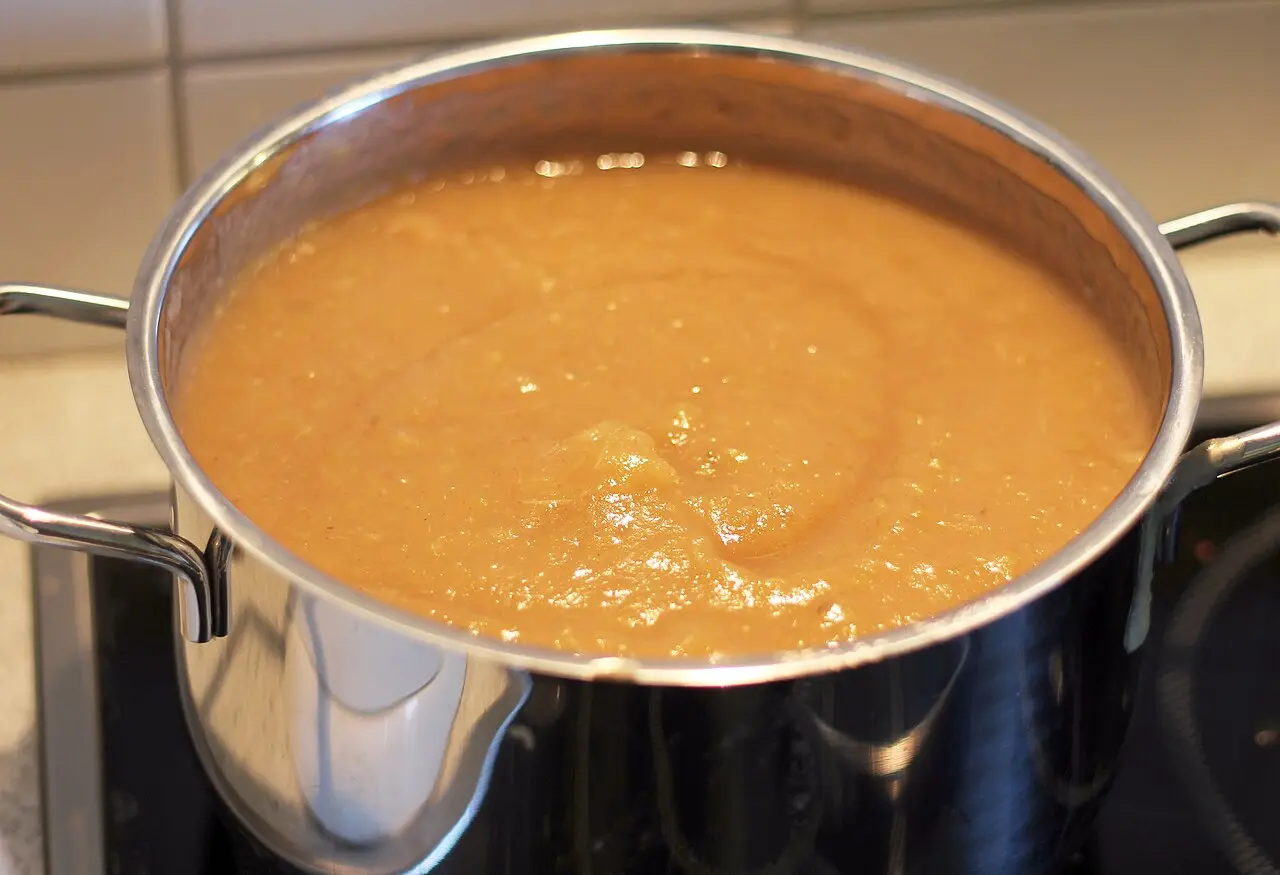
Apple sauce for goose and pork
Apples boiled soft in a little water and beaten to a pulp with sugar and a small piece of butter.
-
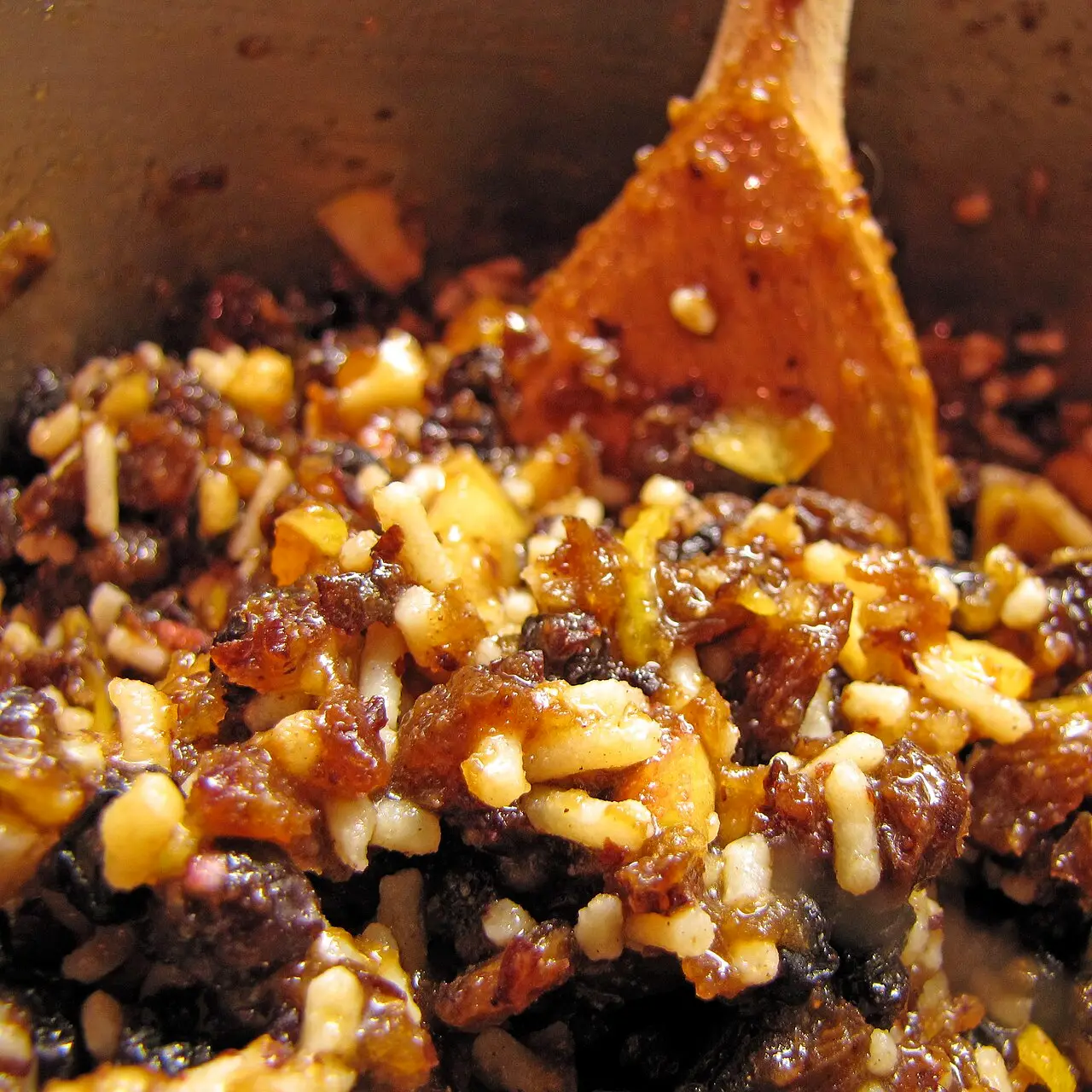
Mincemeat
Suet, raisins, currants, sugar and candied peel mixed with boiled lemons, baked apples and brandy.
-
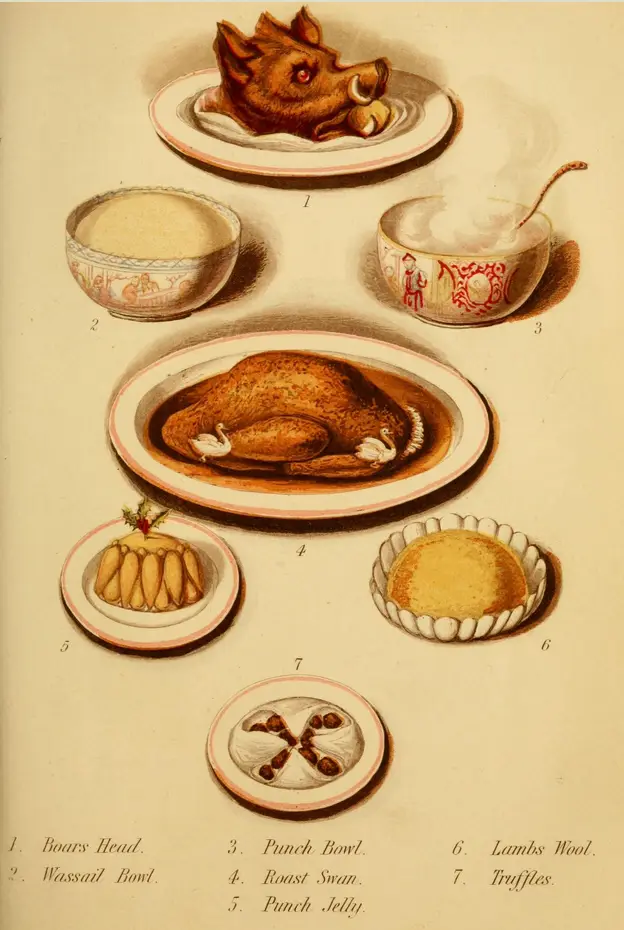
Lamb's wool
Hot strong ale stirred with the pulp of roasted apples, grated nutmeg, ginger and sugar.
-
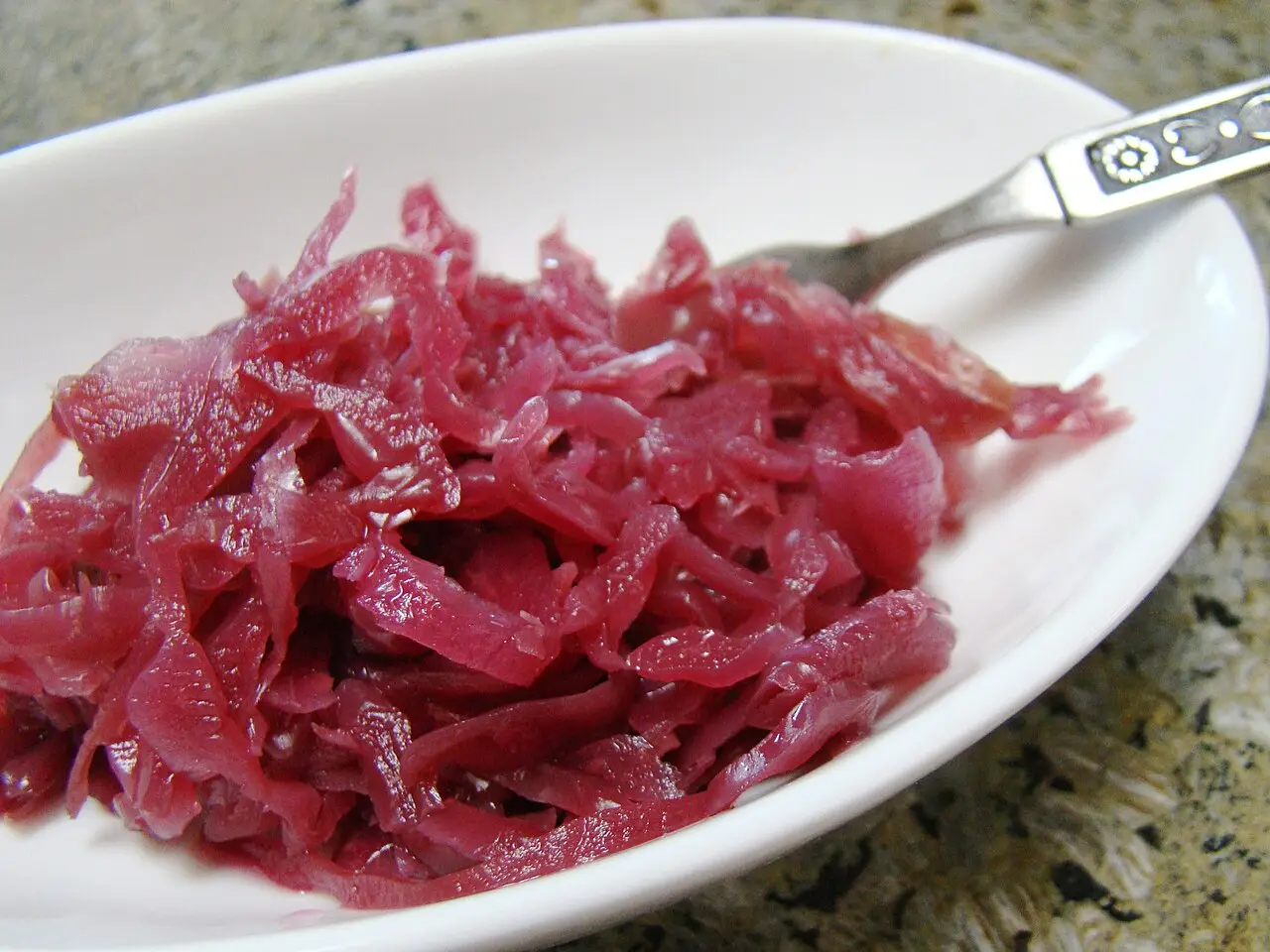
Red cabbage with apples
Sliced red cabbage stewed for two to three hours with butter, apples, cloves, vinegar, sugar and red wine.
-
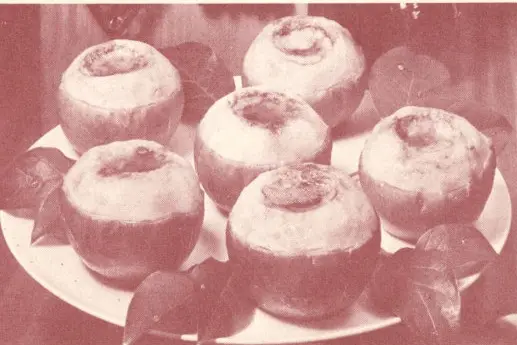
Baked apples
Whole apples, cored and part-peeled, filled with honey, spice and raisins and baked with water in the dish.
Sources
- The Book of Household Management, Isabella Beeton; published by S. O. Beeton; Project Gutenberg, 1861. Supports: apple sauce served with roast goose (No. 968) and roast pork (Nos. 800, 827 and 829); the goose in perfection from Michaelmas to Christmas; mincemeat with apples made in early December (Nos. 1309 and 1310); mince pies seasonable at Christmas time (No. 1311).
- A Christmas Carol, Charles Dickens; Project Gutenberg, December 1843. Supports: the Cratchits' Christmas goose, "eked out by apple-sauce and mashed potatoes" (Stave Three).
- Cups and Their Customs (second edition), John Van Voorst, London; credited by Project Gutenberg to George Edwin Roberts and Henry Porter, 1869. Supports: the wassail bowl still drunk on Christmas Eve in many parts of England; lamb's wool, hot ale with the pulp of roasted apples, as of nearly the same composition.
- The Curiosities of Ale & Beer: An Entertaining History, John Bickerdyke; Swan Sonnenschein & Co., London; Project Gutenberg, 1889. Supports: the chief ingredients of the ancient wassail bowl; keeping wassail on Twelfth Night and Christmas Eve as an ancient custom; the wassailing of apple trees with cider in Devonshire on the eve of the Epiphany, and its rhyme.
- Bratapfel, DWDS, Digitales Wörterbuch der deutschen Sprache, Berlin-Brandenburgische Akademie der Wissenschaften, 2020. Supports: the Bratapfel as an apple baked unpeeled and usually served in Advent, filled with nuts, raisins, sugar, marzipan or the like and spiced with cinnamon.
- Knecht Ruprecht, Theodor Storm, Gedichte, eighth edition, Gebrüder Paetel, Berlin, pages 143 and 144; Wikisource, 1889 (written 1862). Supports: the sack of apples, nuts and almonds that Knecht Ruprecht carries for good children at Christmas.
- Nüsse zu Nikolaus: Was feiert man am Nikolaustag?, ARD alpha, Bayerischer Rundfunk, 10 November 2024. Supports: apples, like nuts, as traditional gifts of Saint Nicholas.
- The Boston Cooking-School Cook Book, Fannie Merritt Farmer; Little, Brown, and Company, Boston; the Harvard University copy at the Internet Archive, 1896. Supports: the "Menu for Christmas Dinner" on page 520, whose third line reads "Roast Goose. Potato Stuffing. Apple Sauce.".
- German National Cookery for English Kitchens, Chapman and Hall, London; the Wellcome Library copy at the Internet Archive, 1873. Supports: recipe 593, "Roth Kraut", red cabbage garnished with quarters of stewed apple: "Red cabbage this way is excellent with roast goose, game, sausages, roast pork" (pages 163 and 164).
- Apples in Appealing Ways (Home and Garden Bulletin No. 161), Human Nutrition Research Division, Agricultural Research Service, United States Department of Agriculture; Project Gutenberg, April 1969. Supports: the recipe "Baked apples": baking apples filled with honey or sugar, cinnamon, nutmeg and, if desired, raisins.
- æbleskive, Bettina Buhl, Det Grønne Museum; Lex (lex.dk), 22 July 2025. Supports: æbleskiver among the oldest Danish baked goods, linked with Christmas baking only in the last hundred years, and usually made without apple today.
- Jouluruoka, Tietävä, Suomalaisen Kirjallisuuden Seura (the Finnish Literature Society). Supports: rosolli among the dishes of the traditional Christmas table, and a salad that may hold apple.