Mincemeat
Suet, raisins, currants, sugar and candied peel mixed with boiled lemons, baked apples and brandy.
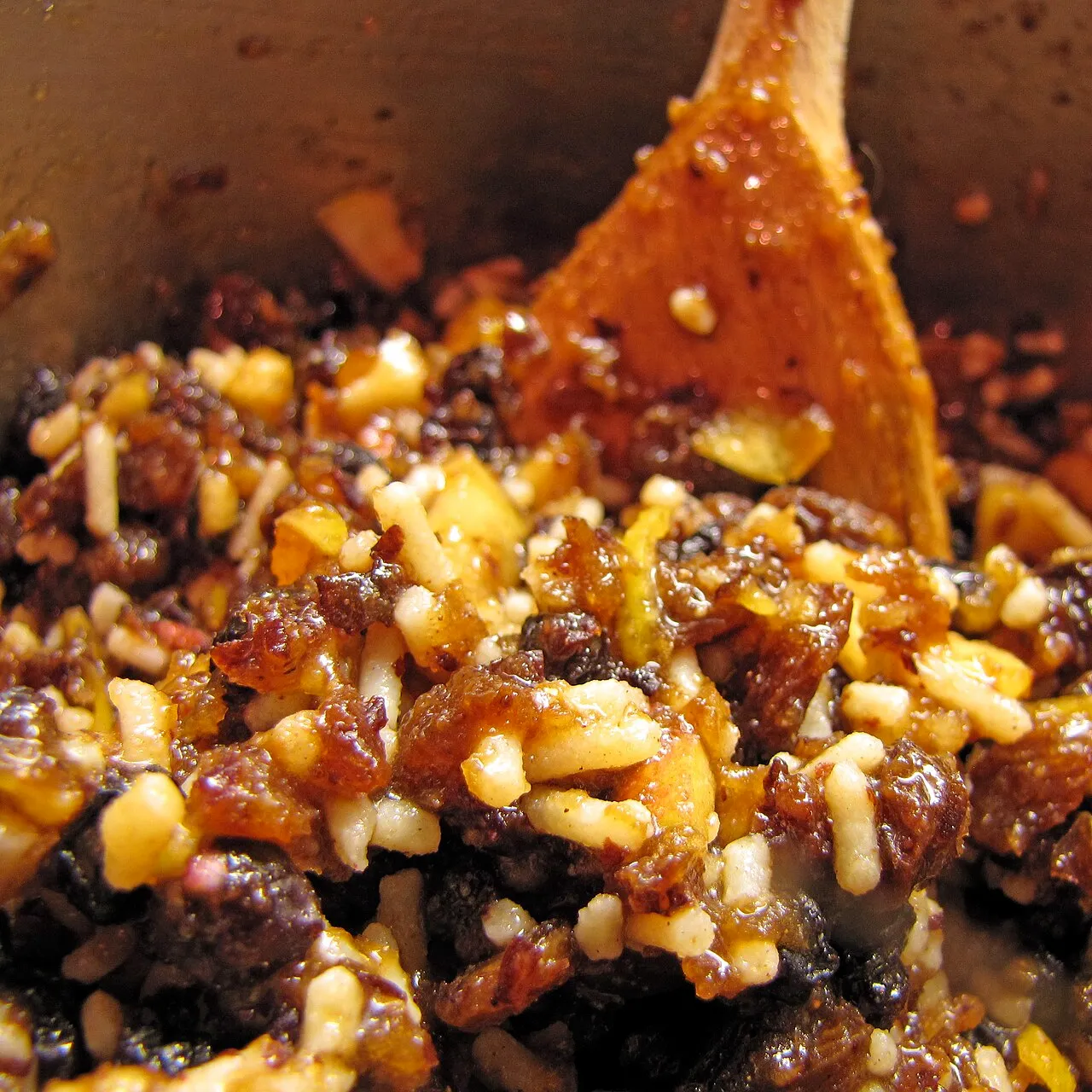

- Makes
- 1 batch
- Kind
- Sauces and preserves
- From
- United Kingdom
- Source
- The Book of Household Management, 1861
Allergens
- Check the label for
-
- wheat (gluten): shredded suet
- sulphites: raisins, currants, candied citron, candied orange peel, candied lemon peel, orange marmalade
Contains alcohol.
Worked out from the ingredients as written. Products differ, so read their labels. How allergens are worked out
Adjust the recipe
Scale to what I have
Ingredients
-
In the source: “2 lbs. of moist sugar”
-
In the source: “the same quantity of lemon-peel”
-
In the source: “1 teacupful of brandy”
Tick what you have: copying then takes only what is left.
You will need
- a stone jar with a closely fitting lid
Method
-
For this step: 3 lemons
-
For this step: 3 apples
-
For this step: 450 g (1 pound) raisins; 450 g (1 pound) currants; 450 g (1 pound) shredded suet; 900 g (2 pounds) sugar; 28 g (1 ounce) candied citron; 28 g (1 ounce) candied orange peel; 28 g (1 ounce) candied lemon peel; brandy; 2 tablespoons orange marmalade
Notes
- Beeton says this mincemeat should be made in the first or second week of December.1
- For a mincemeat that is to be kept, the United States National Center for Home Food Preservation gives another recipe, of suet, meat, apples, raisins and cider: it is simmered for an hour and then processed in quart jars in a pressure canner for 90 minutes.2
- Her mince pies, made of puff paste and filled with the book's other mincemeat, are marked "seasonable at Christmas time".1
The apples
The recipe asks for three large apples, baked, with their skins and cores removed, and names no variety.1
This recipe
It follows The Book of Household Management. The source uses British measures (pounds, ounces and imperial pints); the metric and US amounts are this site's conversions. This site has no kitchen and has not cooked the recipe.
What was changed: The source measures the brandy as "1 teacupful" and nowhere says what a teacupful holds, so the line keeps the source's words and carries no amount. Its "moist sugar" is listed as sugar, with its own words beside the line: the book does not say what kind of sugar it means. After "1 oz. of sliced candied orange-peel" it asks for "the same quantity of lemon-peel", which we read as an ounce of sliced candied lemon peel. It says the mincemeat will be ready for use in a fortnight and gives no other direction for keeping it; we add none. It does not say when the grated rind and strained juice of the lemons go in; we add them with the remaining ingredients. It gives no time or heat for boiling the lemons or baking the apples, and we add none. It says only "suet" here; the recipe before it says beef suet. Pounds and ounces are the same in the British and American systems; the metric quantities are our conversions. The steps are in our own words.
How the recipes are chosen and converted
Print or download
- PDF, metric measures, A4 paper
- PDF, US measures, Letter paper
- Recipe data (schema.org JSON-LD), metric measures
- Recipe data (schema.org JSON-LD), US measures
- Cooklang file, metric measures
- Cooklang file, US measures
- Plain text (Markdown), metric measures
- Plain text (Markdown), US measures
The files give the source's quantities. A recipe app can import this page from its address.
You have changed the quantities. Printing keeps them; the files above give the source's quantities.
With your quantities and measures:
About this dish
This is recipe 1310, “Excellent Mincemeat”, in Isabella Beeton’s The Book of Household Management, which came out in 24 monthly parts from 1859 to 1861 and as a bound book in 1861.1 The recipe before it, headed simply “Mincemeat”, adds a pound and a half of lean beef to much the same fruit, suet, sugar and brandy, and measures its apples by the pottle.1 This one has no lean meat: its fat is suet, and the fruit is raisins, currants, candied peel, lemons boiled to a pulp and three large baked apples.1
Beeton ties both to December.1 The first is to be made about the beginning of the month and this one in its first or second week, each is ready for use in a fortnight, and her mince pies are “seasonable at Christmas time”.1
Sources
- The Book of Household Management, Isabella Beeton; published by S. O. Beeton; Project Gutenberg, 1861. Supports: the recipe "Excellent Mincemeat" (No. 1310): its ingredients, quantities, method, its being ready for use in a fortnight, and its season; the recipe "Mincemeat" (No. 1309) with its lean beef, beef suet and pottle of apples; the mince pies (No. 1311) and their season; the dates of the monthly parts and of the bound edition.
- Festive Mincemeat Pie Filling, National Center for Home Food Preservation, University of Georgia; adapted from the United States Department of Agriculture's Complete Guide to Home Canning (Agriculture Information Bulletin No. 539), revised 2015. Supports: a mincemeat of suet, ground beef or venison, apples, raisins, cider, spices and sugar: the suet and meat cooked in water, the whole simmered for an hour, and the filled quart jars processed in a pressure canner for 90 minutes.
From The World of Apples, apple.io/recipes/mincemeat/
In these collections
More of this kind
-
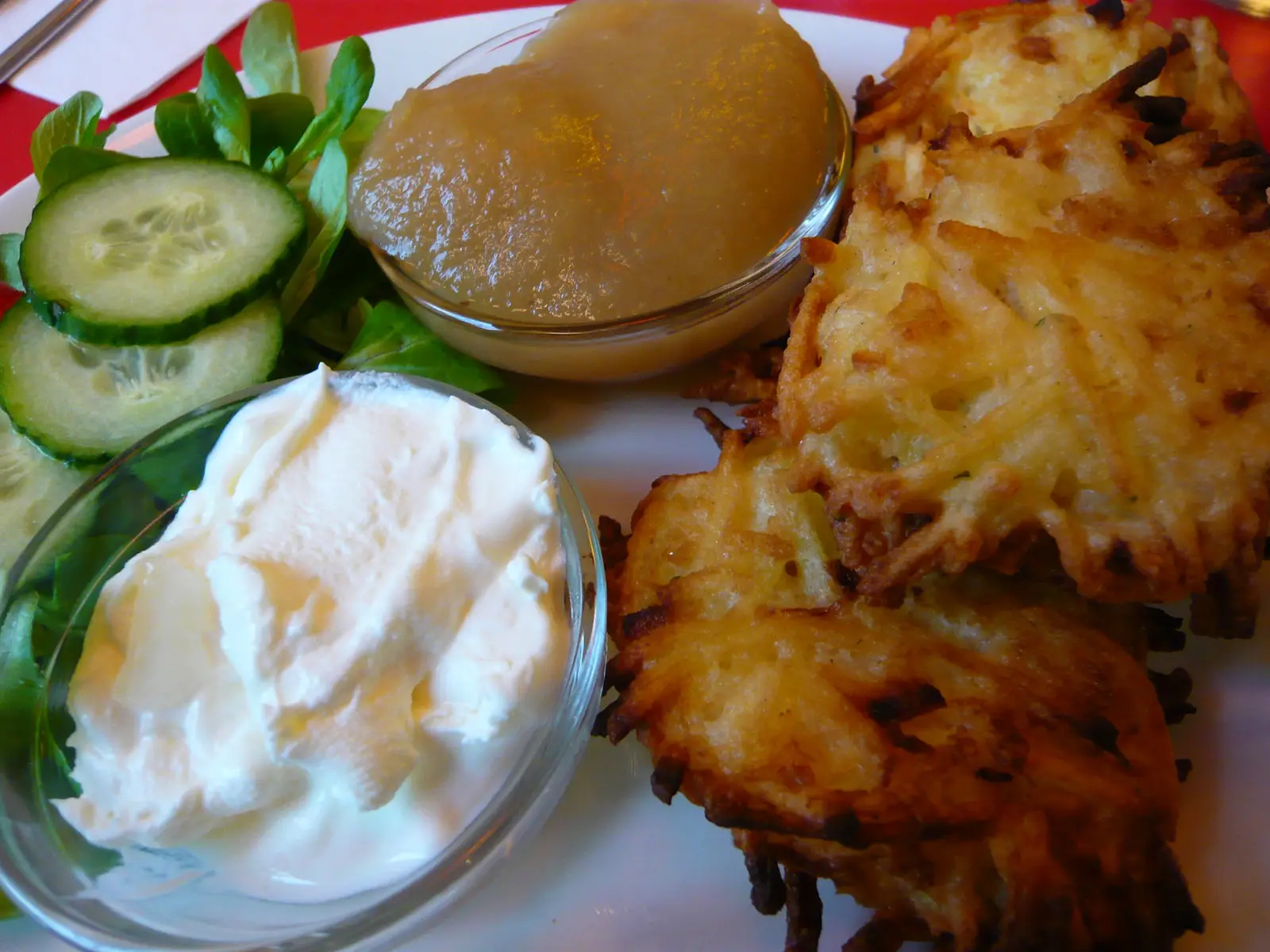
Applesauce
Sweet red apples simmered in their skins with cinnamon, then passed through a food mill: a pink sauce for latkes.
-
Cranberry-apple relish
Raw cranberries, unpeeled tart apples and an unpeeled orange, chopped fine and sweetened.
-
Fresh apple chutney
Thin strips of raw apple with onion, green chilli, parsley and green ginger, dressed with vinegar and oil.
-
Apple sauce for goose and pork
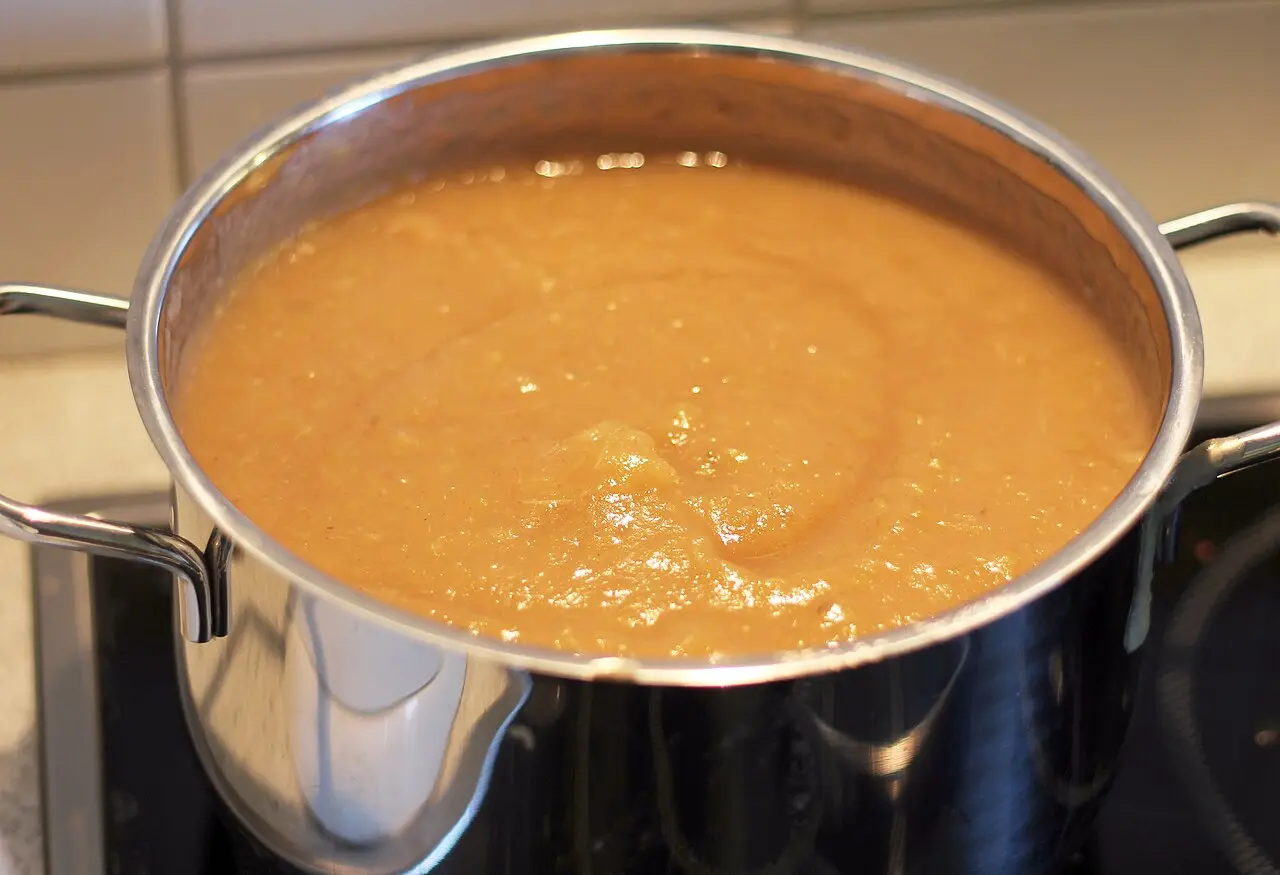
Apples boiled soft in a little water and beaten to a pulp with sugar and a small piece of butter.