Apples of Denmark
16 varieties in the atlas came from Denmark. The oldest is Gravenstein, dated by about 1669.
Harvest
Denmark grew 18,510 tonnes of apples in 2024, 0.02% of the world's harvest; it ranked 72nd among the world's producers.1
The figures
| Year | Tonnes |
|---|---|
| 2024 | 18,510 |
| 2023 | 13,070 |
| 2022 | 21,940 |
| 2021 | 30,560 |
| 2020 | 40,020 |
| 2019 | 25,210 |
| 2018 | 32,650 |
| 2017 | 20,496 |
| 2016 | 36,470 |
| 2015 | 35,647 |
| 2014 | 35,371 |
| 2013 | 31,184 |
| 2012 | 18,731 |
| 2011 | 25,735 |
| 2010 | 24,190 |
| 2009 | 27,513 (estimated by FAOSTAT) |
| 2008 | 28,958 (estimated by FAOSTAT) |
| 2007 | 32,000 (estimated by FAOSTAT) |
| 2006 | 31,779 |
| 2005 | 35,307 |
| 2004 | 35,307 |
| 2003 | 32,100 |
| 2002 | 18,800 |
| 2001 | 20,000 (estimated by FAOSTAT) |
| 2000 | 25,000 (estimated by FAOSTAT) |
| 1999 | 32,000 |
| 1998 | 29,000 |
| 1997 | 33,000 |
| 1996 | 18,000 |
| 1995 | 30,000 |
| 1994 | 37,500 |
| 1993 | 80,000 |
| 1992 | 83,000 |
| 1991 | 55,000 |
| 1990 | 70,000 |
| 1989 | 52,000 |
| 1988 | 45,000 |
| 1987 | 26,492 |
| 1986 | 40,201 |
| 1985 | 45,105 |
| 1984 | 54,376 |
| 1983 | 47,159 |
| 1982 | 59,462 |
| 1981 | 43,296 |
| 1980 | 115,000 |
| 1979 | 125,000 |
| 1978 | 120,000 |
| 1977 | 129,643 |
| 1976 | 102,767 |
| 1975 | 128,328 |
| 1974 | 104,134 |
| 1973 | 116,332 |
| 1972 | 93,334 |
| 1971 | 115,457 |
| 1970 | 120,625 |
| 1969 | 125,816 |
| 1968 | 122,416 |
| 1967 | 122,336 |
| 1966 | 111,893 |
| 1965 | 125,400 |
| 1964 | 122,615 |
| 1963 | 119,798 |
| 1962 | 108,295 |
| 1961 | 113,295 |
Estimated or imputed by FAOSTAT, not a figure the country reported.
Varieties from Denmark, oldest first
-
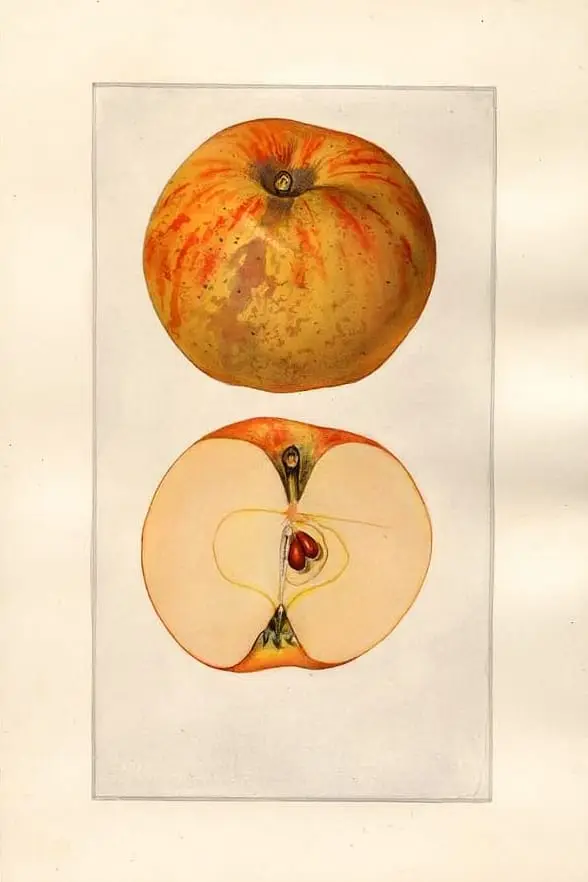
Gravenstein
A triploid of disputed origin, linked to Gråsten Castle and to Italy; Danish growers named it the national apple in 2005
-
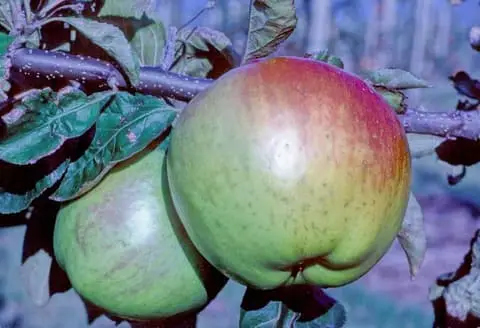
Signe Tillisch
Raised in Denmark in 1866 and named after the grower's daughter; DNA shows it a child of Alexander and London Pippin
-
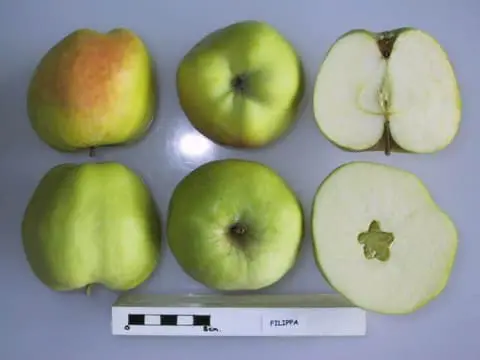
Filippa
Grown from pips sown in a pot by Filippa Johannsen at Hundstrup, Fyn, about 1880; a parent of Aroma
-
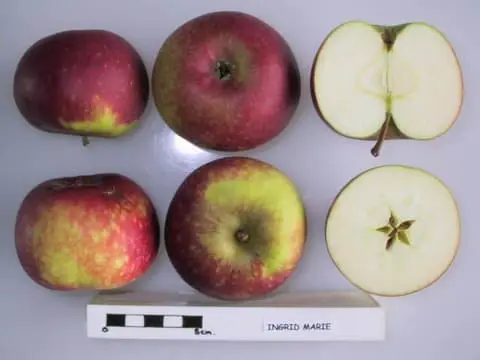
Ingrid Marie
Found in a Fyn school garden about 1910; Denmark's most widespread apple until 1997 and still Sweden's in 2023
And 12 more in the catalogue, A to Z
- Bodil Neergaard about 1850
- Cherry Cox about 1942
- Guldborg by the 1870s
- Ildrod Pigeon by 1840
- Josefine Kallehave
- Kortegaard Cox 1914
- Lundbytorp by 1913
- Maglemer second half of the 1700s
- Molleskov about 1860
- Red Ingrid Marie
- Rod Tonnes by 1942
- Skovfoged by the early 1800s
Sources
- FAOSTAT: Production: Crops and livestock products, Food and Agriculture Organization of the United Nations (FAO), Updated 31 December 2025. Supports: each country's apple harvest by year (item 515, apples, in tonnes, 1961 to 2024), the shares of the world's harvest and the ranks worked out from them, and which figures FAOSTAT estimated or imputed.