Cripps Red
Cripps Pink's sister seedling from a 1973 cross at Stoneville, Western Australia: very late, very firm and tangy
History
In 1973 John Cripps, a senior research officer of the Western Australian Department of Agriculture, crossed Lady Williams with Golden Delicious at the Stoneville Horticultural Research Centre1, aiming, as Tancred and colleagues put it, to join the keeping quality of the one to the fruit quality of the other3. One seedling first fruited in 19791. It is a sister of Cripps Pink from the same cross, and both bear their breeder’s name1,4.
It was patented in the United States in 1993 as Cripps-Two1, a name a later patent equates with Cripps Red2, and it received a Community plant variety right in the European Union in 19984. In September 2025 the EU General Court agreed that new evidence cast serious doubt on the novelty of both Cripps varieties, so the Community Plant Variety Office must now consider whether their rights are void4. Like Cripps Pink, Cripps Red is marketed under a trade mark, Sundowner4,5; the list of varieties in the international marketing standard for apples gives Joya as a second5.
In 1994 it was of minor commercial importance but promising, being developed as a premium apple for Australia and for export and grown under trial around the world3. In the spring of 1992 it was crossed, as the mother, with Tenroy Gala at Stoneville; the seedling became ANABP 01, patented in the United States in 20162.
The fruit
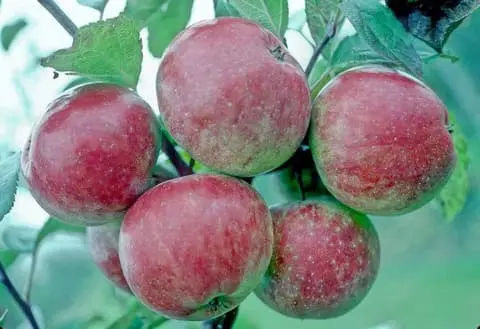
The patent describes a medium-sized, oblong-conical fruit averaging 78.7 mm across and about 185 grams1. The smooth skin does not crack; red stripes over a yellow-green ground fill in to solid red over up to 80 per cent of fruit in full sun1. The cream flesh is very firm, and the patent calls its flavour “acid tangy”, its high acidity setting it apart from the sweeter Golden Delicious and Fuji1. Tancred and colleagues found the fruit darker and slightly sweeter than that of Cripps Pink3.
It ripens very late3: at Manjimup, in Western Australia, it is picked from about 20 May to 4 June1. It keeps for up to six months in cold storage and 10 to 12 months in controlled atmosphere, and early tests suggested that it was highly tolerant of scald1.
Growing
The tree is medium to large, spreading and moderately vigorous, less upright than Cripps Pink1 and, according to Tancred and colleagues, less vigorous3. It needs little winter chill, an estimated fewer than 400 hours below 7 °C1. At Manjimup it flowers early and for a long season, from about 30 September to full bloom about 25 November1. It bears young, on spurs and shoots, has shown no tendency to biennial bearing and is not self-compatible; its fruit is highly tolerant of sunburn1.
Where the sources disagree
- Which parent bore the seed. Tancred and colleagues call Lady Williams the seed parent in their text but list Golden Delicious first in their table of seed × pollen parents3; the patent names the parents in both orders1.
- Colour. The 1993 patent describes red stripes filling to solid red1, while the 2016 patent for ANABP 01 describes Cripps-Two’s colour as pink over yellow-green2.
Family tree
Parents, grandparents and great-grandparents, as the entries in the atlas record them.
- Cripps Red Australia, 1973
- Parent Lady Williams Australia, about 1935
- Parent Granny Smith Australia, 1868
- Parent Ortley United States, by 1817
- Parent Yates
- Parent Granny Smith Australia, 1868
- Parent Golden Delicious United States, 1905
- Parent Grimes Golden United States, by 1804
- Parent Lady Williams Australia, about 1935
Sources
- US Plant Patent 8,477: Apple tree Cripps-Two cultivar, John E. Cripps, assigned to the Chief Executive Officer of the Department of Agriculture, Western Australia; United States Patent and Trademark Office; Google Patents, 1993-11-30. Supports: a seedling of a planned cross between Lady Williams and Golden Delicious, with parentage also given as "A cross of Golden Delicious and Lady Williams"; the crosses made in 1973 by John Cripps, Senior Research Officer, Western Australia Department of Agriculture, at the Stoneville Horticultural Research Centre; first fruiting in 1979; filed 3 April 1992, published 30 November 1993; a spreading habit, "Not as upright" as its sister seedling the Cripps cultivar; tree medium to large, moderately vigorous, branches at wide angles (about 60°), bearing on spurs and shoots; low winter chilling, estimated at "less than 400 hours below 7° C"; precocious, fruiting on one-year-old upright growth, with no tendency to biennial bearing noted; fruit highly tolerant of sunburn, skin medium-thick, smooth, not cracking, with slight russet around the stalk cavity and large, prominent lenticels; high acidity giving "a crisp, fresh flavor with an appealing tang", unlike the sweeter Golden Delicious and Fuji; 12.5 to 15 percent Brix at the best picking date and 13.2% sugar at harvest; first bloom about 30 September and full bloom about 25 November at Manjimup, flowering earlier and longer than Granny Smith, Hi-Early, Gala, Golden Delicious, Lady Williams and Fuji in 1989 and 1990; fruit medium, average diameter 78.7 mm and weight about 185 grams, oblong-conical, symmetric, unribbed; red stripes filling to solid red over a yellow-green ground, up to 80% red in full sun; very firm; flesh cream, medium texture and juiciness, flavour "Acid tangy"; picking about 20 May to 4 June in Western Australia; not self-compatible; use dessert and market; up to six months in cold storage and 10–12 months in controlled atmosphere, retail shelf life about four weeks at 15–18 °C; in preliminary tests possibly free of bitter pit and highly tolerant of scald.
- US Plant Patent 27,420: Apple tree named ANABP 01, John E. Cripps, Western Australian Agriculture Authority; United States Patent and Trademark Office; Google Patents, 2016-11-29. Supports: ANABP 01 from a controlled cross made in the State of Western Australia's breeding programme at Stoneville Research Station in the spring of 1992, between the female parent "Cripps-Two" (U.S. Plant Pat. No. 8,477; "also known as 'Cripps Red'") and the male parent Tenroy Gala (U.S. Plant Pat. No. 4,121); first propagated at Manjimup in July 1999; the "pink over yellow-green" colour of Cripps-Two compared with the dark purple-red of ANABP 01; filed 23 July 2014, granted 29 November 2016.
- Thirty-seven apple varieties of Australian origin, Stephen J. Tancred, Aldo G. Zeppa and James N. Cummins, Fruit Varieties Journal 48(2): 118–125, American Pomological Society, 1994. Supports: Table 1 (p. 122; pedigrees given as seed parent × pollen parent), where Cripps Red is listed under the name Sundowner: Golden Delicious × Lady Williams, Stoneville, WA, 1973, harvest very late, size large, status "Minor" (of minor commercial importance but with good prospects, being actively trialled and planted); Lady Williams superseded by its progeny, less prone to superficial scald and bitter pit (p. 121); John Cripps combining the keeping quality of "the seed parent, Lady Williams" with the fruit quality of "the pollen parent, Golden Delicious" (pp. 121, 123); Cripps Red less vigorous than Cripps Pink, with "darker, slightly sweeter fruit", both being developed as premium domestic and export apples and grown under trial worldwide (p. 123).
- General Court decision doesn't fall far from the Board of Appeal's tree on validity of apple plant variety rights, Jocelyn Bosse, The IPKat, 2025-09-26. Supports: Cripps Red "marketed as Sundowner", marked in the post as a registered trade mark; both Cripps varieties named after their breeder, John Cripps, who developed them while working for the Western Australian Department of Agriculture, from a cross of Golden Delicious and Lady Williams made in 1973, when Australia had no plant variety rights system; Community plant variety rights granted for Cripps Pink in 1997 and for Cripps Red in 1998; in Case T-159/24 (September 2025) the EU General Court agreed with the Community Plant Variety Office's Board of Appeal that new evidence raised serious doubts about the novelty of both varieties, so that the office must open proceedings on whether the rights should be declared null and void.
- International Standards for Fruit and Vegetables: Apples, pp. 49 and 52: Non-Exhaustive List of Apple Varieties, OECD Publishing, Paris (explanatory brochure on the UNECE standard for apples, FFV-50, 2020 version), 2021. Supports: a list of varieties whose fourth column gives known trade marks under which a variety may be marketed, "for information only", the first three columns being meant for varietal names and synonyms, not trade marks (p. 49); Sundowner and Joya given as the trade marks of Cripps Red (p. 52).
More from Australia
-
Ballarat Seedling
-
Cripps Pink
Bred by John Cripps from a 1973 cross of Lady Williams and Golden Delicious; top-grade fruit is sold as Pink Lady
-
Democrat
-
Dunn's Seedling
-
Geeveston Fanny
-
Glengyle Red
-
Granny Smith
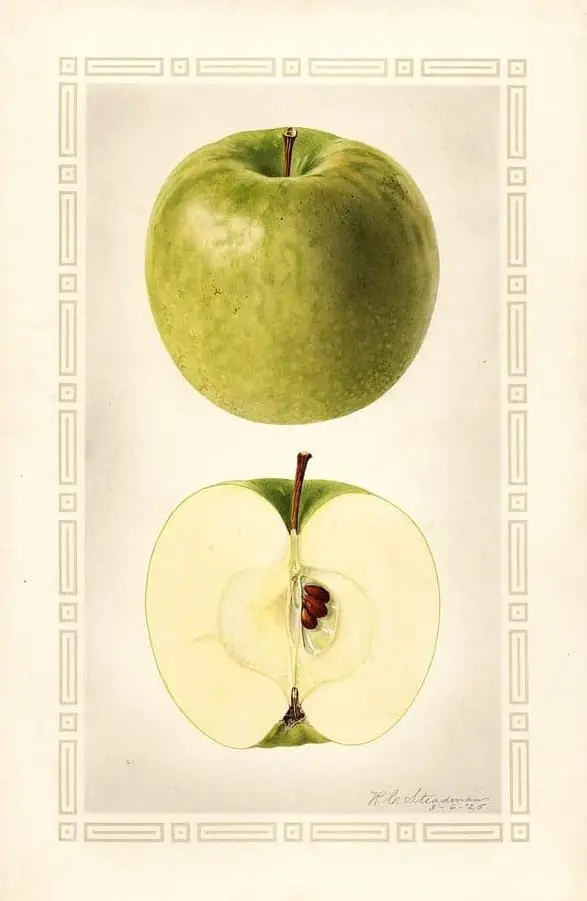
From Maria Ann Smith's orchard near Sydney; by 1975 it made up 39 per cent of Australia's apple crop
-
King Cole