Dutch apple fritters
Slices of sour apple dipped in a batter of flour and beer, fried and dusted with icing sugar.
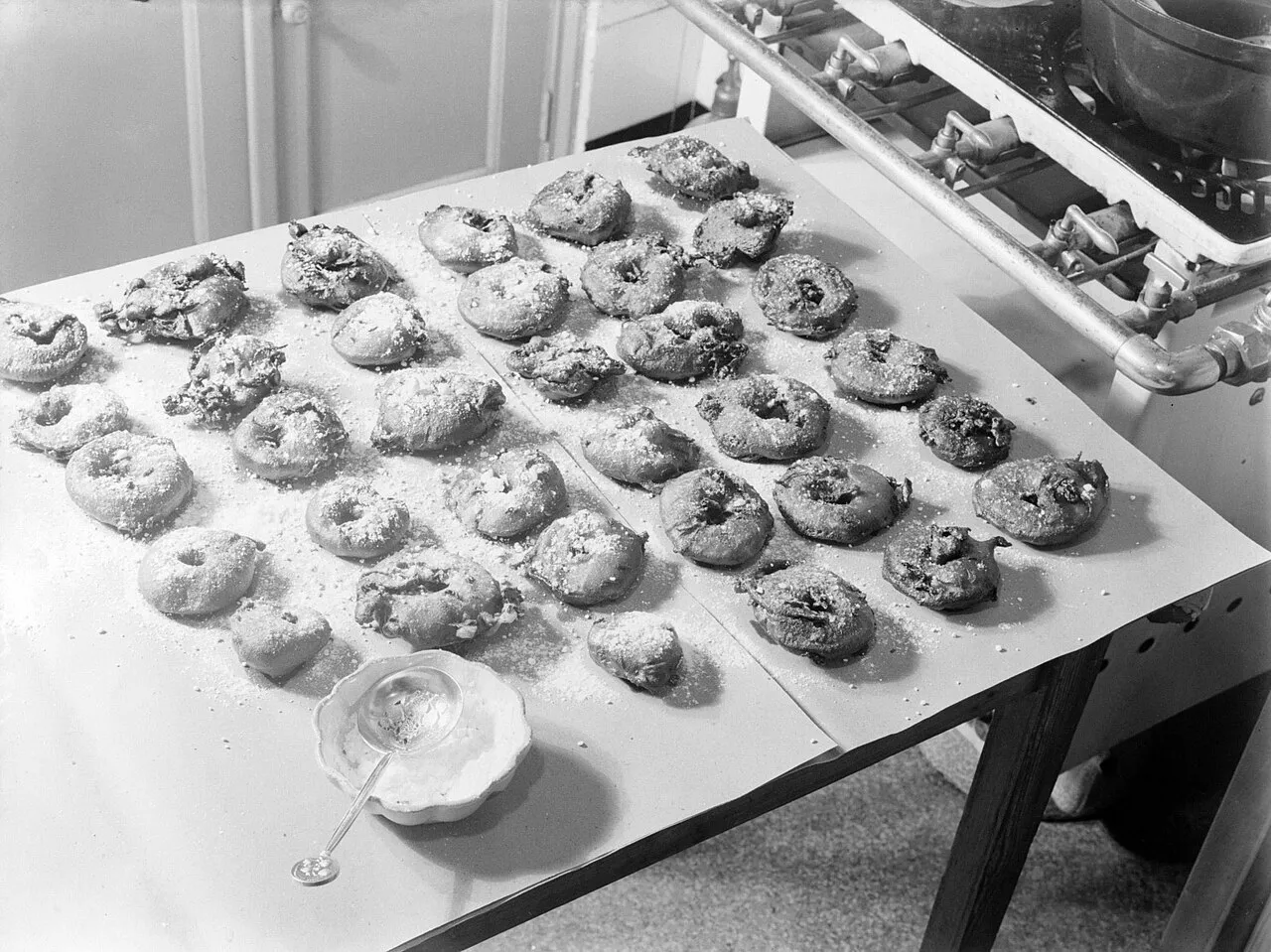

- Makes
- 6 servings
- From
- Netherlands
- Source
- Kookboek van de Amsterdamsche Huishoudschool, sixth, improved edition (in Dutch), no date on the title page; the Koninklijke Bibliotheek gives [1925]
- Called
- Dutch: appelbeignets (apple fritters)
Allergens
- Contains
-
- wheat (gluten): wheat flour
- barley (gluten): beer
- Check the label for
-
- rye (gluten): beer
- oats: beer
- milk: beer
- sulphites: beer
Suits vegetarians and vegans. Contains alcohol.
Worked out from the ingredients as written. Products differ, so read their labels. How allergens are worked out
Adjust the recipe
Scale to what I have
Ingredients
-
In the source: “250 Gr. tarwemeel”
-
In the source: “3 à 3½ d.L. bier of spuitwater”
-
In the source: “12 à 14 zure appelen (goudreinetten of bellefleurs)”
Tick what you have: copying then takes only what is left.
You will need
- a small, deep iron pot
- a larding needle or a knitting needle
- grey paper for draining
Method
-
For this step: vegetable oil
-
For this step: 12 to 14 tart apples
-
For this step: 250 g (2 cups) wheat flour; 300 to 350 ml (1¼ to 1½ cups) beer; salt
-
For this step: icing sugar (confectioners' sugar)
Notes
- If no small hole appears in the fritters while they fry, the batter is still too thick and needs a little more beer.1
- The Netherlands Nutrition Centre advises filling a deep fryer no more than half full of oil, because otherwise the pan can overflow and catch fire, and heating the oil to no more than 175°C (347°F).5
The apples
The source asks for 12 to 14 sour apples and names two kinds in brackets, "goudreinetten" and "bellefleurs".1
This recipe
It follows Kookboek van de Amsterdamsche Huishoudschool, sixth, improved edition (in Dutch). The source uses metric measures; the US amounts are this site's conversions. This site has no kitchen and has not cooked the recipe.
What was changed: Translated from the Dutch; the lines shown as printed are in the source's own words. Its "tarwemeel" is wheat flour, and we give it under that name. The book keeps the word apart from "bloem", another of its words for flour, and it bakes its sifted wheat loaf with "tarwemeel" and its unsifted one with "ongebuild tarwemeel", so the word here means sifted wheat flour and not wholemeal; we have not matched it to a flour sold today. Its "3 à 3½ d.L. bier of spuitwater" is 3 to 3½ decilitres of beer or soda water: we give beer, and write the decilitres as millilitres. Its "zure appelen" are sour apples, and "goudreinetten" and "bellefleurs" are the two kinds it names. For frying it allows lard, a proprietary vegetable fat or a proprietary salad oil; we give vegetable oil, and leave its line for the fat out of the printed wording because it names the two products. It heats the fat until "a blue vapour comes off it" and gives no temperature; we give the 175 °C that the Netherlands Nutrition Centre names as the most for deep frying. The cups are our conversions, the flour at the cup weight of white all-purpose flour. The icing sugar is named only in its method. It gives no frying time, and the yield is the book's statement that all its recipes are calculated for six persons.
How the recipes are chosen and converted
Print or download
- PDF, metric measures, A4 paper
- PDF, US measures, Letter paper
- Recipe data (schema.org JSON-LD), metric measures
- Recipe data (schema.org JSON-LD), US measures
- Cooklang file, metric measures
- Cooklang file, US measures
- Plain text (Markdown), metric measures
- Plain text (Markdown), US measures
The files give the source's quantities. A recipe app can import this page from its address.
You have changed the quantities. Printing keeps them; the files above give the source's quantities.
With your quantities and measures:
About this dish
Appelbeignets are slices of apple dipped in batter and fried in oil, and in the Netherlands they are traditionally eaten on New Year’s Eve.3 The Dutch bakery museum at Hattem names fritters among the bakes that were meant above all for the last day of the year.4 They are also called appelflappen, though that name properly belongs to another apple dish, made with puff pastry.3
This recipe is No. 569 in the Kookboek van de Amsterdamsche Huishoudschool, the cookery book of an Amsterdam school of housekeeping, by C. J. Wannée; it is taken from the sixth edition, whose title page bears no date and for which the Dutch national library’s record gives the year 1925, in square brackets.1 Cornelia Johanna Wannée (1880–1932) taught at the school and later became its head; the first edition of her book came out in 1910, and it has been added to and reprinted for a century.2 In her preface of 1910 Wannée writes that every recipe in the book had been tried and found good, and the book reckons all its recipes for six people.1
The flour the recipe asks for is tarwemeel, wheat flour, a word the book keeps apart from bloem, another of its words for flour.1 The dictionary of the Dutch language defines tarwemeel as flour ground from wheat, either in general or in one of the forms that differ in fineness, and above all as distinct from tarwebloem; a writer of 1776 whom it quotes gives the name to the less finely sifted flour, of which wheat bread was baked, to tell it from the finer.6
Sources
- Kookboek van de Amsterdamsche Huishoudschool, sixth, improved edition (in Dutch), C. J. Wannée; H. J. W. Becht, Amsterdam; read at Delpher, of the Koninklijke Bibliotheek, no date on the title page; the Koninklijke Bibliotheek gives [1925]. Supports: recipe No. 569, "Appelbeignets" (p. 242): its ingredients, quantities and method, the two kinds of apple it names, and its note on a batter that is too thick; recipes No. 761 and 762 (p. 326), a sifted wheat loaf made with "tarwemeel" and an unsifted one made with "ongebuild tarwemeel", and the use of "bloem" in other recipes, among them No. 759 and No. 786; the statement before the recipes that all of them are calculated for six persons; the preface dated Amsterdam, 1910, which says that all the recipes have been tried and found good; the title page of the sixth edition, which bears no date; the library's record, which gives the year of publication as [1925].
- Kookboeken uit 1901-1945 (in Dutch), Koninklijke Bibliotheek, the national library of the Netherlands. Supports: Cornelia Johanna Wannée (1880-1932), teacher and later head of the Amsterdamsche Huishoudschool; the first edition of her cookery book in 1910; the book added to and reprinted for a century.
- appelbeignet (in Dutch), Algemeen Nederlands Woordenboek, Instituut voor de Nederlandse Taal. Supports: the definition: a slice of apple dipped in batter and fried in oil, traditionally eaten in the Netherlands on New Year's Eve; also called appelflap, although that name is properly used for another apple dish, made with puff pastry.
- Oud- en Nieuw: festijn van wafels en oliebollen (in Dutch), Bakkerijwiki, Nederlands Bakkerijmuseum. Supports: apple dumplings, fritters, sausage rolls and oliebollen were meant especially for the last day of the year. That the Bakkerijwiki is a project of the Nederlands Bakkerijmuseum in Hattem is said in the site's colophon, https://www.bakkerijwiki.nl/index.php?col=1.
- Hoe gebruik ik de frituurpan? (in Dutch), Voedingscentrum, the Netherlands Nutrition Centre. Supports: a deep fryer filled no more than half full of oil, as otherwise the pan can overflow and catch fire; the oil heated to no more than 175 °C.
- TARWEMEEL (in Dutch), Woordenboek der Nederlandsche Taal, Instituut voor de Nederlandse Taal, article published in 1930. Supports: the definition: the name of the flour got by grinding wheat, either that flour in general or one or more forms of it that differ in fineness, and then above all in distinction from tarwebloem; and its quotation from Berkhey, 1776, in which the finer flour is called bloem-meel in distinction from the less finely bolted, called meal, coarse meal or tarwe-meel, of which wheat bread is baked.
From The World of Apples, apple.io/recipes/dutch-apple-fritters/
More of this kind
-
Apple fritters
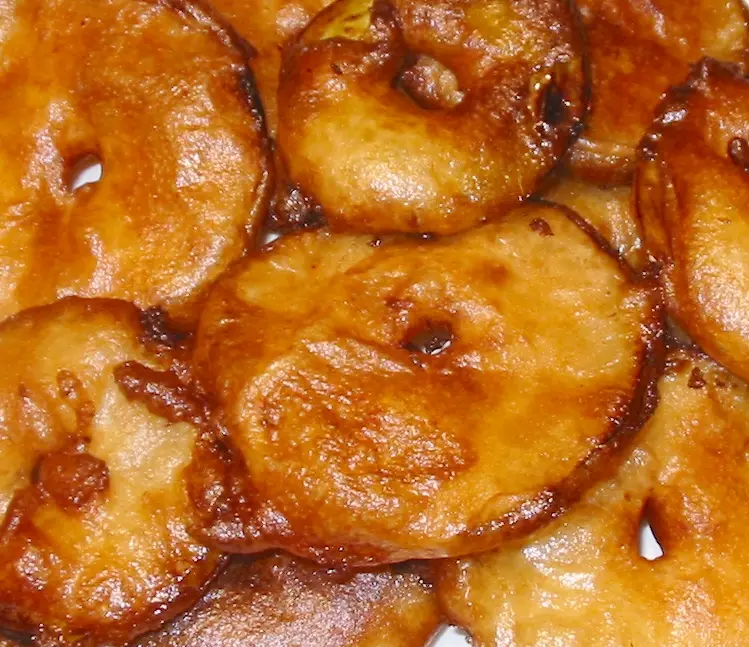
Apple rings dipped in batter, fried golden in oil and showered with vanilla sugar, from Rome's Jewish kitchen.
-
Æbleskiver
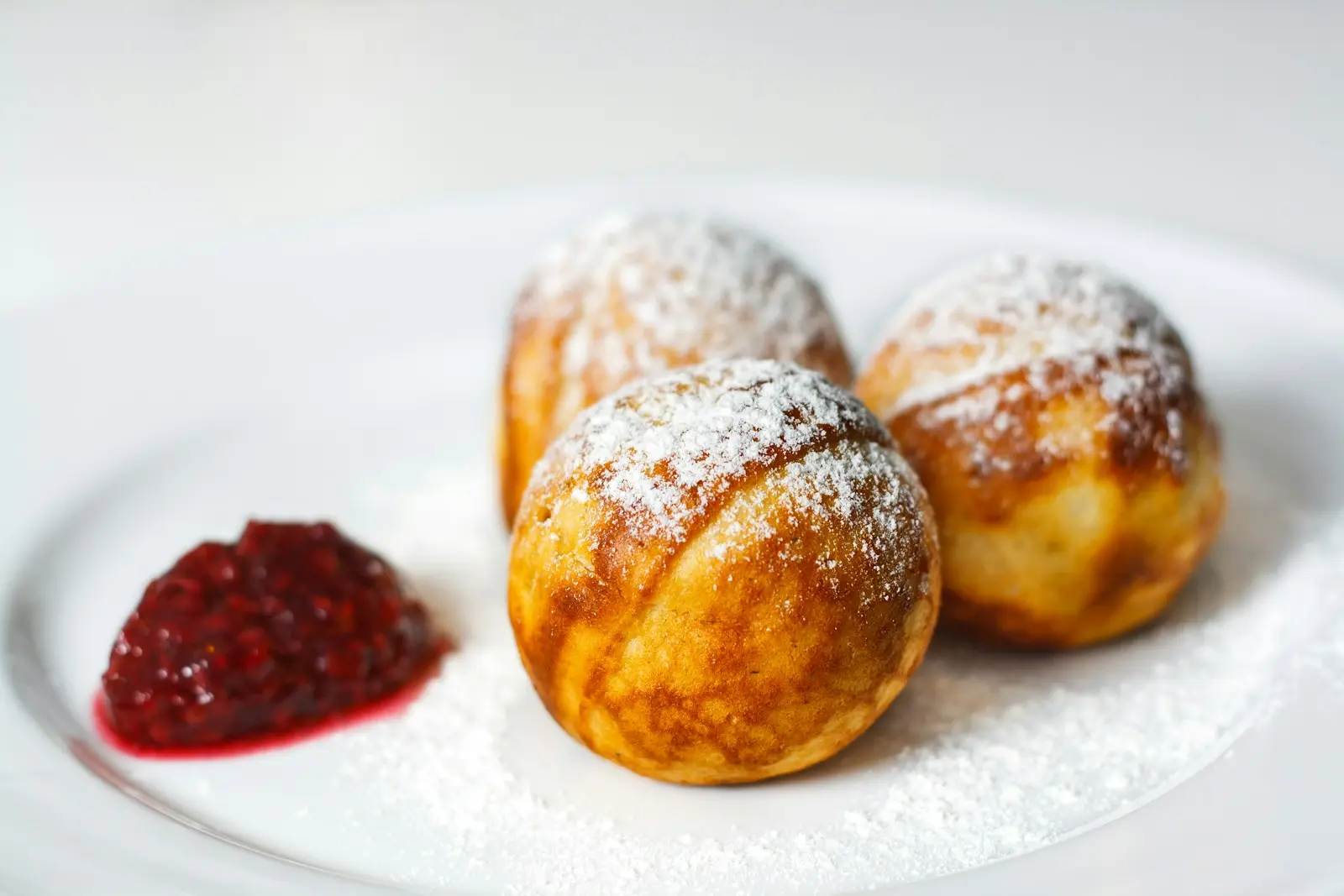
Balls of buttermilk batter baked in a pan with round hollows, with apple at the centre, eaten with jam and icing sugar.