Apple charlotte
Layers of bread and butter and thinly sliced apples, with lemon and sugar, baked in a pie dish and turned out.
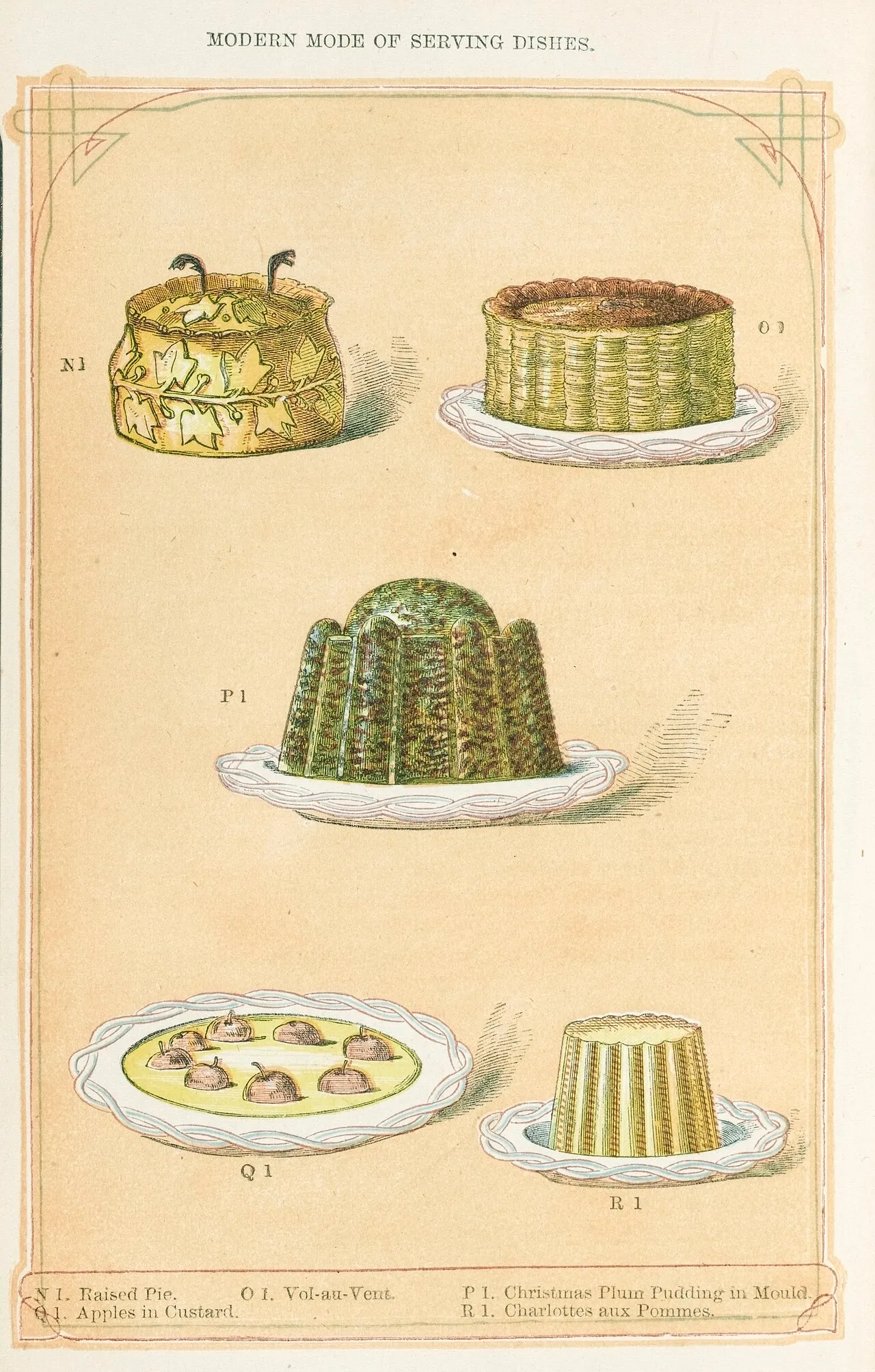

- Makes
- 1 charlotte, each enough for 5 or 6 people
- Cooking time
- rather more than 3/4 hour
- Kind
- Puddings
- From
- United Kingdom, England
- Source
- The Book of Household Management, 1861
Allergens
- Contains
-
- wheat (gluten): slices of bread and butter
- milk: butter, slices of bread and butter
- Check the label for
-
- barley (gluten): slices of bread and butter
- egg: slices of bread and butter
- soya: slices of bread and butter
- sesame: slices of bread and butter
- sulphites: lemon juice
Suits vegetarians.
Worked out from the ingredients as written. Products differ, so read their labels. How allergens are worked out
Adjust the recipe
Scale to what I have
Ingredients
-
In the source: “9 slices of bread and butter”
-
In the source: “about 6 good-sized apples”
-
In the source: “1 tablespoonful of minced lemon-peel”
-
In the source: “2 tablespoonfuls of juice”
-
In the source: “moist sugar to taste”
-
In the source: “sifted sugar”
Tick what you have: copying then takes only what is left.
You will need
- a pie dish
Method
-
For this step: butter
-
For this step: 9 slices of bread and butter; 6 apples
-
For this step: 1 tablespoon lemon peel; 2 tablespoons lemon juice; sugar
-
For this step: sugar
Timers come with you from page to page on this site, and ring while it is open in your browser and this device is not silenced. They cannot ring once the tab is closed or the phone is asleep, so the screen stays on while one runs.
Notes
- Beeton defines a tablespoonful as "a measure or bulk equal to that which would be produced by half an ounce of water".1
The apples
The source asks for "about 6 good-sized apples", pared, cored and cut into thin slices.1 In her note on the apple, Beeton says that the best baking apples for early use are the Colvilles, for autumn the rennets and pearmains, and for winter and spring the russets.1
This recipe
It follows The Book of Household Management. The source uses British measures (pounds, ounces and imperial pints); the metric and US amounts are this site's conversions. This site has no kitchen and has not cooked the recipe.
What was changed: The source asks for "moist sugar to taste"; we name sugar only and keep its words beside the line. Project Gutenberg's text has "torn the charlotte on a dish" where the printed book has "turn". The list says "2 tablespoonfuls of juice"; that it is lemon juice we take from the method, which sprinkles on "the lemon-peel and juice". Its list of ingredients leaves out the butter for the dish and the sifted sugar for the top, which its method uses; it gives no amount for either. It names no oven temperature beyond "a brisk oven", and says "rather more than 3/4 hour" in the method and "3/4 hour" under Time. It does not say what size of pie dish to use.
How the recipes are chosen and converted
Print or download
- PDF, metric measures, A4 paper
- PDF, US measures, Letter paper
- Recipe data (schema.org JSON-LD), metric measures
- Recipe data (schema.org JSON-LD), US measures
- Cooklang file, metric measures
- Cooklang file, US measures
- Plain text (Markdown), metric measures
- Plain text (Markdown), US measures
The files give the source's quantities. A recipe app can import this page from its address.
You have changed the quantities. Printing keeps them; the files above give the source's quantities.
With your quantities and measures:
About this dish
This is the third and plainest of three apple charlottes in Isabella Beeton’s Book of Household Management, which came out in monthly parts from 1859 to 1861 and as a bound book in 1861.1 The first two, under the French name “Charlotte-aux-pommes”, are a mould lined with bread dipped in clarified butter and filled with apple marmalade, and a hollowed cake layered with apple marmalade and topped with whipped cream; this one, headed “A very simple apple charlotte”, is layers of bread and butter and sliced apples in a pie dish.1
A layered charlotte of this kind was in print in England more than fifty years earlier.2 “A Charlotte” in the London printing of 1808 of A New System of Domestic Cookery, a book “by a Lady” that the Internet Archive’s record gives to Maria Eliza Rundell, lines a buttered baking dish with very thin slices of white bread, fills it with layers of sliced apples, sugar and bits of butter, covers it with bread soaked in warm milk and bakes it slowly for three hours.2
Beeton says in her preface that she has attempted to give with every recipe an estimate of its cost, the number of people it is sufficient for and the time when it is seasonable: for this charlotte ninepence, five or six persons, and from July to March.1
Sources
- The Book of Household Management, Mrs. Isabella Beeton; S. O. Beeton, London; Project Gutenberg (the text). The printed pages were read in the Wellcome Library's copy of the first edition, https://archive.org/details/b21527799, 1861. Supports: recipe 1420, "A very simple apple charlotte": its ingredients, method, time, cost, the number of people it is sufficient for and its season; recipes 1418 and 1419, the two called "Charlotte-aux-pommes"; the preface, on what each recipe states; paragraph 77, the definition of a tablespoonful; the note "The apple" after recipe 111, on the best baking apples; the publication in monthly parts from 1859 to 1861 and as a bound book in 1861, as the electronic text states it; in the printed first edition (pages 714 and 715) the recipe reads the same but for "turn the charlotte on a dish", and the title page has "London: S. O. Beeton, 248, Strand, W.C. 1861".
- A New System of Domestic Cookery; formed upon principles of economy, and adapted to the use of private families. By a Lady. A new edition, corrected, Maria Eliza Rundell (the title page says only "By a Lady"); John Murray, London; Internet Archive (the copy of Oxford University), 1808. Supports: the recipe "A Charlotte" on page 151: a buttered baking dish lined with thin slices of white bread, layers of sliced apples, sugar and butter, a cover of bread soaked in warm milk, and three hours' slow baking; the title page; the attribution to Maria Eliza Rundell in the Internet Archive's record.
From The World of Apples, apple.io/recipes/apple-charlotte/
More of this kind
-
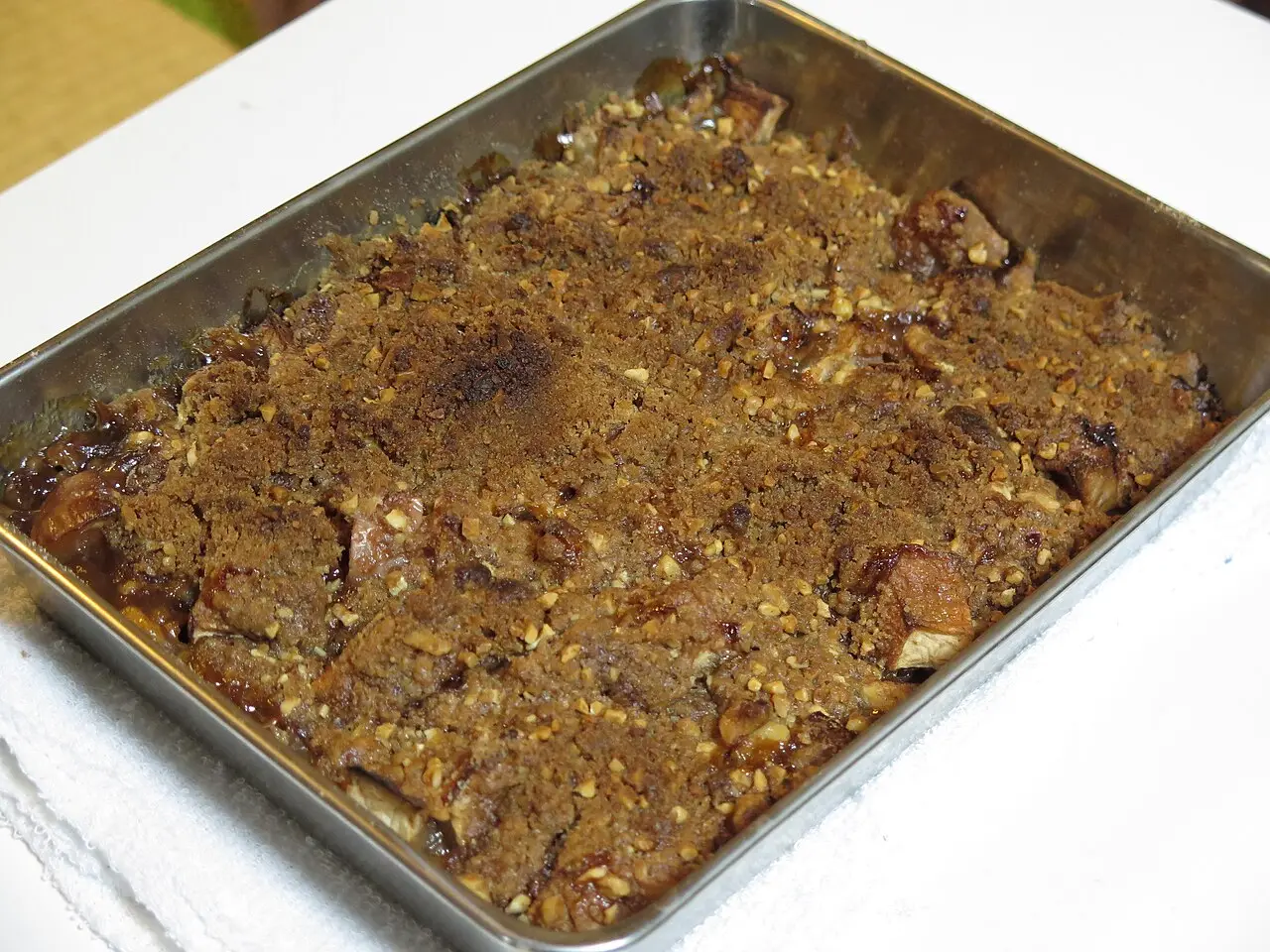
Apple crisp
Sliced tart apples baked under a crumbly topping of flour, brown sugar, spice and butter.
-
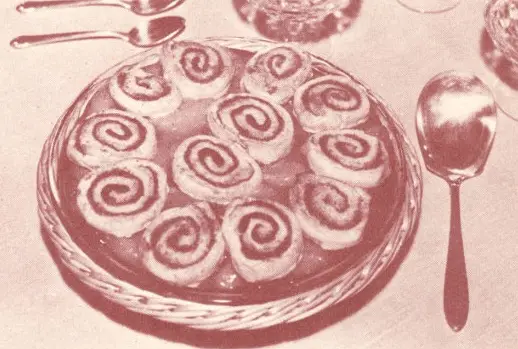
Apple cobbler
Tart apple slices cooked with tapioca and baked under slices of dough rolled up with butter, sugar and cinnamon.
-
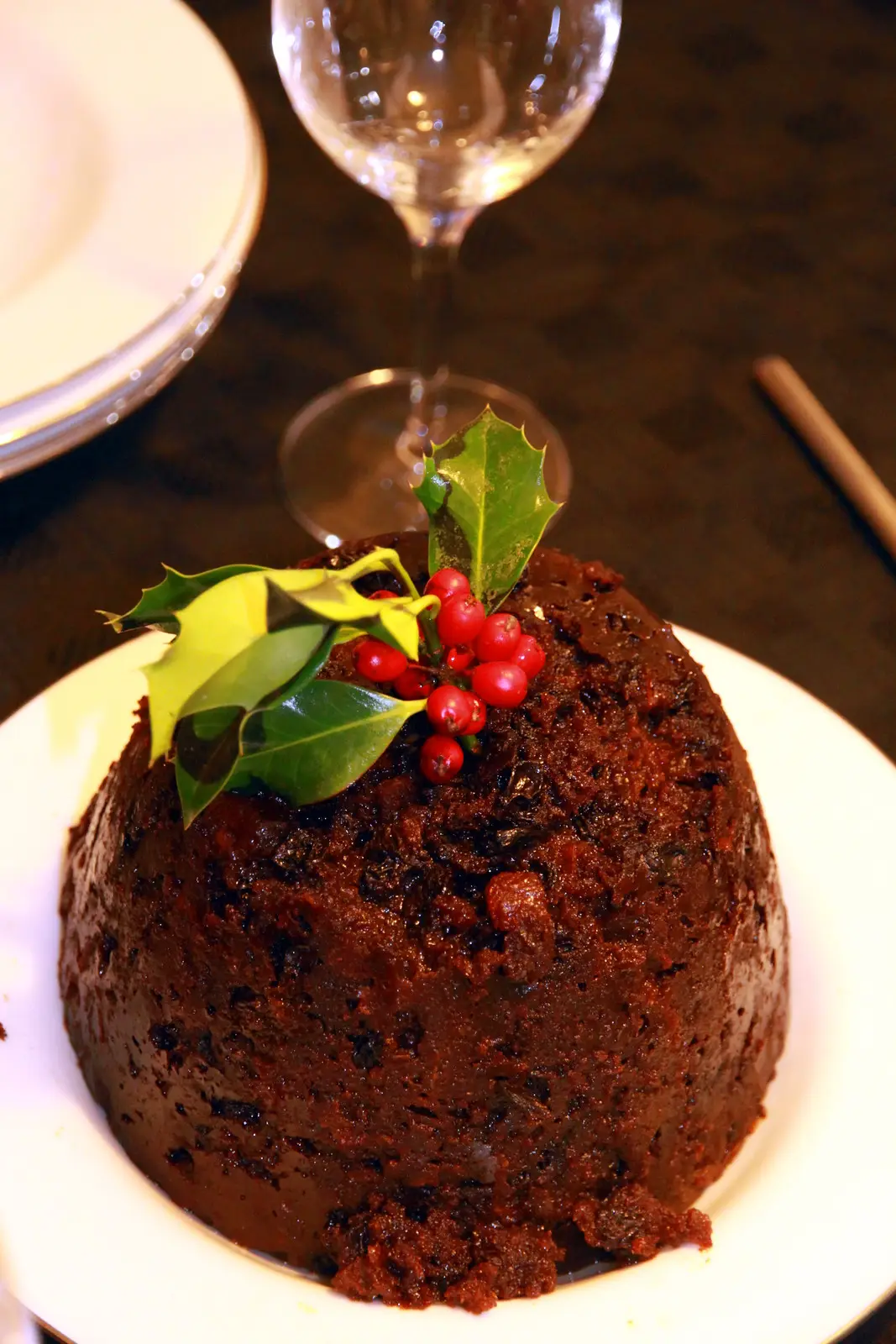
Christmas pudding
A steamed pudding of rum-soaked dried fruit, a grated Bramley apple, breadcrumbs and ground almonds, with rum cream.