Apple varieties, United Kingdom
Ashmead's Kernel
Raised in Gloucester about 1700 by Dr Ashmead, a physician; a rich russet that genetic markers show is triploid
History
Ashmead’s Kernel was raised in Gloucester by Dr Ashmead, whom Hogg called “an eminent physician of that city”2. Hogg put its origin at about the beginning of the eighteenth century2; the Herefordshire Pomona and the National Fruit Collection give about 17001,3, and Bunyard about 17204. The original tree stood in what had been Dr Ashmead’s garden until the ground was sold for building; Clarence Street now covers the spot2,3.
For a long time it was little known beyond Gloucestershire. Mr Hignell, an orchardist at Tewkesbury, told Hogg in 1840 that he had first seen the fruit in 1796, on a tree in Mr Wheeler’s nursery at Gloucester that had been grafted from the original and was then over thirty years old2. The Brompton Park Nursery grew it in 1780, from stock received from Wheeler, but Miller and Sweet of Bristol did not list it in the catalogue of their large collection in 17902,3. Hogg knew it as a favourite in the gardens of West Gloucestershire that seemed unknown in other parts of the country2. In 1981 it received a First Class Certificate from the Royal Horticultural Society1.
Its parents are unknown. Lindley judged it a seedling of Nonpareil, so alike were their leaves and shoots2,3. A 2018 study of the National Fruit Collection with genetic markers found it to be triploid, and proposed Nolan Pippin, a diploid, as a possible parent of both Ashmead’s Kernel and Improved Ashmead’s Kernel, which are plausibly siblings5. Nolan Pippin, however, is recorded only from 1920, when a Mrs Woodward of Essex sent it to the National Fruit Trials; if it is the parent, it would date from the seventeenth century, and Nolan Pippin may not be its original name5.
The fruit
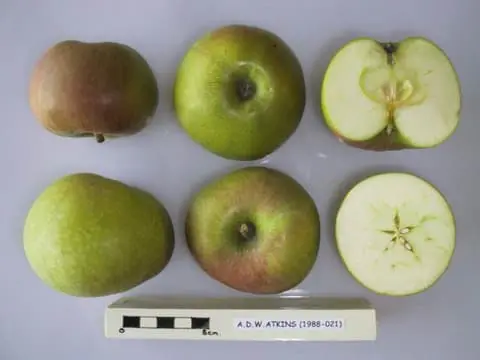
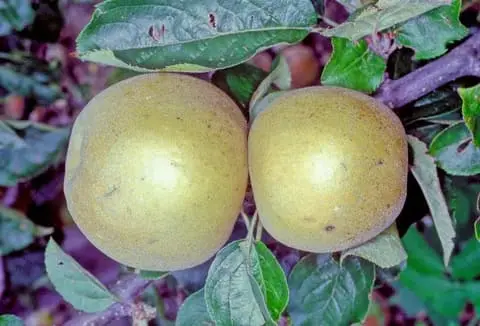
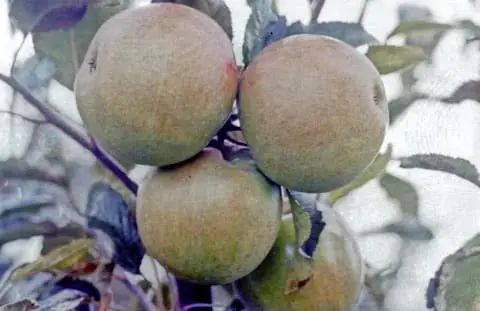
The fruit is below medium to medium in size, round and flattened or broadly conical, and sometimes much elongated1,2,4. Its light greenish-yellow skin is covered with yellowish-brown russet, with a brownish-orange tinge on the side facing the sun2. Its yellowish flesh is firm, crisp and juicy, with a sugary, rich and highly aromatic flavour2. Hogg ranked it “a dessert apple of the very first quality”, with all the richness of the Nonpareil “but with a more sugary juice”2.
At Brogdale, Kent, it reaches 10 per cent flowering around 9 May and is picked in early October1. Hogg found it ready from November and at its best from Christmas until May2; the Pomona gave its season as November to May3, and Bunyard as December to March4.
Growing
Hogg and the Pomona found the tree very hardy and a good bearer, able to succeed where the Nonpareil would not2,3. Bunyard recorded moderate growth and called it fertile, but also “a poor cropper”4. It is triploid5.
Uses
Where the sources disagree
Sources
- Ashmead's Kernel (accession 1970-106), National Fruit Collection, Brogdale, Kent (Defra). Supports: "Raised in about 1700 by Dr Ashmead, Gloucester"; a First Class Certificate from the Royal Horticultural Society in 1981; "firm, juicy flesh with a rich aromatic flavour"; synonyms including Dr Ashmead's Kernel, Ashmead's Seedling, Semis d'Ashmead and Samling von Ashmead; a medium, broad globose-conical fruit with a green-yellow ground, brown over colour and high to very high russet (National Apple Register, Smith, 1971, as shown on the record); 10% flowering on 9 May and picking in early October at Brogdale; a dessert apple.
- The Fruit Manual, 5th ed., pp. 11–12: Ashmead's Kernel, Robert Hogg, Journal of Horticulture Office, Internet Archive, 1884. Supports: raised at Gloucester "about the beginning of last century, by Dr. Ashmead, an eminent physician of that city"; the original tree in his former garden, destroyed when the ground was needed for building, on the spot of Clarence Street; Mr Hignell of Tewkesbury telling Hogg in 1840 that he first saw the fruit in 1796, on a tree in Mr Wheeler's nursery at Gloucester worked from the original and then "upwards of thirty years old"; grown at the Brompton Park Nursery in 1780, received from Wheeler; not in the catalogue of Miller and Sweet of Bristol in 1790; a favourite in the gardens of West Gloucestershire but seemingly unknown elsewhere; below medium size, round and flattened, "sometimes considerably elongated"; light greenish-yellow skin covered with yellowish-brown russet, tinged brownish orange in the sun; yellowish, firm, crisp, juicy, sugary, rich, highly aromatic flesh; "A dessert apple of the very first quality, possessing all the richness of the Nonpareil, but with a more sugary juice"; in use from November, best from Christmas till May; very hardy, "an excellent bearer", succeeding where the Nonpareil fails; Lindley believing it a seedling of the Nonpareil from its leaves and shoots.
- The Herefordshire Pomona, vol. II, plate LIV: Ashmead's Kernel, Robert Hogg and H. G. Bull (eds), Woolhope Naturalists' Field Club, Internet Archive, 1876–1885. Supports: raised in Gloucester in Dr Ashmead's garden "(c. 1700)"; the original tree standing "until within the last few years", when its ground was sold for the houses of Clarence Street; grown at Brompton Park in 1780 from Mr Wheeler's stock, but absent from Miller and Sweet's Bristol collection in 1790; in season from November until May; the tree very hardy and bearing well, and Lindley considering it a seedling of the Nonpareil.
- A Handbook of Hardy Fruits, vol. I, p. 19: Ashmead's Kernel, E. A. Bunyard, John Murray, Internet Archive, 1920. Supports: a dessert apple, December to March; medium, round-square; greenish yellow with a faint brown flush, covered with russet; firm, pale yellow, very aromatic flesh; growth moderate, fertile; "raised by Dr. Ashmead, of Gloucester, about 1720"; "A valuable fruit for late use but a poor cropper".
- Genetic analysis of a major international collection of cultivated apple varieties reveals previously unknown historic heteroploid and inbred relationships, M. Ordidge and others, PLoS ONE 13(9): e0202405, PubMed Central, 2018-09-12. Supports: a study of the National Fruit Collection with SSR and DArT markers; Ashmead's Kernel and Improved Ashmead's Kernel both triploid (Table 4); Nolan Pippin, a diploid, "a potential diploid parent" of both, and the two triploids "plausible siblings"; Nolan Pippin known only from its receipt by the National Fruit Trials from a Mrs Woodward of Essex in 1920; accepting it as a parent "would potentially date the cultivar to the 17th century", and Nolan Pippin "may not be its original name".