Szarlotka
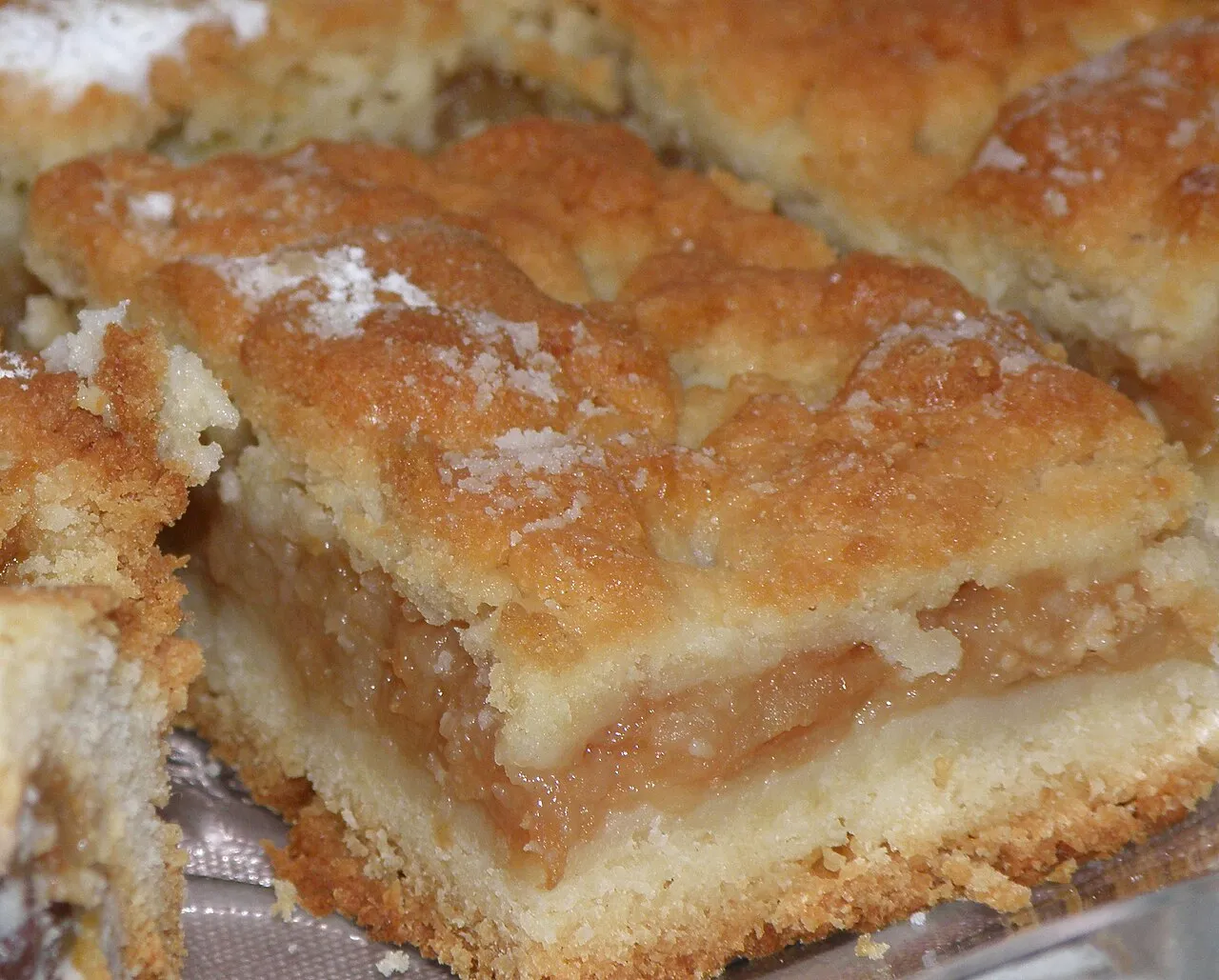
A shortcrust case baked empty under dry peas, then filled with apples stewed in butter with cinnamon and sultanas.

- Makes
- 1 tart, each with pastry for 6 to 8 people and apples for 6
- Cooking time
- half an hour for the pastry, then 5 minutes with the apples
- Kind
- Pies and tarts
- From
- Poland
- Source
- Najnowsza kuchnia wytworna i gospodarska, 1903
- Called
- Polish: szarlotka z jabłek w kruchem cieście (apple szarlotka in shortcrust pastry)
Allergens
- Contains
-
- wheat (gluten): plain flour (all-purpose flour)
- milk: butter
- egg: eggs
- Check the label for
-
- sulphites: sultanas (golden raisins)
Suits vegetarians.
Worked out from the ingredients as written. Products differ, so read their labels. How allergens are worked out
Adjust the recipe
Scale to what I have
Ingredients
Pastry
-
In the source: “½ funta mąki”
-
In the source: “ćwierć funta świeżego niesolonego masła”
-
In the source: “2 całe jaja”
-
In the source: “dodając po trochu zimnej wody”
-
In the source: “4 łuty miałkiego cukru”
Apples
-
In the source: “8–10 dużych jabłek”
-
In the source: “trochę tartej skórki cytrynowej”
-
In the source: “szczyptę tłuczonego cynamonu”
-
In the source: “garść przemytych rodzenków sułtańskich”
Tick what you have: copying then takes only what is left.
You will need
- a saucepan or a round tin
- a frying pan
- clean paper and dry peas, to weight the pastry
Method
Pastry
-
For this step: 200 g (1⅔ cups) plain flour (all-purpose flour); 100 g (7 tablespoons) butter; 2 eggs; water
-
For this step: 50 g (¼ cup) caster sugar (superfine sugar)
-
For this step: butter
Apples
-
For this step: 8 to 10 apples; butter
-
For this step: sugar; grated lemon zest (grated lemon rind); 1 pinch ground cinnamon; sultanas (golden raisins)
Finishing
Timers come with you from page to page on this site, and ring while it is open in your browser and this device is not silenced. They cannot ring once the tab is closed or the phone is asleep, so the screen stays on while one runs.
Notes
- The source weighs in pounds and in łuty.1 Russian weights and measures replaced the New Polish ones in the Kingdom of Poland in 1849.7
- A dictionary printed in Warsaw in 1916 gives the Russian pound as 409 g and the New Polish pound as 405 g, and the łut as the thirty-second part of a pound; the first sense it gives of the pound is 500 g.6 The New Polish measures, with their pound of 405 g, had been in force from 1819.3
The apples
The source asks for 8 to 10 large apples for six people, peeled, cored and cut into thin slices, and names no variety.5
This recipe
It follows Najnowsza kuchnia wytworna i gospodarska. The source uses old measures of its own country, named below; the metric and US amounts are this site's conversions. This site has no kitchen and has not cooked the recipe.
What was changed: Translated from the Polish. The source's pound (funt) and łut are old measures, and the metric amounts are our conversions of them. The book prices a loaf in kopecks and has no metric weight in it, so we take its pound to be the pound of Warsaw in its time: 409 g by the Russian measures in force there from 1849, or 405 g by the New Polish ones before them, each of 32 łuty. On either, ½ funt is a little over 200 g, ¼ funt a little over 100 g and 4 łuty about 51 g; we give 200 g, 100 g and 50 g. The pound of 500 g, which the dictionary of 1916 gives first, would make every weight about a quarter larger. The cups and spoons are converted from the same figures. Its "miałki cukier", fine sugar, is given as caster sugar, and its "groch surowy", raw peas, as dry peas. The butter for the tin is in its method only. The apples are not in recipe 81 itself, which says to prepare them "in the way given above": the apples, butter, sugar, lemon zest, cinnamon and sultanas, and the way of stewing them, are those of recipe 80, "Szarlotka z jabłek", on the page before, which is written for six people. The source gives no amount for the water, the butter for frying, the sugar for the apples, the lemon zest ("a little") or the sultanas ("a handful"), no oven temperature beyond "a hot oven", and no size of tin.
How the recipes are chosen and converted
Print or download
- PDF, metric measures, A4 paper
- PDF, US measures, Letter paper
- Recipe data (schema.org JSON-LD), metric measures
- Recipe data (schema.org JSON-LD), US measures
- Cooklang file, metric measures
- Cooklang file, US measures
- Plain text (Markdown), metric measures
- Plain text (Markdown), US measures
The files give the source's quantities. A recipe app can import this page from its address.
You have changed the quantities. Printing keeps them; the files above give the source's quantities.
With your quantities and measures:
About this dish
A szarlotka, in the words of a Warsaw dictionary of 1916, is a sweet dish of apples peeled, cut up and baked in shortcrust pastry; the dictionary marks the word as French.2
Marta Norkowska’s recipe, from Najnowsza kuchnia wytworna i gospodarska, published in Warsaw and Kraków in 1903, bakes the pastry case empty, under paper and dry peas so that it does not crack or sink, and fills it afterwards with apples stewed in butter.1 She says that the pastry can also be baked together with raw apples, but that this takes very long and that the pastry, soaking up the acid of the apples, often turns out heavy, so that it is best to prepare each thing separately.1
An older Warsaw recipe is covered with pastry.4 Lucyna Ćwierczakiewiczowa’s 365 obiadów za 5 złotych, in its eighth edition of 1871, lines a buttered and breadcrumbed pan with thin pastry, fills it with finely shredded apples stewed with sugar and mixed with cinnamon and raisins, covers them with pastry and leaves the szarlotka in the oven for an hour.4
Sources
- Najnowsza kuchnia wytworna i gospodarska, Marta Norkowska; Gebethner i Wolff, Warsaw, and G. Gebethner i Spółka, Kraków; Polish Wikisource, with the scan on Wikimedia Commons, 1903. Supports: recipe 81, "Szarlotka z jabłek w kruchem cieście", on page 296: the pastry, weighed in funty and łuty, the blind baking under dry peas, the half hour and the five minutes, and the remark on baking pastry and raw apples together; the title page. Recipe 42 of the same chapter, "Grzanki w cieście", prices a loaf at 7½ kopecks.
- M. Arcta Słownik ilustrowany języka polskiego (entry "Szarlotka"), Michał Arct; Wydawnictwo M. Arcta, Warsaw; Polish Wikisource, 1916. Supports: the definition of szarlotka as a sweet dish of apples peeled, cut up and baked in shortcrust pastry, marked as a word from French.
- 200. rocznica wprowadzenia w Królestwie Polskim "miar nowopolskich", Główny Urząd Miar (Central Office of Measures, Poland). Supports: the New Polish system of measures, decreed on 13 June 1818 and in force from 1819, with a pound of 405 g and a quart of one litre.
- 365 obiadów za 5 złotych (wydanie ósme poprawione i powiększone), Lucyna Ćwierczakiewiczowa, published by the author; Drukarnia Aleksandra Pajewskiego, Warsaw; Polish Wikisource, 1871. Supports: the earlier recipe 35, "Szarlotka z jabłek w kruchém cieście", on page 255: a pan lined with thin pastry, stewed shredded apples with cinnamon and raisins, a lid of pastry and an hour in the oven.
- Najnowsza kuchnia wytworna i gospodarska: recipe 80, "Szarlotka z jabłek", Marta Norkowska; Gebethner i Wolff, Warsaw, and G. Gebethner i Spółka, Kraków; Polish Wikisource, with the scan on Wikimedia Commons, 1903. Supports: recipe 80, on page 295, which stands directly above recipe 81 and to which it sends the reader for the apples: 8 to 10 large apples for six people, peeled, cored and thinly sliced, stewed in butter with sugar, a little grated lemon peel, a pinch of cinnamon and a handful of sultanas.
- M. Arcta Słownik ilustrowany języka polskiego (entry "Funt"), Michał Arct; Wydawnictwo M. Arcta, Warsaw; Polish Wikisource, 1916. Supports: the pound as a unit of weight of 500 g; the New Polish pound of 405 g and 32 łuty; the Russian pound of 409 g. The entry "Łut" of the same dictionary (https://pl.wikisource.org/wiki/M._Arcta_S%C5%82ownik_ilustrowany_j%C4%99zyka_polskiego/%C5%81ut) makes the łut the thirty-second part of a pound.
- Polska administracja miar: vademecum (in Polish), Główny Urząd Miar (Central Office of Measures, Poland), Warsaw, 2015. Supports: the New Polish measures abolished in the Kingdom of Poland in 1849 and replaced by the Russian ones (page 16); Russian measures and weights to be used there from 19 May 1849 (page 118).
From The World of Apples, apple.io/recipes/szarlotka/
More of this kind
-
Apple pie
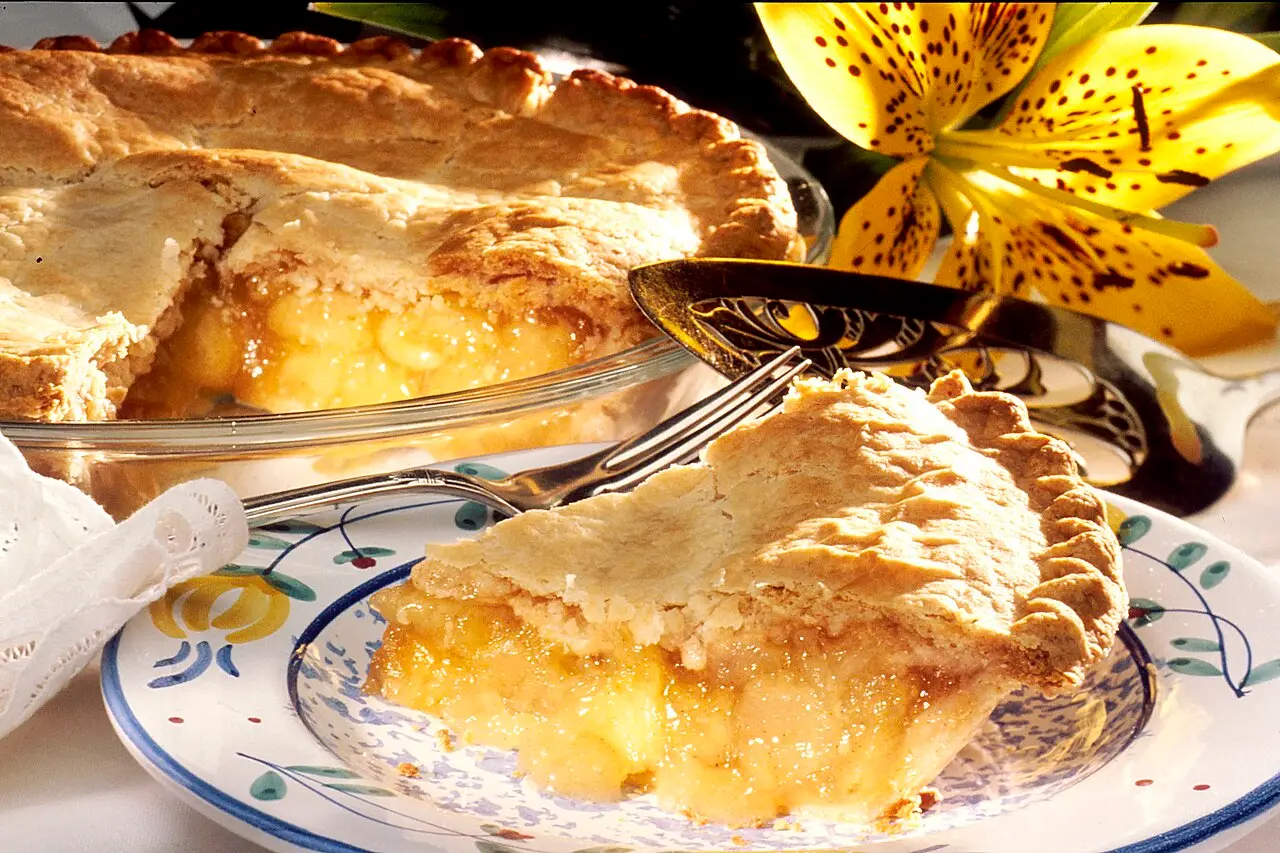
Sliced tart apples under sugar, cornflour and cinnamon, baked between two crusts of shortening pastry.
-
Cranberry-apple pie
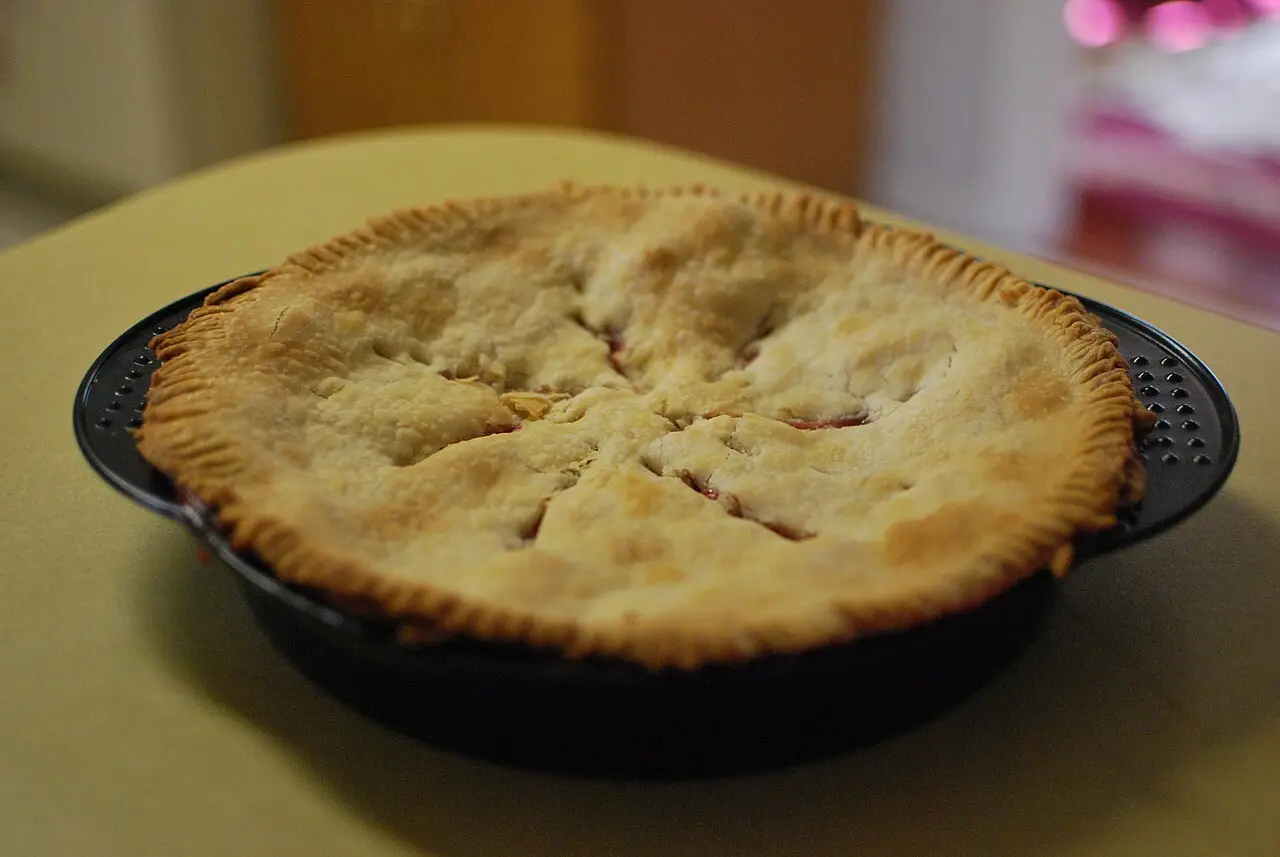
A two-crust apple pie in which fresh cranberries take the place of some of the apples.
-
Apple strudel
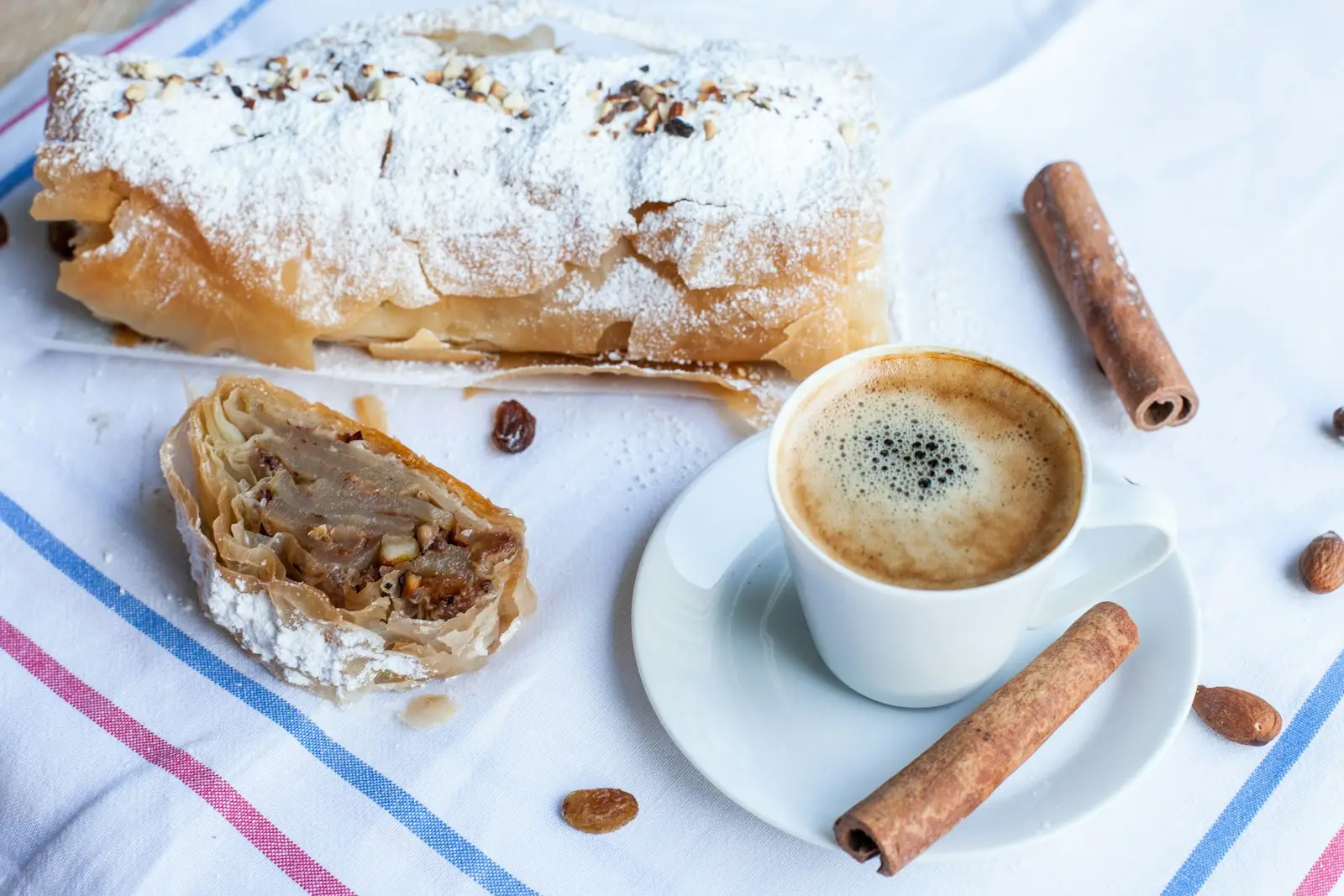
Sourish apples, rum-soaked raisins and walnuts on buttered crumbs, rolled in a dough pulled by hand until wafer-thin.
-
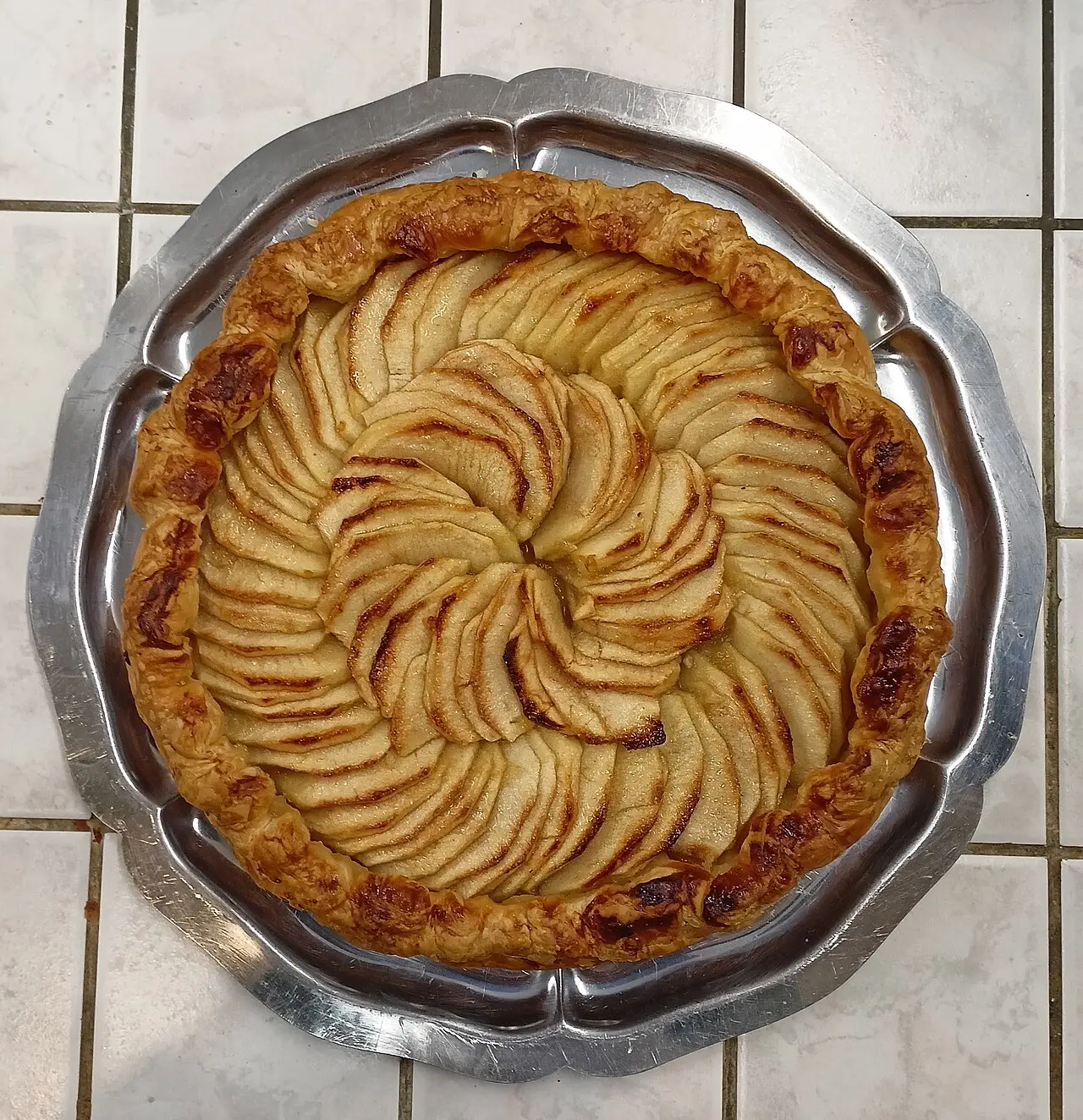
Flan de pommes
A puff pastry case filled with apples cooked in butter and sugar, baked and glazed with apricot jam.